
REVIEW · TRA QUE VEGETABLE VILLAGE TOURS
Hoi An Local Market and Vegetable Village Cooking Class
Cooking starts at the market stall. I like how this half-day Hoi An class links local ingredients to hands-on technique, and ends with a meal you build yourself with Chef Hai. It is a practical way to understand Vietnamese flavor without relying on a cookbook guess.
I also enjoy the farming stop at Tra Que Vegetable Village, where you see how everyday produce turns into the herb and vegetable backbone of many dishes. One more plus, the group stays small, so questions do not get lost and the timing feels human.
The main thing to consider is that you will spend meaningful time outdoors, and hot, humid weather can be a factor. If you are sensitive to heat, plan to pace yourself and drink water early.
Key highlights you will care about
- Hoi An Market prep time so you learn what to buy and how to talk to sellers before you cook
- Tra Que Vegetable Village for an organic farming glimpse and an herb-focused flavor lesson
- Cam Thanh timing that mixes water time, a welcome drink, and the cooking classroom flow
- Chef-led fundamentals that focus on ingredient differences and traditional methods
- Four dishes included so the class feels like more than a single demo
- Small group size of up to 12 travelers for better attention and fewer delays
Why this Hoi An cooking class starts at the local market
The day makes sense from the first stop. You do not begin with a recipe sheet, you begin with the building blocks, then you learn how to choose them, handle them, and use them later. It is the difference between cooking as a performance and cooking as a skill.
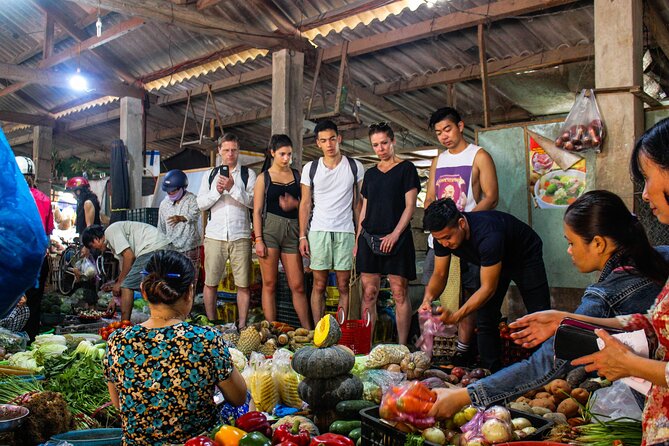
What I like most is that the market visit is not just wandering for photos. You are there to understand ingredients for the dishes you will make, and you get a chance to practice dealing with local sellers. That alone pays off if you ever want to cook Vietnamese food back home without guessing.
A small warning: the market stop is short, about 20 minutes. If you are the type who loves long browsing, you might want to come back on your own another day, but for class prep, the timing is efficient.
You can also read our reviews of more shopping tours in Hoi An
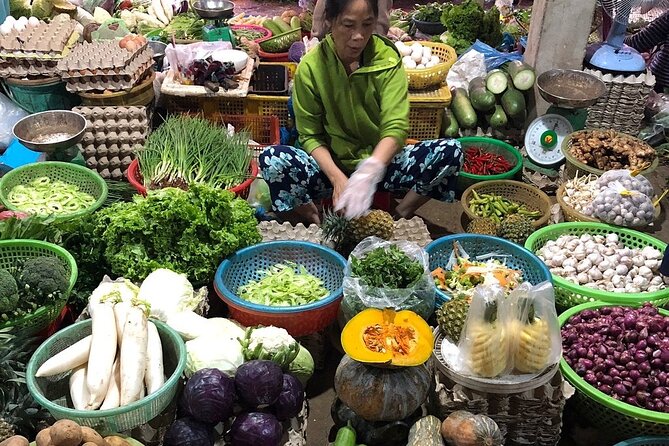
Hoi An Market: what to look for before the cooking starts
At the Hoi An Market, you get a front-row education on how Vietnamese cooking starts with fresh produce. Your guide helps you learn what ingredients matter for the dishes coming next, so you can start thinking in flavors instead of just buying items.
This is also where you learn the practical side of shopping. You will get tips on how to approach sellers, how to ask about items, and how to avoid confusion when you are not sure what something is called. Even if you do not buy extra food, you leave with a clearer sense of what chefs look for.
Because the market time is about 20 minutes, I recommend you go in with a focused mindset. Think: which herbs do I recognize, what vegetables look crisp, and what smells are strongest. The goal is not to collect everything, it is to understand the key ingredients.
Tra Que Vegetable Village: organic farming and the herb lesson
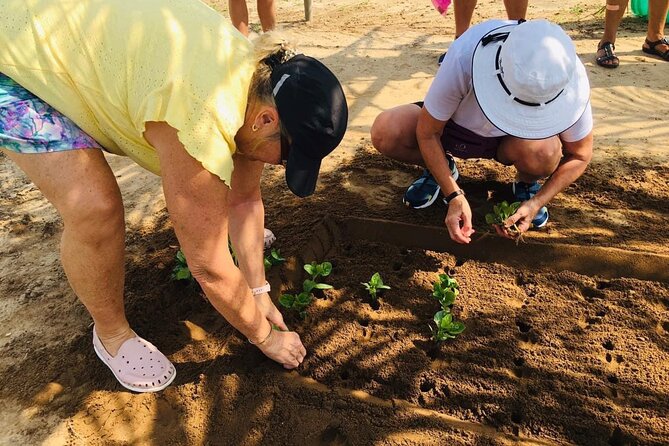
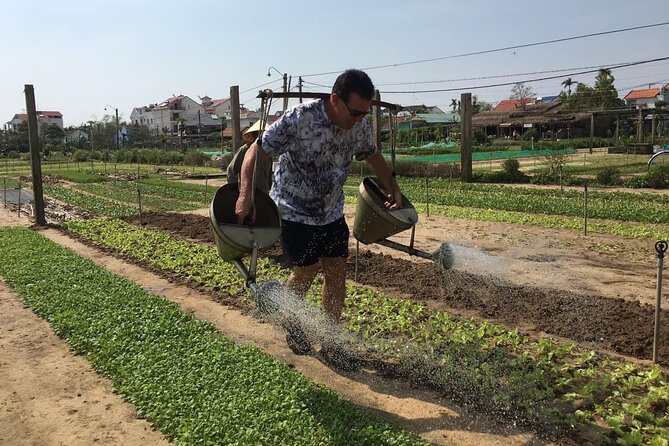
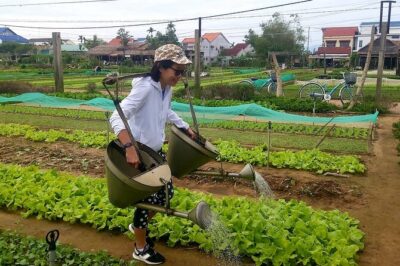
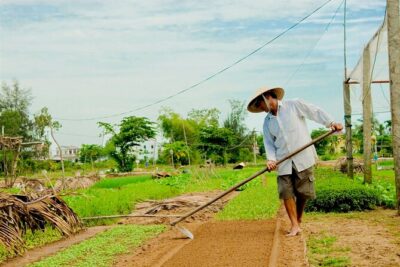
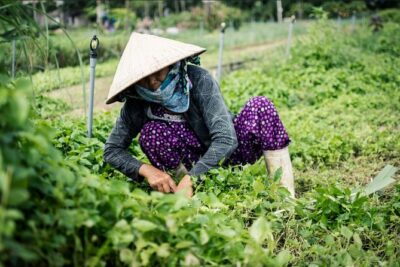
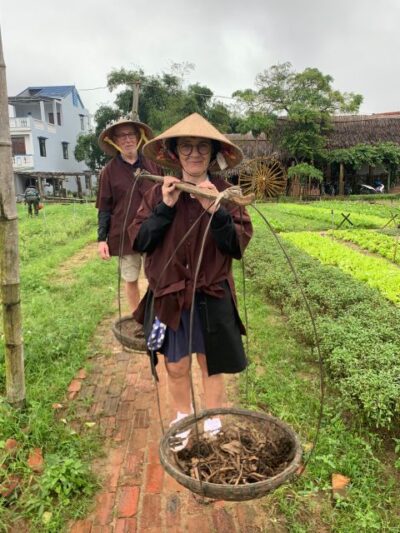
Next comes Tra Que Vegetable Village, known for its organic growing and for how produce is treated as part of the community routine. The setting is calm, and you get to enjoy the farming area with nice weather and friendly locals, which makes the learning feel less rushed.
The most valuable part here is the connection between what you see and what you taste later. The vegetables look green and fresh, and the point is not just the photo value. It is that these ingredients carry strong flavor, and Vietnamese cooking leans heavily on herbs and vegetables for balance.
One of the best takeaways from the teaching style is that you get introduced to many of the herbs Vietnamese cuisine uses. Even if you have cooked with herbs before, you likely have not cooked with Vietnamese herb combinations in a structured way. Seeing them growing, then talking about them, helps the flavors make sense.
The stop is about 30 minutes, so you will not get a full farming documentary. But you do get enough to understand what “fresh” really means in this region’s cooking, and you get context you can remember when you are chopping at home.
Cam Thanh water time, welcome drink, then straight into cooking
Then you head to Cam Thanh, where the mood shifts from field and market to meal-making mode. You go back to the restaurant area for a welcome drink, and this is where the cooking class truly takes over.
Cam Thanh is also tied to water activities in this experience. In the flow I saw described, there is basket boat time and a quick look at different fishing techniques. It is not the kind of activity that drags, it works as a mental reset before you start chopping and cooking.
One practical benefit of this structure is the pacing. After market and farming, your body is ready for a sit-down moment, and the class setting gives you a clear place to focus. That matters, because cooking lessons go faster when you are not trying to read instructions while hungry and tired.
Expect the class portion to last about three hours. That is long enough to actually work, taste as you go, and learn what changes when you adjust ingredients.
Your hands-on cooking class with Chef Hai, and what you master
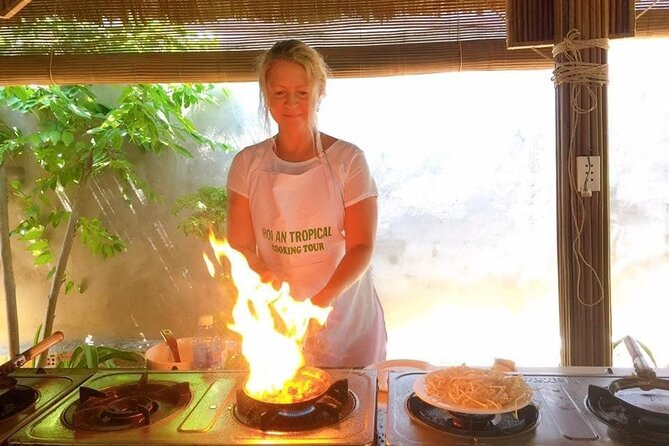
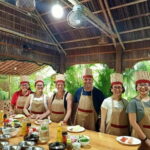
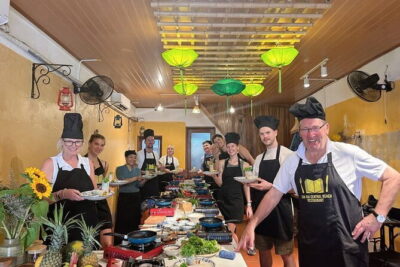
The cooking portion is taught by a chef, and the name you will most commonly hear is Chef Hai. The teaching is built around fundamentals, so it is not just a one-time demo. You learn differences between ingredients and traditional methods, which is what lets you repeat the food later.
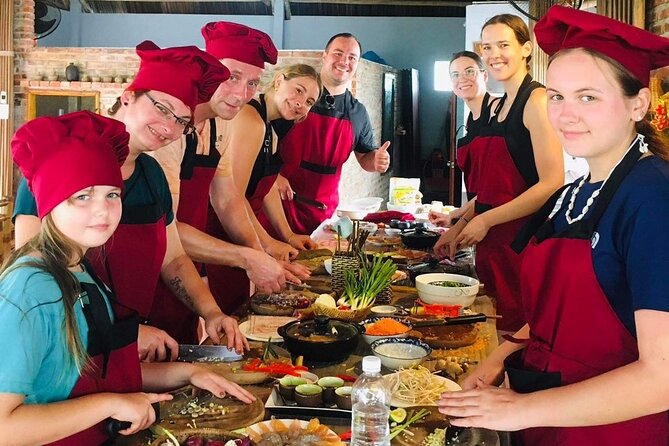
The key promise here is that you cook four dishes of Vietnamese food. That is the difference between a short tasting and a class that genuinely builds your confidence. If you leave hungry, that is a miss, and the class is designed to keep you fed while you learn.
I like that the instruction is method-focused. Instead of only telling you what to do, you are coached on how ingredients behave, and why certain steps matter. That means when a sauce changes thickness, or when herbs lose aroma, you start recognizing what is happening rather than just following steps.
Also, pay attention to the “small technique” moments. Those are the parts that make your home version taste right. For example, how you prep herbs, when you add aromatics, and how you balance vegetables with sauce are exactly the kind of fundamentals you want to remember.
More Hoi An lantern evenings, food walks, village rides, island trips, and central Vietnam day tours to compare



The real value: why four dishes teaches Vietnamese flavor, not just recipes
Vietnamese cooking is all about balancing multiple elements at once: herbs, fresh vegetables, acidity, saltiness, and that signature “comfort” feeling from familiar sauces. This class is built to teach that balance through action, by having you cook four dishes and see how the building blocks repeat across meals.
Even without dish names in the details you are given, you can still expect that the instruction connects ingredients you saw at the market and in Tra Que back to what you are making. That is what makes the experience stick. You are not learning random steps, you are seeing how the same core produce shows up in different ways.
Another value point is that the class teaches you ingredient differences. You are not just told to use green herbs and assume they are interchangeable. You learn why one leaf matters more in one dish than another, and how freshness affects the end taste.
And yes, it is fun. Making the food yourself is what turns “tasty” into “I understand why it tastes that way.” When you take that understanding home, you can upgrade your future cooking without needing a guide beside you.
Price and logistics: why $29 feels like a fair deal
The price is $29.00 per person, and the timing is about 4 hours 30 minutes. When you spread that across a market stop, a vegetable village visit, and a long cooking class with multiple dishes, it starts to look reasonable fast.
You also get value from what is included. Admission tickets are listed for the market and for Tra Que, and the cooking portion at the restaurant is listed as admission free. That means your money is going primarily toward guided time and instruction, not surprise add-ons.
Another element that improves value is the group size cap of 12 travelers. With a smaller group, you spend less time waiting and more time actually cooking. That matters in a hands-on class where everyone needs room and attention.
Pickup is offered, and there is a mobile ticket. Even if you prefer to navigate yourself, pickup can reduce the stress of getting to a countryside-style route. Just keep in mind that the day depends on good weather, so you are trading flexibility for a more outdoor-focused experience.
Timing, comfort, and who this half-day tour fits best
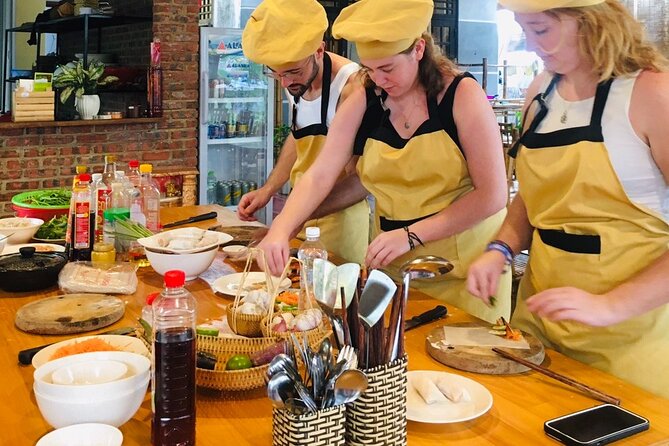
This is a good fit if you like food that has a backstory you can actually see. You get market ingredients, organic farming context, and then a cooking class that uses what you learned. If you want Vietnamese food in a way that is practical and not just performative, this one works.
It is also a strong choice if you want guided structure. The combination of ingredient talk, herb learning, and traditional methods means you do not have to guess what to do with unfamiliar produce. That helps even if your cooking skills are basic.
On the other hand, it can feel like a fast-moving day outdoors. The market and farm stops are relatively short, but you still have heat and sun on your side. If you are someone who likes long indoor experiences only, you might find the pacing too outdoorsy.
Overall, this tour suits couples, small groups, and anyone who wants to learn. Solo travelers also fit well because the group size is small and the class format creates natural conversation.
Practical tips so you taste more and stress less
First, dress for warm weather. You will be outside at the market and the vegetable village, and you will enjoy the day more if you wear breathable clothes and shoes you can walk in comfortably.
Second, eat something light before you go, but do not fill up too much. The class is designed so you will be cooking and tasting four dishes, so arriving overly full can make the later bites feel less satisfying.
Third, bring a small amount of cash if you like the option of buying extra items. One detail that shows up in the experience flow is that you may have the chance to purchase fresh vegetables and herbs for your class. Even if you do not plan to buy, small cash helps when something catches your eye.
Fourth, ask questions during the cooking. The chef instruction focuses on ingredient differences and traditional methods, and those are exactly the topics that will boost your results at home. If you care about one technique, say so early.
Finally, pace your water breaks. You are moving from market to farm to Cam Thanh, and the day gets better when you stay hydrated.
Should you book this Hoi An Market and Vegetable Village Cooking Class?
If you want a half-day with a clear food payoff, I think this is a solid booking. You get hands-on cooking, not just a demo, and you also get the ingredient story that helps the recipes make sense. The small group size, the market-to-farm-to-class flow, and the chance to cook four dishes together with a chef named Hai are the big reasons to choose it.
I would skip it if you dislike outdoor time or you prefer a more relaxed, scenic day with fewer food steps. The value here is in learning and cooking, so if your goal is mostly sightseeing, you may want to pair it with something else.
If your idea of a great trip includes fresh ingredients, herbs you can name, and a meal you can recreate, this one belongs on your Hoi An list.
FAQ
How long is the Hoi An Local Market and Vegetable Village Cooking Class?
The tour lasts about 4 hours 30 minutes.
What will I cook during the class?
You will learn how to cook four dishes of Vietnamese food.
Is pickup included?
Pickup is offered.
What admissions are included?
Admission tickets are included for the Hoi An Market and Tra Que Vegetable Village, and the cooking class portion at the restaurant is listed as admission free.
How big is the group?
This experience has a maximum of 12 travelers.
What happens if the weather is poor?
This experience requires good weather. If it is canceled due to poor weather, you will be offered a different date or a full refund.
What is the cancellation policy for a full refund?
You can cancel up to 24 hours in advance for a full refund. If you cancel less than 24 hours before the start time, the amount paid is not refunded.
More Markets in Hoi An
More Shopping Tours in Hoi An
More Tour Reviews in Hoi An



Not for you? Here's more nearby things to do in Hoi An we have reviewed








Tra Que Vegetable Village Tours, compared.
 ★ 5.0Hoi An Countryside Biking Tour(Vegetable village -basket boat – fishing village)From $45216 reviews
 ★ 5.0Hoi An countryside biking – Basket Boat – Vegetable village – Local home CookingFrom $5837 reviews
 ★ 5.0HOI AN Biking Vegetable Village, Basket Boat, Coconut ForestFrom $3520 reviews
 ★ 5.0HOI AN Vegetable Village, Basket Boat, Palm Forest PRIVATE TOURFrom $4018 reviews
 ★ 5.0Tra Que Village Cycling And FarmingFrom $2515 reviews
 ★ 5.0Half Day Cooking Class At Tra Que Vegetable Village Hoi AnFrom $719 reviews
 ★ 5.0Cooking Class with Tra Que Eco Farm & Local Market DiscoveryFrom $295 reviews
 ★ 3.7Farming with Farmers at ancient vegetable Village “Tra Que”From $413 reviews
Browse the lists this tour appears in