
REVIEW · TRA QUE VEGETABLE VILLAGE TOURS
Cooking Class with Tra Que Eco Farm & Local Market Discovery
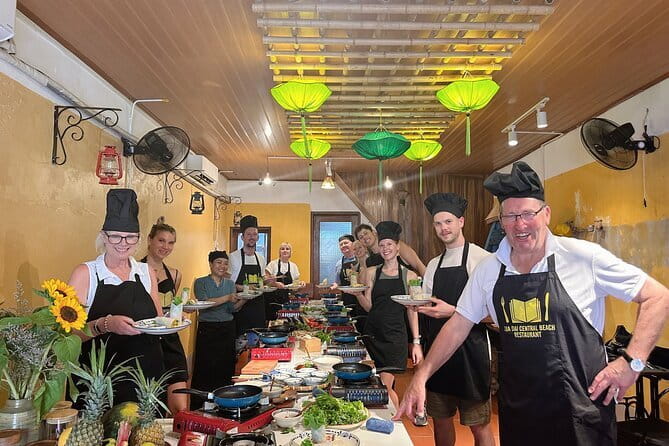
Cooking in Hoi An starts with the garden. In this half-day class, you visit Tra Que Vegetable Village and then head to the Hoi An market to pick the ingredients you will actually cook later.
The hands-on cooking is the second big win. You cook 4 local dishes yourself with a guide and chef team that work in clear English, with support you can actually follow, and a small group (up to 10). One practical consideration: if you care about getting photos and recipes after class, ask ahead how they are shared, since a previous participant reported a delay.
Key Highlights Before You Go
- Tra Que Vegetable Village farm time: learn how herbs and greens are grown, then try small tasks on site
- Market practice with bargaining help: learn what good produce looks like before you buy
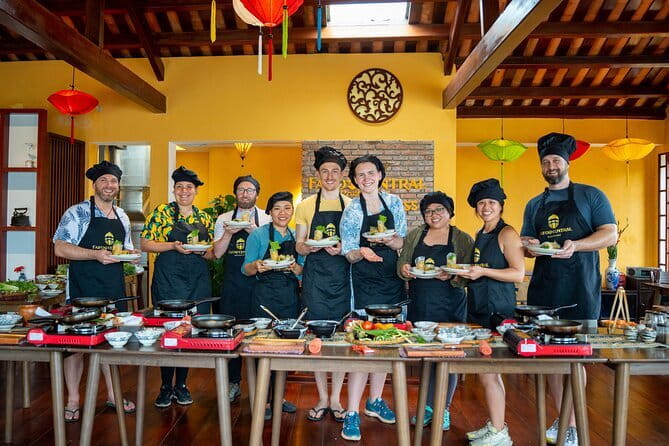
- Cooking 4 dishes hands-on: you cook, not just watch, with instruction from the chef team
- Small group size (max 10): easier questions, less waiting, better pacing
- Included lunch plus drinks and dessert: you leave fed, not just educated
- English-speaking guide/chef team: guidance stays understandable from farm to kitchen
From Hotel Pickup to Tra Que Vegetable Village Farm Work
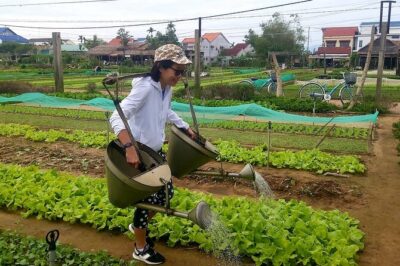
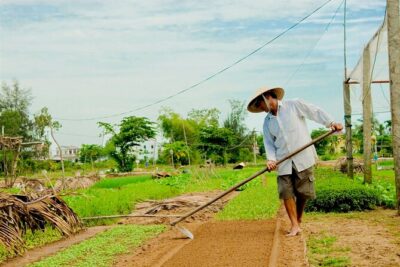
Your morning starts with a hotel pickup around 8:15 to 8:30 am, then it is straight out to Tra Que Vegetable Village, a farming area known for growing vegetables and herbs for a very long time. This is not a quick photo stop. You spend real time walking the fields and learning what is grown and why.
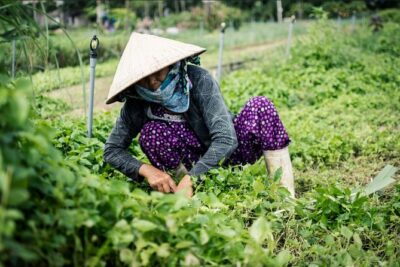
What I like about Tra Que in a class like this is that it makes the food make sense. Instead of memorizing ingredient names, you see them growing. You get a feel for how greens and herbs differ by leaf type, smell, and how they hold up in cooking. The guide also explains traditional farming routines, which helps you understand why some ingredients taste sharper or more aromatic.
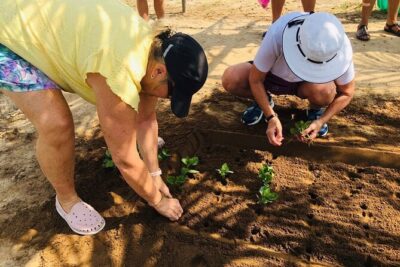
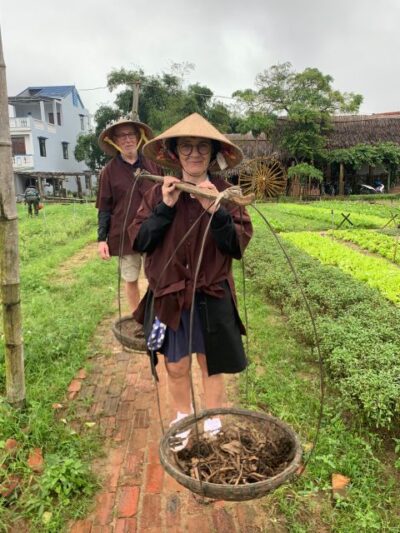
You might also try a farm activity, the kind of small hands-on work that makes the whole trip more memorable. It is also a nice reset from Hoi An’s usual traffic and shopfront vibe, because you are out in open air with an easy, day-in-the-life pace. Expect some time walking around, plus a calm pause for tea in the village atmosphere.
One more practical note: morning farm visits can get hot fast. Wear breathable clothing and bring sunscreen. Even if you are not doing strenuous work, you will still be outside long enough for it to matter.
You can also read our reviews of more shopping tours in Hoi An
The Hoi An Market Lesson: How to Choose Produce Like a Local
After the farm, you head to the Hoi An local market in the late morning window. This part is where many cooking classes fall short, because they rush you through. Here, the emphasis is on talking with sellers and learning what to buy.
I find markets are easiest when you have a plan for what you need. That is exactly what this class gives you. You learn how to pick fresh ingredients, and you learn how bargaining works without turning the whole thing into an awkward performance. You will likely be guided through the process: ask, compare, choose, and then confirm you are getting good quality.
A big value point is that this market stop connects directly to the meals you will cook. When you see herbs, vegetables, and common staples in their natural habitat, you start to understand which items are used for freshness, which ones add fragrance, and which ones add body to a dish.
Also, it helps that the guide and chef team use practical English. One past participant specifically praised the chef’s English, saying the instruction was clear. Another mentioned a guide named Ngoc leading the market portion. That kind of local guidance makes it much easier to focus on the food rather than translating every moment in your head.
Welcome Drinks at the Cooking House, Then Real Cooking Begins
Around late morning you arrive at the cooking house for welcome drinks. This is a simple but smart setup. You get a moment to sit, settle, and hydrate before the kitchen work ramps up.
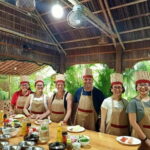
From there, you move into the cooking class where the goal is clear: you cook 4 different local dishes, using techniques you actually learn step by step. The chef team is described as humorous and supportive, which matters more than it sounds. A good cooking class keeps you relaxed, not nervous, especially when ingredients are unfamiliar.
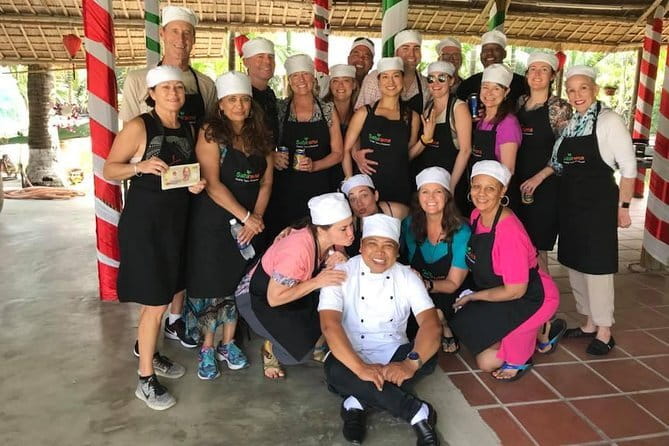
Group size here is small, up to 10 travelers, so you should feel comfortable asking questions. That is a big deal in a kitchen. If you are stuck on knife work or confused about timing, a large class setup can leave you waiting. A smaller group means more attention.
Also, plan your mindset. This is not a polished tasting event where you just watch plating. You will be handling ingredients and preparing dishes. If you go in curious and willing to try, you will get a lot more out of the experience.
The Skills You Get While Cooking 4 Vietnamese Dishes
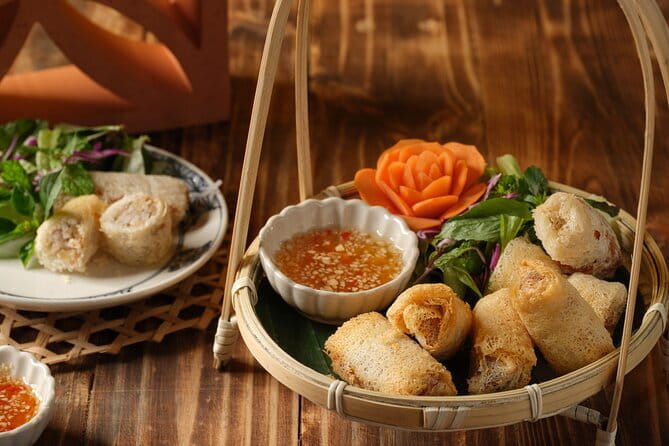
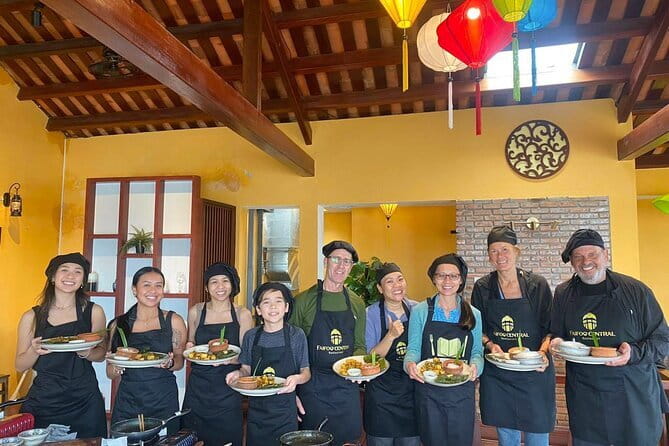
The class teaches you how to cook Vietnamese food by having you participate in the process. You cook 4 different local dishes, and you learn cooking skills along the way, not just memorized instructions.
What you learn tends to fall into a few skill categories that travel well beyond the classroom:
- Ingredient handling and freshness
You already practiced buying produce at the market, so the kitchen learning feels connected. You will likely see why fresh herbs are used near the end, why certain greens keep their bite better than others, and how different herbs contribute distinct flavors.
- Flavor building with common Vietnamese basics
Vietnamese cooking often relies on balancing salty, sour, sweet, and fragrant notes. Even if you do not know the theory, you will start to recognize the rhythm of mixing, tasting, adjusting, and rebalancing.
- Timing and heat control
A lot of Vietnamese dishes depend on quick cooking or careful timing. In a class like this, you are not just mixing. You are actively managing heat and pace so your dish comes out right.
- Assembly and texture
Many local dishes are judged by texture, whether it is crispness, tenderness, or how things hold together. When you make it yourself, you learn what to watch for, and you also learn how to fix small issues on the spot.
One highlight from a previous participant: they said the 4 dishes were brilliant and that the chef and guide (and even the overall team) made the experience fun and educational. Another praised the class as a must do, saying they cooked everything themselves and left very full. That matches the spirit here. You are learning the how, not just consuming the result.
You may notice the class includes guidance that helps you understand how Vietnamese dishes are built from simple ingredients. That is useful if you plan to cook at home later, because you can replicate the method rather than only the exact recipe.
What’s Included: Lunch, Drinks, Dessert, and Why It Matters
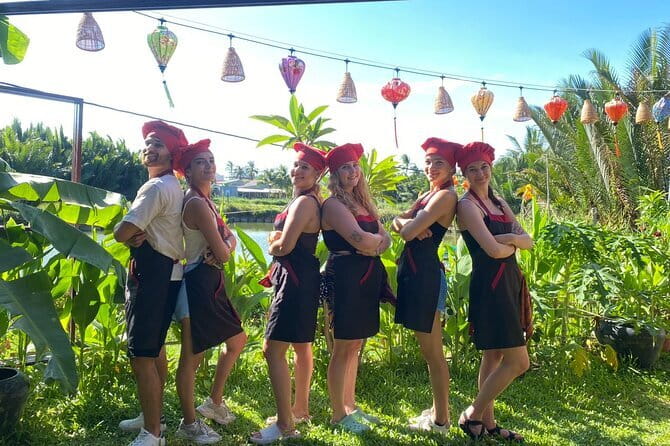
This tour is priced at $29, which is the first thing to look at. But the value comes from what you get for that money, not just the number.
Included items are:
- transportation
- English guide and chef
- entrance tickets to Tra Que Vegetable Village
- lunch from the class
- drinks (1 bottle of water, plus a choice of 1 beer or 1 soft drink, plus a welcome drink)
- dessert
What I like about the inclusion is that it reduces surprise costs. If you are trying to keep your budget stable in Hoi An, you do not want half a day eaten up by add-ons. Here, the meal and key drinks are part of the package.
Also, you get enough food that you will not feel like you are just nibbling between stops. You finish the experience around 1:30 to 2:00 pm. That timing usually works well if you have an afternoon to roam or a late lunch somewhere else is not on your agenda.
Not included: other drinks like wine, juice, smoothies, lassies, and cocktails. So if you have strong preferences, you might want to plan those separately.
More Hoi An lantern evenings, food walks, village rides, island trips, and central Vietnam day tours to compare



Price and Value: Is $29 a Smart Use of Your Time?
For a half-day cooking class that includes a farm visit, a market stop, transportation, and lunch, $29 is a reasonable deal. The biggest reason is the structure: you are doing three meaningful stages, not just sitting in a kitchen.
At the market, you learn selection and bargaining with guidance. At Tra Que, you get context for the ingredients. In the kitchen, you actually cook. That combination is what makes it worth it for most people.
Here is the trade-off to consider. This is priced as an accessible local experience, not a private fine-dining cooking studio. So you should expect a working-class style pace. It can still feel very enjoyable, just not ultra-luxury.
If you want a cooking class where you learn practical technique and eat well, without blowing your daily budget, this one fits.
Small Group Energy and the English-Speaking Advantage
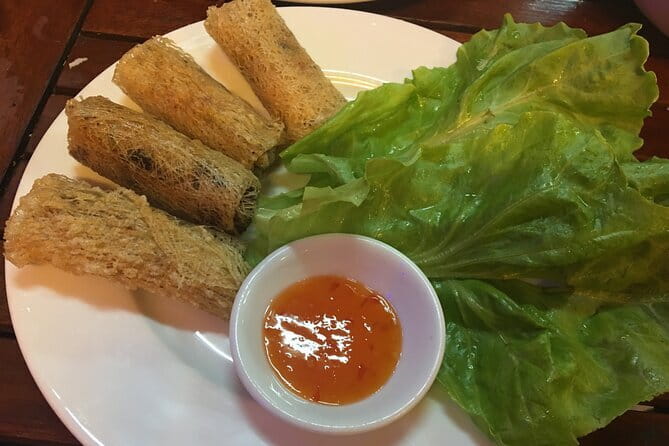
You are capped at 10 travelers, which changes the experience. In a smaller class, you can ask for help without feeling like you are holding everyone back. It also helps the chef and guide keep a steady flow through the dishes.
The English-speaking part also matters. Clear instruction means you spend your attention on cooking, not guessing. One participant singled out the chef’s English as perfect, and that is the difference between a class you remember fondly versus one that feels like a blur of gestures.
If you are traveling solo, this can be a nice way to meet people without being stuck in a large group. If you are traveling as a couple, it still feels social, but you are not fighting for space or time.
Practical Tips to Get Better Results in the Kitchen
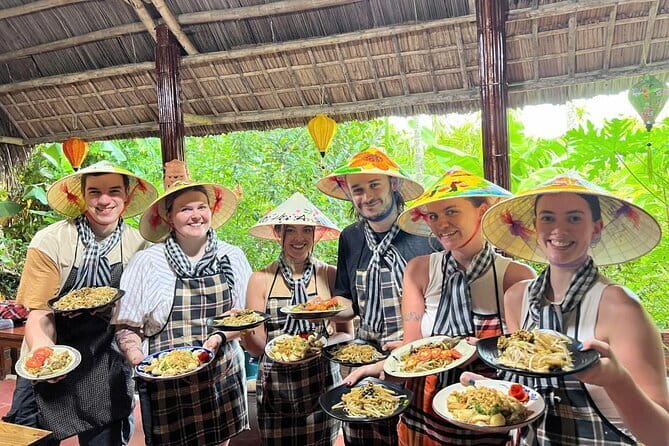
A few things that will help you enjoy the day more:
- Wear closed-toe shoes. You will be walking outside and then cooking.
- Bring light layers. Morning can start cooler, then warm up during farm time.
- Use the market practice. If the guide offers suggestions on what to look for, pay attention. It will make the cooking steps easier.
- Ask how photos and recipes are handled. One past participant mentioned needing photos and recipes and not getting them right away. You cannot change everything, but you can reduce uncertainty by clarifying the process early.
- Expect to eat what you make. This is not just a sampling class. You will leave full, which is part of why the value is strong.
Who Should Book This Cooking Class (And Who Might Pass)
This tour is a great match if you:
- want to learn Vietnamese cooking by doing it, not just watching
- like hands-on food travel, including farm context and ingredient shopping
- enjoy meeting local sellers and understanding how to choose produce
- want an easy morning plan in Hoi An with transportation and lunch included
You might choose something else if you:
- only want a kitchen-only class with zero outside time
- have strict dietary rules you need confirmed ahead of time (the data here does not spell out options)
- strongly prefer to get post-class materials like photos and printed recipes instantly, with no follow-up
Should You Book This Cooking Class?
If you want a half-day plan that connects food to place, I think this one is a solid book. The combination of Tra Que Vegetable Village, guided market shopping, and cooking 4 dishes with an English-speaking chef team is the kind of structure that makes the learning stick. Add included lunch, drinks, dessert, and small group size, and the $29 price starts to look like a fair trade.
Book it if you are curious and ready to get your hands busy. Skip it if you are looking for a purely passive experience or you hate the idea of outside walking and market interaction.
FAQ
Where does this cooking class take place?
The experience runs in Hoi An, including a visit to Tra Que Vegetable Village, a stop at the local market, and the cooking class at Faifoo Central Restaurant Hoi An.
How long is the experience?
It lasts about 5 hours.
What time does pickup start?
Pickup starts around 8:15 to 8:30 am, with the start time listed as 8:30 am.
When does the class end?
The class finishes around 13:30 to 14:00.
How many people are in a group?
The maximum group size is 10 travelers.
What do I cook during the class?
You will cook 4 different local Vietnamese dishes.
What is included in the price?
Included are transportation, an English guide and chef, entrance tickets for Tra Que Vegetable Village, lunch, drink(s) (1 bottle of water and 1 beer or 1 soft drink), a welcome drink, and dessert.
What drinks are not included?
Other drinks such as wine, juice, smoothies, lassies, and cocktails are not included.
Is there free cancellation?
Yes. You can cancel for free up to 24 hours in advance for a full refund.
More Markets in Hoi An
More Shopping Tours in Hoi An
More Tour Reviews in Hoi An



Not for you? Here's more nearby things to do in Hoi An we have reviewed









Tra Que Vegetable Village Tours, compared.
 ★ 5.0Hoi An Countryside Biking Tour(Vegetable village -basket boat – fishing village)From $45216 reviews
 ★ 5.0Hoi An Local Market and Vegetable Village Cooking ClassFrom $2993 reviews
 ★ 5.0Hoi An countryside biking – Basket Boat – Vegetable village – Local home CookingFrom $5837 reviews
 ★ 5.0HOI AN Biking Vegetable Village, Basket Boat, Coconut ForestFrom $3520 reviews
 ★ 5.0HOI AN Vegetable Village, Basket Boat, Palm Forest PRIVATE TOURFrom $4018 reviews
 ★ 5.0Tra Que Village Cycling And FarmingFrom $2515 reviews
 ★ 5.0Half Day Cooking Class At Tra Que Vegetable Village Hoi AnFrom $719 reviews
 ★ 3.7Farming with Farmers at ancient vegetable Village “Tra Que”From $413 reviews
Browse the lists this tour appears in