

REVIEW · WALKING TOURS
Hoian Old Town – Immersive Free Walking Tour
Hoi An can feel like a time machine on foot. This 2-hour Old Town walk turns the big sights into a simple route you can actually enjoy, with stops that connect the town’s trading-port story to the buildings you see today. I especially liked the Japanese Covered Bridge area and how the guide brings those streets to life with local stories.
I also liked the traditional art performance stop, with a scheduled dance and music segment that helps break up the walking. One consideration: you’ll need a UNESCO entrance ticket (5 USD / 120,000 VND) to go into the UNESCO sights along the way, and that cost is separate from the tour price.
Quick hits you’ll care about
- Small group (up to 5 people), so you get real back-and-forth with your guide
- English speaking guide who shares stories locals tell, not just facts off a sign
- Japanese Covered Bridge and multiple historic houses on foot
- Hoi An Traditional Art Performance Theatre, about 45 minutes of show time
- Tip-based format, with suggested amounts for a nice or great experience
- Ends at Hoi An Market, a practical place to keep exploring after the walk
Hoi An Old Town on foot, why 2 hours hits the sweet spot
Hoi An is a UNESCO World Heritage town, but the part that makes it memorable is how close everything feels when you walk. In a short time, you can pass from one era to the next just by turning a corner, and the streets mostly keep the slow, human pace you want on vacation.
This tour works well because it’s built around key landmarks you can actually see and understand without rushing. You get enough time to look closely at the ancient houses and the assembly halls that reflect Hoi An’s past trading links. And you get a built-in pause at the performance theatre, so your feet get a break.
Because it’s only 2 hours, it’s also a good plan if you’ve just arrived or you want to save your energy for the rest of the day. If you try to do everything alone, you often waste time figuring out where to go next. Here, your route is already handled.
You can also read our reviews of more walking tours in Hoi An


Finding your guide at 125 Phan Chu Trinh, and what “small group” changes
You meet at 125 Phan Chu Trinh. Your guide, Quoc Le, will be wearing a white T-shirt and has a shoulder bag, so it’s pretty easy to spot the right person.
The small group limit, up to 5 participants, matters more than it sounds. In a crowd, you end up walking behind everyone and scanning for landmarks. In a tiny group, you can ask quick questions, get directions as you go, and slow down when something catches your eye. It also makes the tour feel more personal, especially during story-heavy stops like old houses and assembly halls.
Price and your UNESCO ticket math, the part to budget up front
The tour price is 10 USD per person for about 2 hours. It’s also a tip-based walk, meaning the ticketed price is the baseline and you decide the rest.
Then there’s the UNESCO entrance ticket you’ll need to enter UNESCO attractions on the route: 5 USD (120,000 VND) per ticket. Plan on that add-on when you budget, because it’s not optional if you want to access those sites.
So the value equation often looks like:
- Tour cost: 10 USD
- UNESCO ticket: 5 USD
- Then tips, based on how you feel about the guide and your experience
On a day when entrance fees elsewhere can quietly pile up, getting a route that hits multiple historic sites in a short time is a big part of the appeal.
Japanese Covered Bridge, the postcard landmark with a deeper meaning
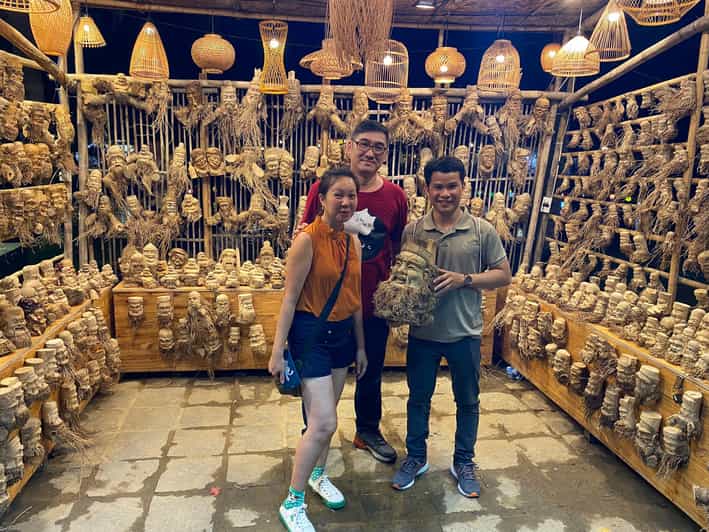
The walk starts with a stop at the Japanese Covered Bridge pagoda area, around 10 minutes. Yes, it’s famous. But the practical reason this stop works early is that it gives you a visual anchor for the rest of the route.
A covered bridge like this is more than a photo op. It reflects how Hoi An’s trading life brought different communities together, and how those communities shaped the architecture and religious spaces you still see. When you stand there with a local guide, you start noticing details in the surrounding buildings and layout, not just the bridge itself.
If you care about atmosphere, go slowly here. Even in a short stop, you can take in the bridge’s shape, the way people move around it, and the sense that the town was designed for real daily use, not just ceremonies.
Tan Ky Old House, seeing how a merchant town lived
After the bridge, the tour heads to the Old House of Tan Ky for another 10 minutes of visiting and sightseeing.
Old houses in Hoi An are where the trading-port story becomes human. You see spaces that feel made for everyday life, and you can start understanding why wealthy merchants invested in homes that were practical as well as impressive. The layout, the front-facing street presence, and the way the interior space works all help you picture how a town built on commerce functioned day to day.
This is also a good stop for learning how locals talk about their heritage. The guide’s job here is to connect what you see to culture and tradition, so you don’t just end up reading a label and moving on.






Hoi An Traditional Art Performance Theatre, a 45-minute break that’s actually worth it
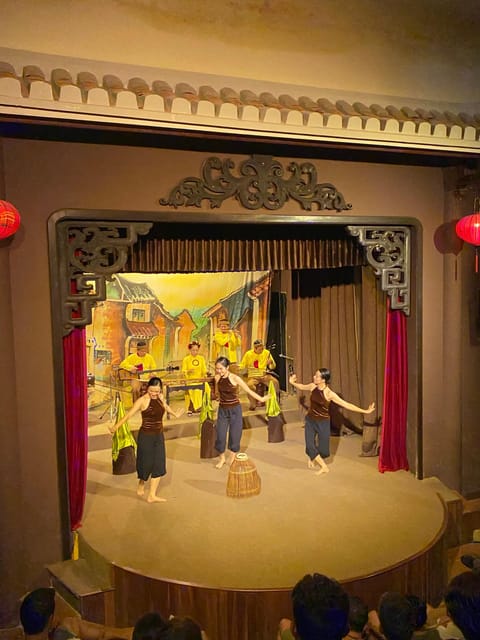
One of my favorite parts of this type of town walk is when there’s a scheduled pause. Here, you get it at the Hoi An Traditional Art Performance Theatre, with about 45 minutes for a concert and dance show.
This stop changes the pace in a good way. You stop walking, you sit down, and you experience the performance in a way that makes sense after you’ve spent time looking at the historic buildings. It’s also a straightforward chance to hear and see traditional forms in a structured time window, instead of hoping you’ll find something later on your own.
Even if you’re not a die-hard performance fan, treat this as part of the cultural orientation. It helps you understand that Hoi An’s heritage isn’t only in stone. It lives in music, dance, and storytelling too.
Fujian and Cantonese assembly halls, community power in architecture
Next up is the Fujian Assembly Hall, visited for about 10 minutes, and the route also includes a Cantonese Assembly Hall stop.
Assembly halls matter in Hoi An because they weren’t just decorative. They were community buildings for specific groups, and they reflect how different Chinese communities organized themselves in the town. When your guide ties these halls back to Hoi An’s trading past, the buildings stop feeling random.
Look at the halls the way you’d look at a town center. Notice how they relate to their surrounding streets and how the structures signal a sense of identity and organization. In a small group, you can ask questions and get clarification without feeling rushed.
This is also one of those stops where you’ll get the most from listening. The architecture is there, but the real value is in the local explanations.
Kazik Park and Phung Hung Ancient House, balancing big sights with quieter corners
After the assembly hall segment, the tour includes Kazik Park. From a reader perspective, parks might sound like a random detour. In a town where most of what you see is historic buildings, a park break is often what keeps you from feeling overwhelmed.
It gives you room to reset your eyes. It also creates a natural breathing space between the community buildings and the old houses deeper in the route.
Then the tour heads to the Phung Hung Ancient House for sightseeing (also around 10 minutes). This stop brings you back to the everyday scale of old Hoi An. Ancient houses here help you understand the town as a lived-in place, not only a museum-like backdrop.
If you’re the type who loves small details, this is where you’ll appreciate the contrast. You’ll notice differences in style and layout between houses, and you start seeing patterns in how the town evolved with its visitors and trading relationships.
Ending at Hoi An Central Market, how to keep the momentum
The tour finishes at Hoi An Central Market, which is a practical way to end a walking experience. Instead of dropping you somewhere hard to connect with, you end in a place where you can immediately keep exploring on your own time.
Markets are also where the town feels current. Even if you don’t plan to buy much, you can still use the market area to:
- get ideas for what to try later
- pick up small gifts
- watch the flow of locals and vendors
This is a smart finish because it gives you options. You can linger, take photos, or head out for the next part of your day.
Rain or shine, and what to wear so the tour stays comfortable
The tour operates rain or shine, so plan for weather. Bring comfortable clothes, since you’ll be walking and standing at multiple stops.
Also note the style rules: loose clothing and see-through clothing are not allowed. It’s a practical, respectful requirement for visiting heritage sites and performance spaces. If you’re traveling light, choose something easy to move in and breathable if it’s hot.
There’s a specific note that the tour is not suitable for people over 95 years. If that applies, you should consider a slower, more flexible option.
Tips, what “pay what you want” really means here
This is a tip-based tour, meaning it’s set up so you can pay what you feel is appropriate.
Your guide includes a simple suggestion:
- 250,000 VND per person for a nice experience
- 300,000 to 400,000 VND per person for a great experience
I like when a guide gives clear guidance like this. It keeps you from having to guess, and it makes tipping feel fair and straightforward.
If you do the performance stop, enjoyed the stories, and found the route easy to follow, tipping in the higher range makes sense. If you’re mostly there for the landmarks and you’re not as engaged with explanations, the lower suggested amount can still be appropriate.
Who this tour suits best, and who might want a different plan
This tour is a strong fit if you want:
- an English speaking guide
- a small group experience
- a route focused on classic Old Town landmarks
- a mix of historic buildings and a traditional art show
- a simple way to understand Hoi An beyond just sightseeing photos
It’s also useful if you arrive and want to get your bearings fast. Two hours is enough to learn the town’s rhythm and major stops so the rest of your day feels easier.
You might consider a different option if:
- you dislike any ticketed UNESCO add-on costs
- you’re not interested in cultural performance or guided storytelling
- you have very limited mobility and need a longer, less stop-and-go plan
Should you book this walking tour of Hoi An Old Town?
I’d book it if you want a short, well-paced overview of UNESCO Old Town with a guide who connects the dots between buildings, culture, and the town’s trading past. The 10 USD tour price is fair, and the small group size keeps the experience from feeling like a cattle call.
The one reason to pause is budgeting for the 5 USD UNESCO ticket plus the fact that you’ll likely want to tip. If you’re okay with that, you’re set up for a smart, practical introduction.
If you want a compact way to see the Japanese Covered Bridge, visit key historic houses like Tan Ky and Phung Hung, and then watch traditional performance at the Hoi An Traditional Art Performance Theatre, this tour is a very workable choice. It’s the kind of plan that leaves you with both photos and understanding, and it ends where you can keep exploring right away.
FAQ
How long is the Hoi An Old Town walking tour?
The tour runs for 2 hours.
What is the meeting point address?
The meeting point is at 125 Phan Chu Trinh.
Is there an English speaking guide?
Yes, the tour includes a live English speaking tour guide.
How many people are in the group?
The group is limited to 5 participants.
How much does it cost?
It costs 10 USD per person.
Do I need to buy UNESCO entrance tickets?
Yes. Entrance tickets are required for UNESCO attractions, priced at 5 USD (120,000 VND).
Is the tour tip-based?
Yes. It is a tip based tour, where you pay what you feel is appropriate. The guide suggests 250,000 VND per person for nice and 300,000 to 400,000 VND per person for great.
What should I bring and wear?
Bring comfortable clothes. Loose clothing and see-through clothing are not allowed.
Is it worth booking, and will I enjoy it?
If you like walking through historic areas with a small group, want an easy introduction to the major Hoi An landmarks, and don’t mind adding the UNESCO ticket cost, you should enjoy this tour. The short 2-hour format and the scheduled traditional performance stop make it a practical way to learn the town’s culture without spending your whole day on planning.
More Walking Tours in Hoi An



More Tours in Hoi An





More Tour Reviews in Hoi An
Not for you? Here's more nearby things to do in Hoi An we have reviewed











Walking Tours, compared.
 ★ 5.0Evening Walking Food Tour, folk game and lantern boatFrom $39665 reviews
 ★ 5.0Hoi An Ancient Town Walking Tour with a LocalFrom $9517 reviews
 ★ 4.9Hoi An Ancient Town – Walking Tour with Local GuideFrom $14385 reviews
 ★ 5.0Hoi An Street Food Walking Tour with TastingsFrom $35317 reviews
 ★ 5.0Hoi An Walking TourFrom $69269 reviews
 ★ 5.0Guided Tour to Marble Mountains & Hoi An Walking Tour , Night Market, Boat RideFrom $96218 reviews
 ★ 5.0Hoi An Night Market with Hoi an walking Tour , Colourful Lanterns, Boat RideFrom $85142 reviews
 ★ 4.4Cham Island: Underwater Walking & Snorkeling TourFrom $68112 reviews
Browse the lists this tour appears in