
REVIEW · COFFEE EXPERIENCES
Exploring Vietnamese Coffee Culture, Coffee Making in Hoi An
Hoi An coffee teaches in real time. In this 2 hour workshop, you learn how Vietnamese coffee goes from bean roasting to your cup, then you brew and taste two styles, including Ha Noi egg coffee.
What I like most is the hands-on part. You do the work, not just watch it, and you taste what you made right away. I also like the way the experience connects flavor to process, from harvesting to brewing, guided by a local expert.
One drawback to consider is meeting logistics. One recent booking had trouble finding the place because the meeting point differed from what was expected, and another booking reported showing up to a closed location. It is rare, but it is smart to confirm the exact meeting spot the day of your class.
Key Highlights You Will Actually Care About
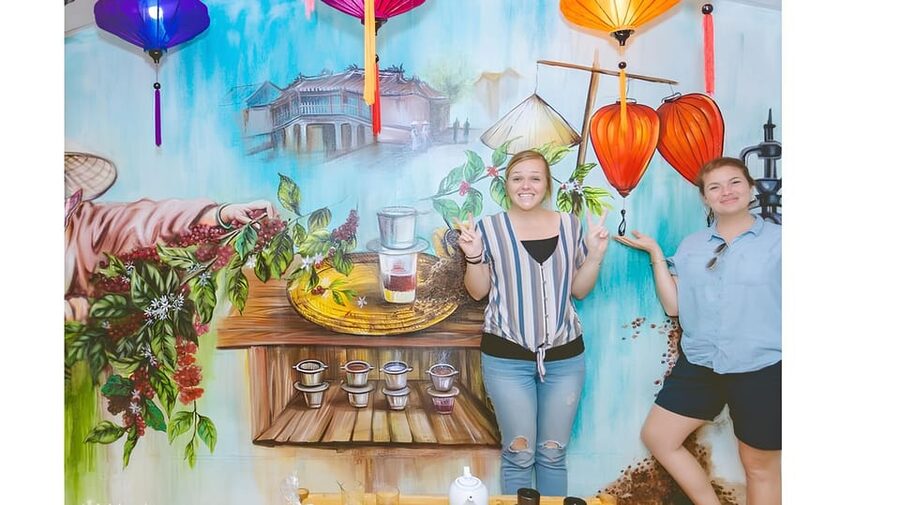
- Two Vietnamese coffee styles you make yourself, then drink while it is still fresh
- Ha Noi egg coffee included as one of the tastings and brewing lessons
- Phin filter practice so you understand how this iconic Vietnamese method works
- Coffee production story from harvesting to roasting and finally brewing
- Small-group feel and friendly staff, based on a strong attendee experience
- Take-home skills you can use with friends and family back home
Hoi An Coffee Workshop in Two Hours: What You’re Getting for About $20
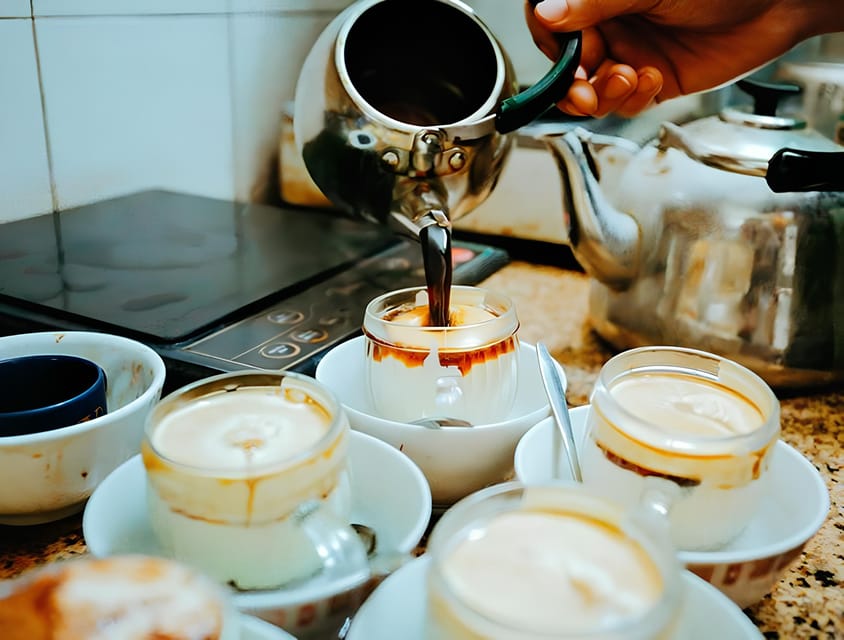
For around $20 per person, you are buying more than a tasting. You get a guided coffee making class with the ingredients and tools, plus Vietnamese tea and cookies. That matters because Vietnamese coffee is method-driven. If you only sip, you miss why the drink tastes the way it does.
This is a great deal if you want something you can recreate later. By the end, you should be able to talk someone through the process, especially the Vietnamese Phin filter brewing style. And because the workshop is only 2 hours, it fits easily into a busy Hoi An day without turning into a half-day project.
It is also a good match if you like learning by doing. You follow the journey from harvesting to brewing, then you practice the key steps yourself instead of relying on a demo.
More Hoi An lantern evenings, food walks, village rides, island trips, and central Vietnam day tours to compare



Start With Tea and a Local Expert, Then Get Straight to Coffee
Your session begins by meeting your local guide and starting with a cup of special herbal tea. That little warm-up sets the tone. Vietnamese coffee can be intense, so starting with something lighter helps you reset your palate before the darker roasts and stronger flavors show up.
From there, you get the cultural and historical context for why Vietnamese coffee became famous. You also learn traditional coffee making methods, including the role of dark roasting and how that affects bitterness, body, and aroma. The guide is the key here: they connect the steps you perform with the flavors you experience, so it does not feel like random instructions.
The best part of this opening phase is that it gives you a mental map. Once you understand what the drink is supposed to do, the brewing steps make sense. You are not just copying actions, you are learning a system.
Following Vietnamese Coffee From Harvest to Your Cup
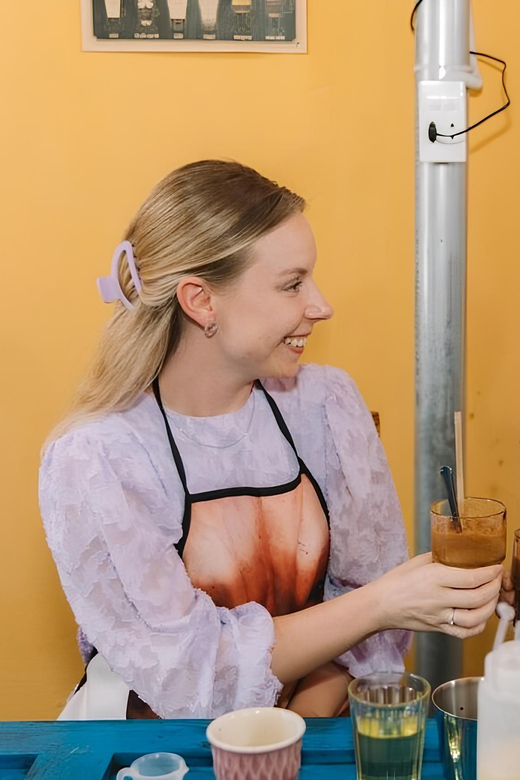
One reason this workshop feels more meaningful than a typical coffee tasting is that it follows the production path. You do not only learn how to brew. You also hear about how Vietnamese coffee gets from harvesting to the final brew.
The workshop includes time on roasting, including roasting dark beans to perfection. Dark roasting is a defining trait in Vietnamese coffee. It tends to create deeper, heavier flavors that stand up to the brewing method, and it influences the final bitterness and sweetness balance.
As you learn the production journey, you also start noticing what changes what. For example, roasting affects aroma strength and how the coffee tastes once water and time do their work. Even if you have never seen the process before, the workshop helps you connect the dots in plain language, so you can understand your cup instead of guessing.
If you are the type who loves food explanations, this part is where the workshop earns its value.
The Phin Filter Lesson: The Technique Behind Vietnamese Coffee
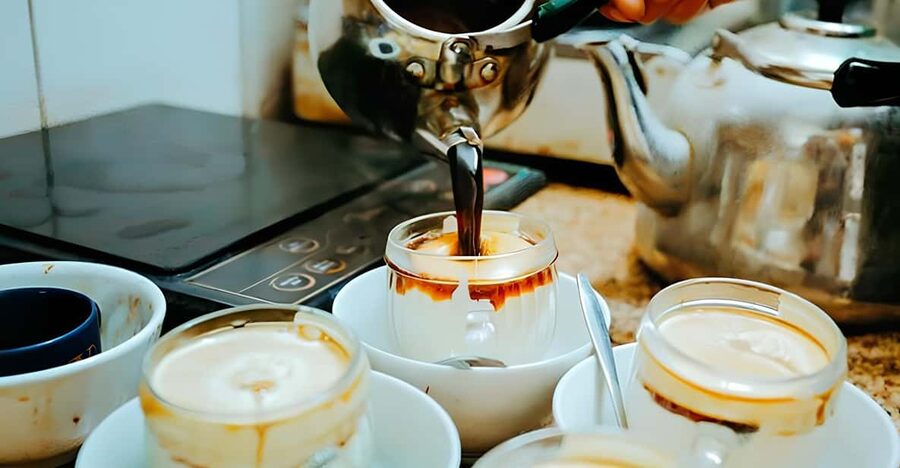
You will spend real time learning about the Phin filter, which is central to Vietnamese brewing. This is not just a tool description. You should understand how the filter works, how it affects flow rate, and why that matters for flavor.
In practical terms, the Phin method is about controlled extraction. The coffee drips slowly, and that slow pace helps develop a thicker cup with a heavier mouthfeel. When you use the Phin filter during the class, you get a first-hand sense of timing and technique, not just theory.
This is also the part that tends to make people excited, because it is different from what many travelers are used to. If you normally brew with an automatic machine or a paper pour-over, the Phin style feels simpler at first glance, but it has its own rhythm.
By the time you brew your own, you should feel more confident about what to adjust next time, like grind consistency, portioning, and timing. Those are the skills that turn this from a one-time tasting into something you can actually do at home.
Two Coffee Styles You Will Brew and Taste, Including Ha Noi Egg Coffee
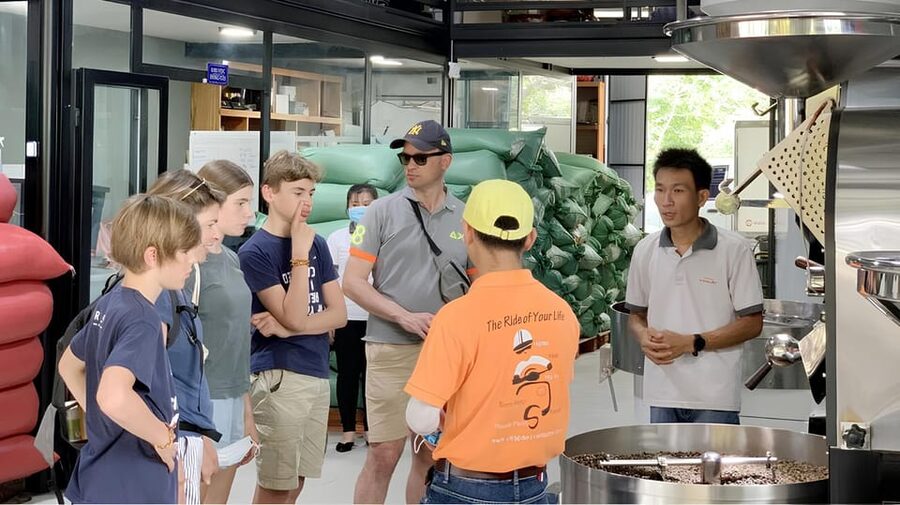
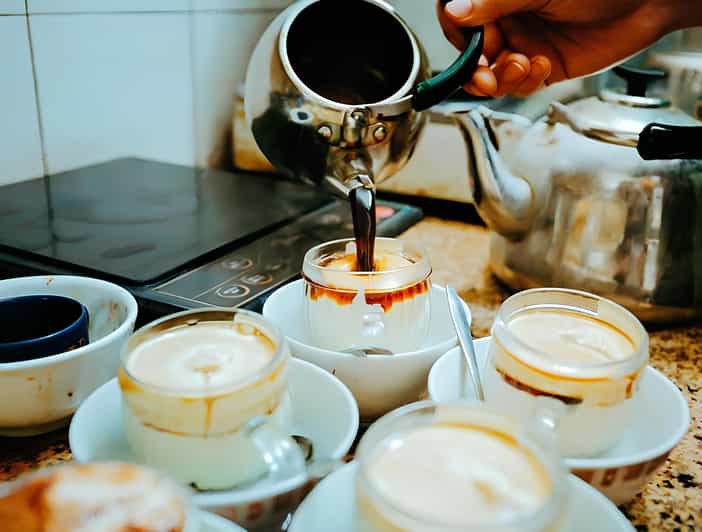
The class includes making and tasting two different Vietnamese coffee styles. One of them is Ha Noi egg coffee, which is known as a signature style in Vietnam.
Even without getting overly technical, tasting two styles is smart because it shows how flexible the same coffee beans can be. You will likely notice differences in texture, sweetness balance, and how the flavor lands on your tongue. That contrast helps you understand what each style is trying to achieve.
You also get to explore a range from black coffee to egg coffee styles, based on what the workshop teaches you to make and try. That means you are not only learning one recipe. You are learning how Vietnamese coffee can shift depending on method and preparation choices.
If you are a “taste then learn” person, you will appreciate this. You taste, learn the why, then taste again with more context. It makes the session feel like progress, not a single long sip.



Roasted Dark Beans, Brewing Time, and the Flavors You Can Talk About
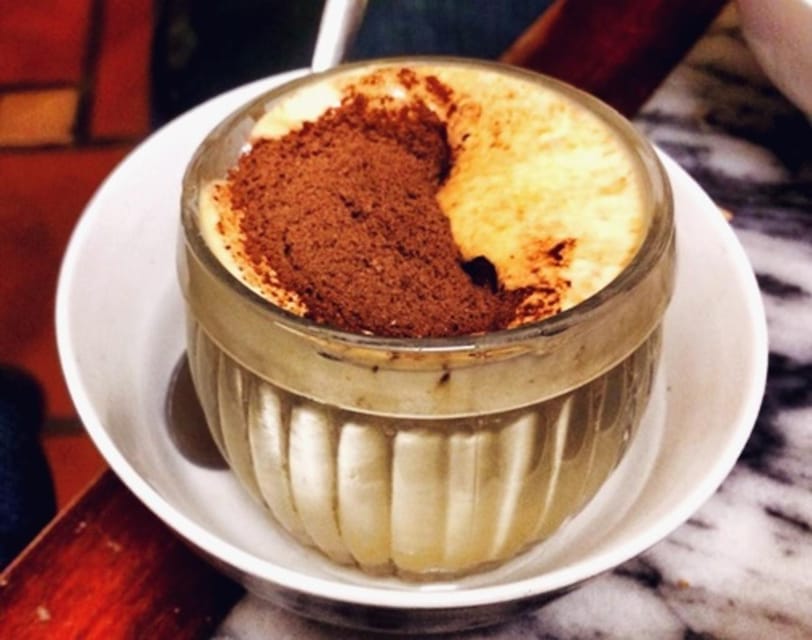
A big part of Vietnamese coffee culture is that it is not afraid of dark roast. In this workshop, roasting dark beans is part of what you are taught, and that explains why many Vietnamese cups feel bold and full-bodied.
As you follow the steps from roasting to brewing, you start picking up on how flavor changes with temperature and extraction time. Slow dripping through the Phin filter can make the coffee feel rounder and heavier. Strong roasting can add smoky notes and deeper bitterness, which often balances with sweet elements used in common styles.
The guide also shares narratives behind the flavors, which is more than trivia. When someone explains why people drink coffee this way, you understand it as a living tradition, not a “quirky drink trend.”
And yes, you do not leave with just stories. You get to drink what you make, alongside a cookie. That pairing matters because it changes how you experience sweetness. You end with something pleasant, not just straight coffee intensity.
The Take-Home Skill: What You’ll Be Able to Share After 2 Hours
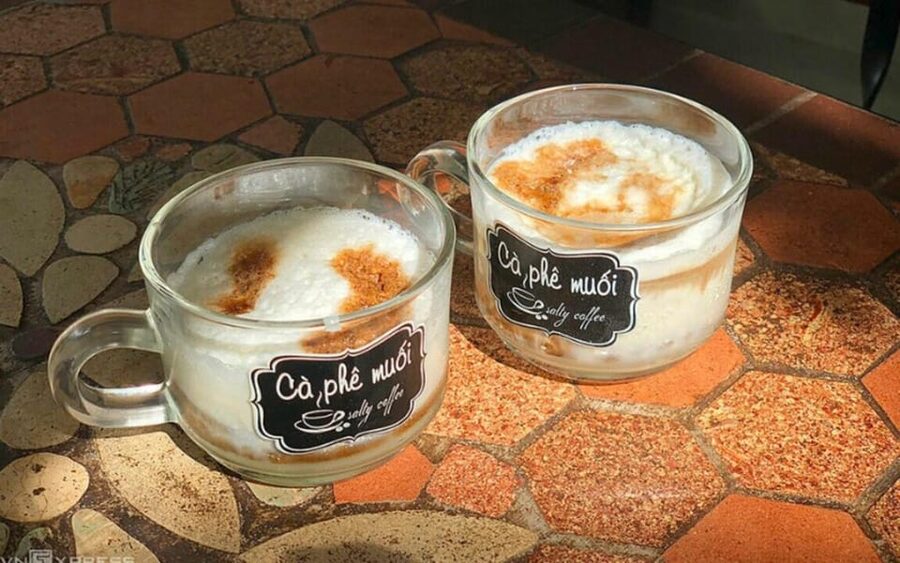
One of the standout promises here is that you take home unique coffee-making skills. That matters more than most people realize, because the value of a class is only real if you can use it later.
At the end of your session, you should be able to explain the core Phin-filter approach and confidently brew at least one style. You will also know what makes Vietnamese coffee different, so you can recreate the vibe, not just the drink.
If you are traveling with friends, this is the kind of activity that gives you an instant conversation starter. If you are traveling solo, it can still be satisfying because you leave with a tangible ability, not just a photo.
Also, the setting includes relaxing ambiance and great music. That sounds minor, but it affects how you enjoy the class. Coffee workshops are usually about patience and attention, and a calmer environment helps you focus on what you are doing.
Small-Group Attention, Friendly Staff, and Where Things Can Go Wrong
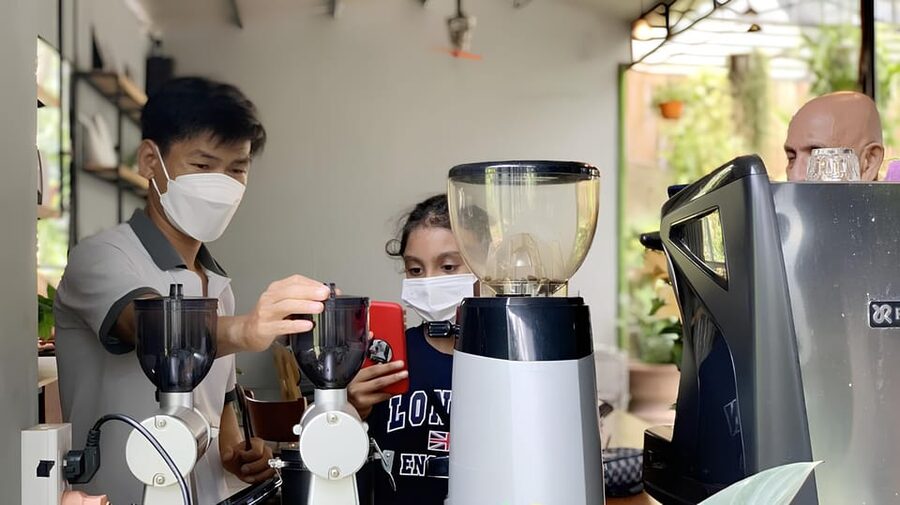
One booking experience pointed out small groups and sweet staff, and that is exactly what you want in a hands-on class. If the group is small, the guide can watch what you are doing and help with the parts that matter, especially around the Phin method.
At the same time, be realistic. A different booking had a problem finding the location because the meeting point was changed from what was expected, and another booking reported arriving to find no one there. Those are separate issues, but they share one lesson: confirm the meeting details before you leave your hotel.
My practical advice is simple. The day of the class, check the meeting instructions again close to departure time. If you are in doubt, contact the operator right away rather than waiting. You want to protect your 2 hour window.
Price and Value: Is This Workshop Worth About $20?
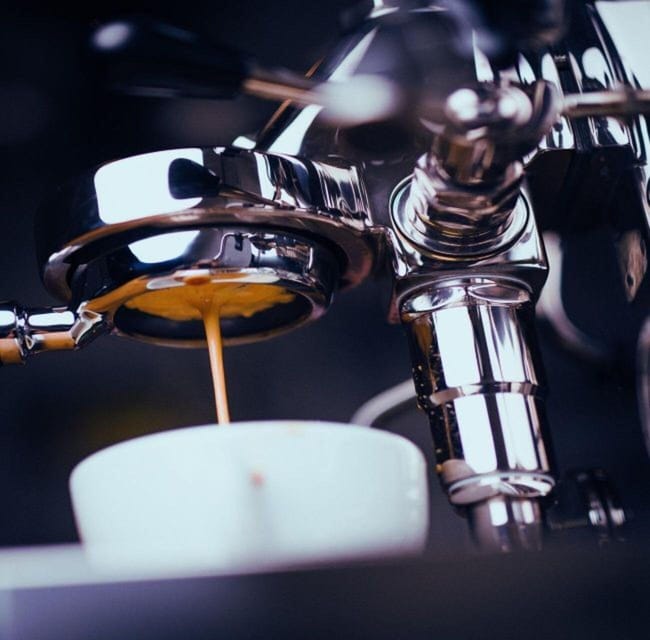
Let’s break it down in plain traveler terms.
You pay about $20, and the class includes:
- Coffee making class with ingredients and tools
- Coffee and Vietnamese tea
- Cookies
- A local guide
That is not just tasting. You are essentially paying for a guided skill session plus the drinks and snacks. If you compare this to paying for multiple coffees in Hoi An, the math gets interesting quickly. You would spend similar money just to sample, and you would still not learn the method.
This workshop is also better value if you are the type who wants an authentic local ritual, not a generic “coffee experience.” The Phin filter focus, plus the production-to-brewing story, is what turns it from a snack-and-sip activity into something educational.
It might be less worth it if you already know how to brew Vietnamese coffee at home and only want casual tasting. In that case, you could get similar flavors at a cafe for cheaper. But if you want the method and the cultural context, this is a fair price for what you do.
Practical Tips for Your Hoi An Coffee Class Day
Keep these points in mind so your class runs smoothly.
First, plan for the experience to take your full attention for 2 hours. This is not a drop-in tasting. You brew, you wait, you taste, and you learn the steps along the way.
Second, because there is no hotel pickup, you will need to get there on your own. If you are staying far from central Hoi An, give yourself extra time for getting across town, and build in buffer for traffic.
Third, check the meeting location details on the day of your class. One attendee issue was that the meeting place changed. That can happen with small local operations, so verifying prevents stress.
Finally, if you are sensitive to strong coffee flavors, consider that Vietnamese dark roast can feel intense. Start with the herbal tea early in the session and pace your tastings.
Should You Book This Vietnamese Coffee Making Workshop?
I think you should book it if you want a hands-on cultural experience in Hoi An that ends with a skill you can actually use later. The best reasons to go are the Phin filter brewing practice, the two styles including Ha Noi egg coffee, and the fact that you connect flavor to process from harvesting and roasting to brewing.
Skip it if you hate classes and prefer pure self-guided exploring, or if you only want a quick caffeine hit. Also, if you are very anxious about meeting logistics, do your homework on the meeting spot day-of and stay ready to contact the operator quickly.
If you fall in the first group, this is a solid value. You get coffee, tea, cookies, and real technique in just 2 hours, with the kind of small-group attention that makes learning stick.
FAQ
How long is the coffee making experience?
It lasts 2 hours.
How much does it cost?
The price is $20 per person.
What languages are the tour guide speaking?
The live guide speaks English and Vietnamese.
What kinds of Vietnamese coffee will I make and try?
You will make and try 2 different Vietnamese coffee styles, including Ha Noi egg coffee, plus you will learn about black coffee and other styles during the workshop.
Is hotel pickup included?
No. Hotel pickup and drop-off are not included.
What is included in the class?
Included are the coffee making class, ingredients and tools, coffee and Vietnamese tea, cookies, and a local guide.
Do I need to wait in a line to join?
The activity includes skip-the-ticket-line.
Can I cancel for a refund?
Yes. There is free cancellation up to 24 hours in advance for a full refund.
Is pay later available?
Yes. You can reserve now and pay later, so you pay nothing today.
More Coffee Experiences in Hoi An

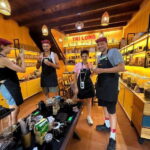

More Tour Reviews in Hoi An
Not for you? Here's more nearby things to do in Hoi An we have reviewed








Coffee Experiences, compared.
 ★ 4.9Vietnamese Coffee Culture and Coffee Making ClassFrom $144,006 reviews
 ★ 5.0Early Morning My Son Sanctuary Trip w. Champa Food & CoffeeFrom $21629 reviews
 ★ 5.0Vietnamese Culture and Coffee Making ClassFrom $15497 reviews
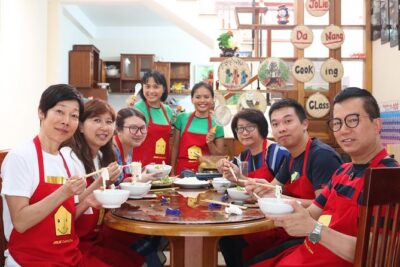 ★ 5.0Da Nang Cooking Class with Coffee Tasting and Market VisitFrom $45310 reviews
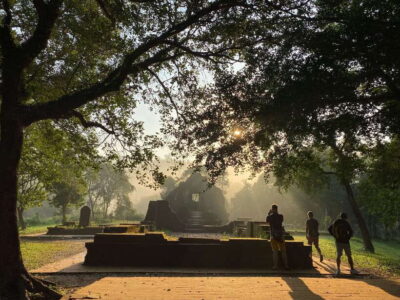 ★ 4.7My Son Early Morning with Banh My and Coffee 6 amFrom $18205 reviews
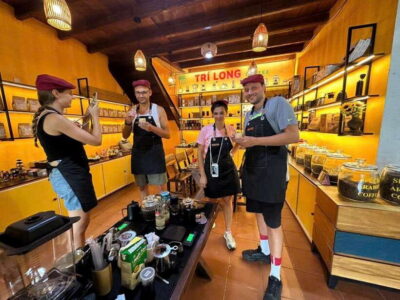 ★ 4.8Vietnamese Coffee Making Workshop at Local RoasteryFrom $16174 reviews
 ★ 5.0Lantern and Coffee Making ClassFrom $24154 reviews
 ★ 5.0My Son Sanctuary Early Morning Tour 6 am w Banh my and CoffeeFrom $21142 reviews
Browse the lists this tour appears in