
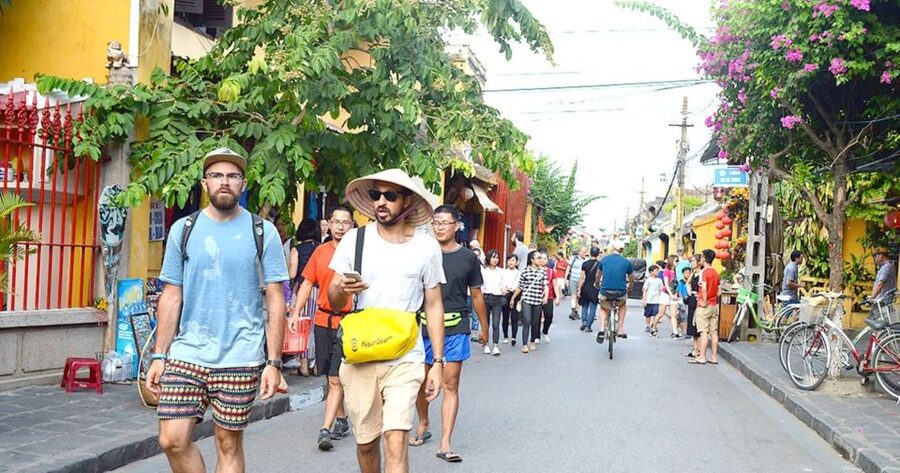
REVIEW · MARKETS
Da Nang/Hoi An: Market & Old Town Private Tour with Transfer
Hoi An feels personal fast. This private tour gives you an organized walk through Hoi An’s market, old-town icons, and traditional crafts, all with a guide and door-to-door transfer. I like how it pairs everyday local life at the market with heritage stops like the Japanese Covered Bridge and Tan Ky ancient house, so you see how the town’s past still shapes what people do today. One thing to consider is the schedule is tight for a 3-hour visit, so you will move at a steady pace and should plan to spend extra time later if you want deeper browsing.
The big win here is convenience plus context. You get pickup and drop-off from your hotel lobby in Hoi An or central Da Nang, plus the English-speaking guide keeps things clear and moving, including time for a traditional performance when your tour slot lines up. Still, if you hate walking between several stops on old-town streets, bring comfortable shoes and be ready for a small endurance test.
Key takeaways
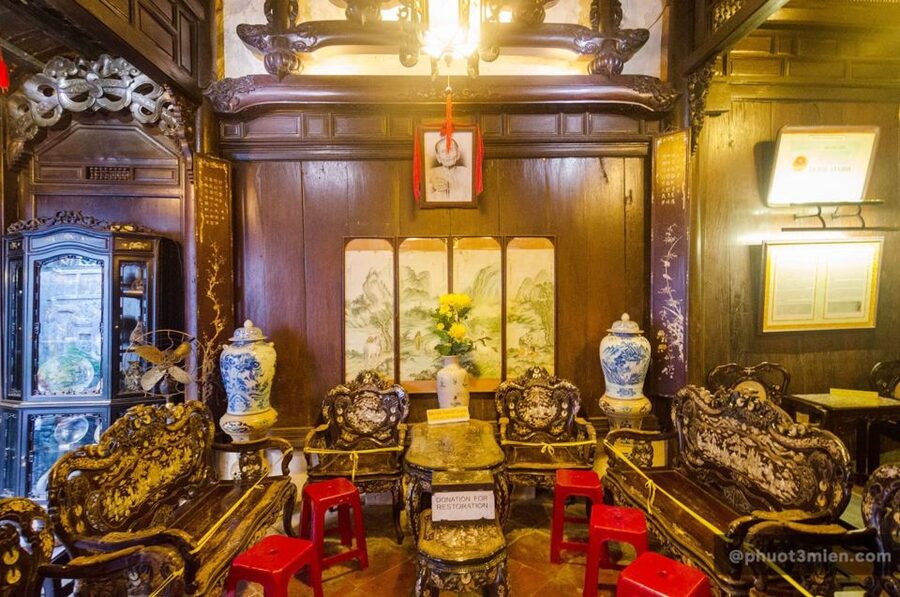
- Central Market first, so you understand daily trading rhythms before seeing the monuments
- Phuc Kien Assembly Hall and Japanese Covered Bridge, two major icons that anchor the old town
- Tan Ky ancient house, one of the older houses built in the late 18th century, with real atmosphere
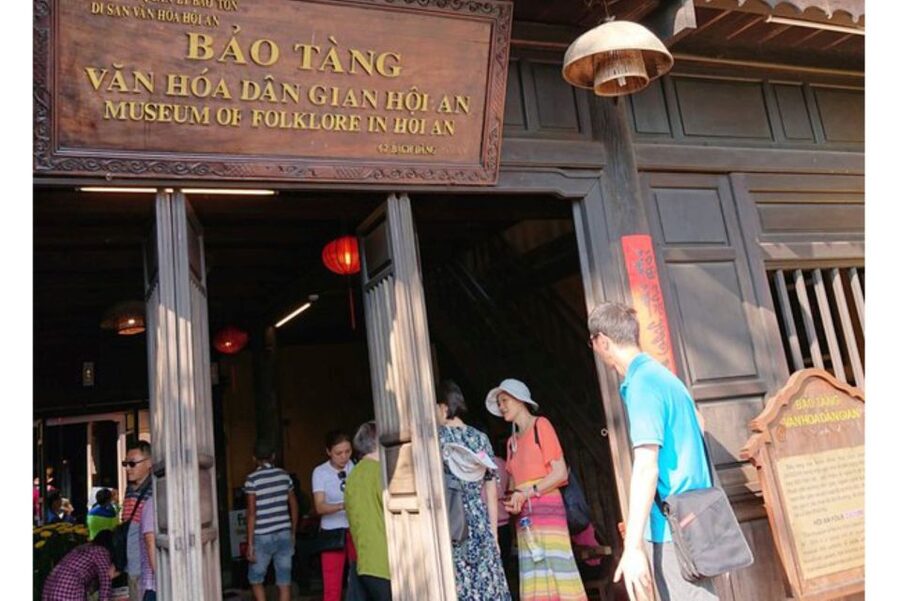
- Hoi An Folk Museum and art stops, good for seeing how modern life and old ways compare
- Silk weaving workshop plus a music and dance performance, so you get craft and culture in the same half-day
- Private car transfer included, which matters because travel between Da Nang and Hoi An eats time on your own
Price and logistics: what $40 covers, and why it’s not just a sightseeing walk
At $40 per person for a 3-hour private tour, the value is mostly in what they handle for you. You are not only paying for an English-speaking guide, you are also getting a private car transfer, pickup and drop-off from your hotel lobby in Hoi An or central Da Nang, the Hoi An old town entrance ticket, and entrance fees for the activities on the itinerary. A bottle of water is included too.
That matters because Hoi An is the kind of place where a DIY day can quietly turn into extra tickets, extra stops, and extra time spent figuring out what to do next. Here, you get a set sequence: market, key old-town sights, then crafts and a performance. You still get to see the atmosphere, but without the planning headache.
The main drawback to price value is that you are paying for a private setup, so it is best when you want one-on-one attention and a fixed plan. If you are the type who wants to wander for half a day with no structure, you might prefer a less scheduled option. This one is built for focus.
You can also read our reviews of more private tours in Hoi An



Getting from Da Nang to Hoi An with a private car transfer
If you are staying in Da Nang, the pickup and transfer are a big practical win. You meet the guide at your hotel lobby in central Da Nang (or Hoi An, if that is where you are based), then you head to Hoi An for the main circuit.
Why I like this approach: Da Nang to Hoi An is not just a straight shot in your head once you factor in traffic and timing. A private car transfer helps you arrive ready to start at 8:00 and hit the day’s highlights without losing your morning to logistics. It also keeps the group experience smooth. With a private group, you are not waiting around for others to roll out in different corners of town.
One small consideration: there is a seasonal surcharge noted for Feb 8 to 15, when transportation services charge an additional 300,000 VND due to TET overtime. If you are traveling around that window, build that into your expectations so there are no surprises.
Starting at Hoi An Central Market at 8:00: the fastest way to understand the town
The tour begins at Hoi An Central Market at 8:00. That is a smart order of operations. Instead of starting with the famous sights, you start with how people trade and move day to day. You get to experience the rich, colorful market atmosphere and learn about local trading at the traditional market.
This stop is especially helpful if you feel a bit lost in old towns. Market first gives you anchors. When you later see the assembly hall, the Japanese Bridge, and the old houses, you can better connect what you are seeing to how the city likely functioned and why it attracted visitors, merchants, and craftsmen.
Practical tip: plan to linger just a little while you are there, even if the tour keeps walking. Look for the everyday patterns, not just photos. If you are serious about learning, ask your guide about what you are seeing in the stalls, and how it ties into local life.
Phuc Kien Assembly Hall, Tan Ky ancient house, and why the guide’s timing matters
After the market, you head toward major heritage stops. You visit the Fujian Assembly Hall, and you also see Phuc Kien Assembly Hall as part of the guided route. The key point is not just architecture, it is how this place connects to living and worshiping culture.
Then you move on to Tan Ky ancient house, described as one of the oldest houses here, built in the late 18th century. This is where the tour’s value turns from general sightseeing into a more grounded experience. Old houses can turn into background scenery if you are rushing. With a guide and a planned route, you are more likely to notice features and details that explain daily life rather than just looking at façades.
A note on pace: between market and old houses, you may feel like you are walking continuously. That is normal for a compact 3-hour structure. If you prefer to sit for long breaks, this itinerary might feel a bit too compact.
Japanese Covered Bridge: the symbol stop you should not skip
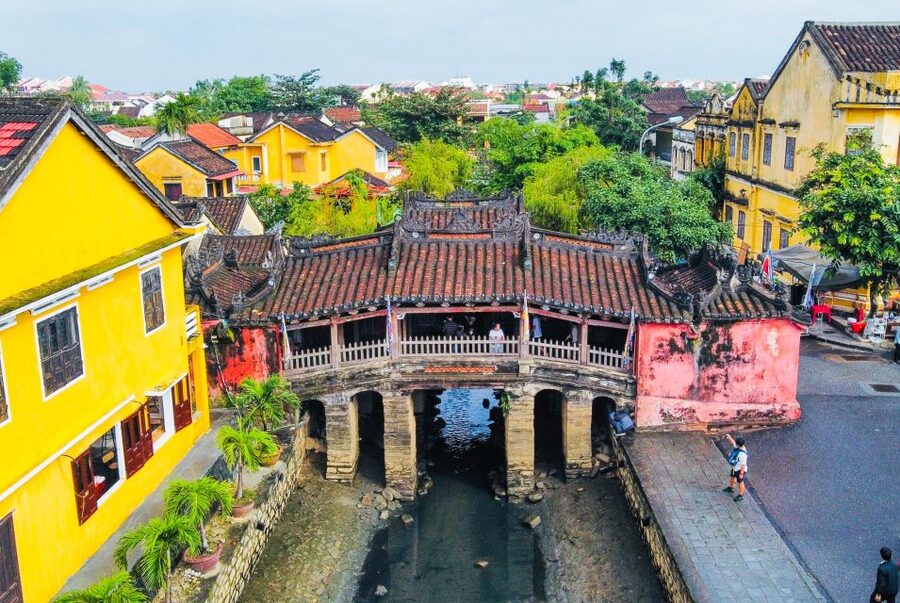
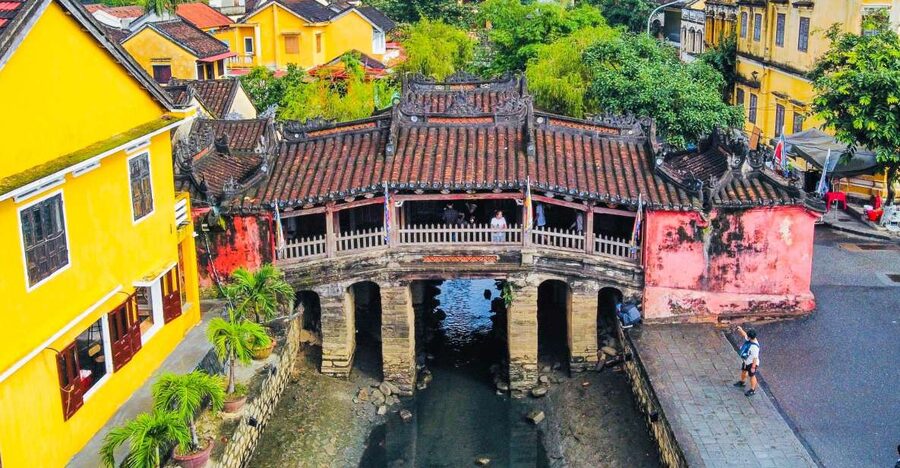
The Japanese Covered Bridge is included, and it is considered the symbol of the city. That alone is a good reason to make it part of your route. But what makes it worth your time here is that you come to it after the market and before the smaller heritage and museum stops. By then, you understand the town is not only buildings and views. It is people’s routines, worship, craft, and trade wrapped into a walkable center.
Also, the bridge has cultural features hidden behind it, so you are not only looking at the postcard view. With your guide’s help, you get a better sense of what you might be overlooking if you just do it solo.
If you care about photos: this is one of the best places to pause and frame shots the way you like. Take a minute to look first, then decide where you want to stand.
You can also read our reviews of more shopping tours in Hoi An






Art shop pictures, art galleries, and learning to see Hoi An’s charm without getting lost
On the way between heritage sites, the tour includes stops by art galleries, plus you will see an art shop with pictures that show daily life. This part of the experience can feel optional, but it is actually a useful bridge between history and how Hoi An is experienced today.
Why this works: old town cities can be hard to read visually. A guide can point you toward what matters, and art stops help you interpret the vibe. You see scenes that match what you are about to experience, and you learn what the town emphasizes visually.
Potential drawback: if you are not interested in buying art or crafts, these stops can feel like extra stops. The upside is that you can still use them as context, not shopping time. You can look, ask questions, and move on.
Hoi An Folk Museum: the comparison you can actually feel in 20 minutes
You also visit the Hoi An Folk Museum. The focus is on living culture and the difference between people in Hoi An modern and old.
That comparison is valuable because it stops the day from becoming a museum-only loop. You get to see how the town’s identity has changed, not just what has survived. Even if you only spend a limited amount of time here, the guide’s framing helps you understand what you are looking at.
If you usually skip museums: try this one anyway. It is part of a short route, so you are not committing to a long indoor session. It is designed to support the idea that Hoi An is a living place, not a frozen set.
Silk weaving workshop plus traditional music and dance performance
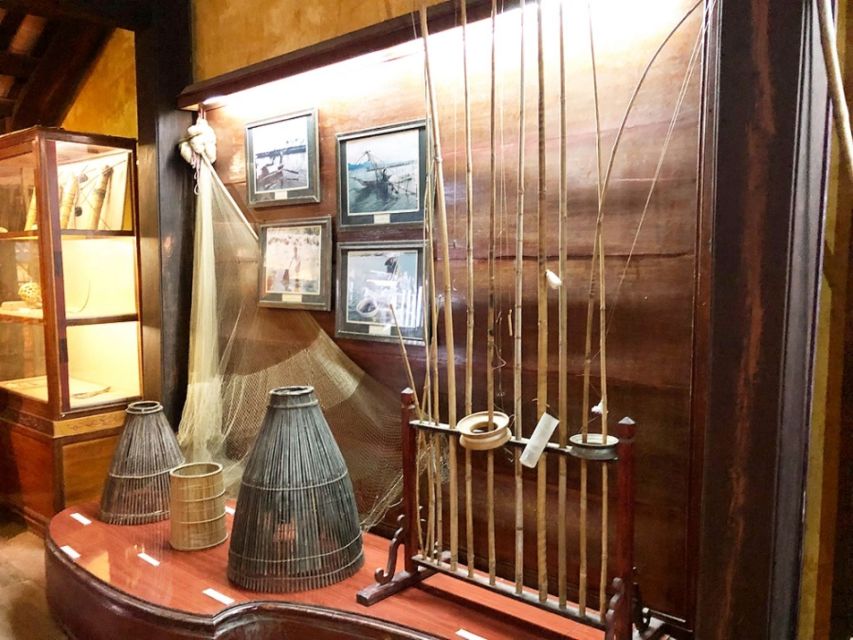
The tour includes a famous silk weaving workshop. You learn about traditional weaving and embroidery craft in Hoi An. Even if you know very little about textiles, a workshop stop is one of the best ways to understand why silk matters in a town known for traditional craft.
Then there is a traditional music and dance performance at a traditional Hoi An house. The schedule is 10:15 or 15:15 daily, so your viewing depends on your tour slot for that day.
This is one of the most memorable parts because it turns what you saw earlier into something you can feel. You go from buildings to craft, then to performance. It is also one of the few moments where you slow down enough to let the day land.
A practical note: performances can be time sensitive. If you have a late flight or a tight next plan, keep some buffer on your calendar for the end of the tour.
When you are done around 11:00, what to do with the extra time
The itinerary returns you around 11:00. After that, you can either go back to your hotel or free to walk around and come back by yourself (optional).
I like this setup because it gives you control. A guide can get you the highlights and context, then you decide what you want to linger on. If you are the type who needs a second pass to absorb a place, this gives you that window.
Tip: after a heritage-heavy morning, pick one area to revisit instead of trying to cover everything again. That keeps it enjoyable instead of exhausting.
Who this private tour is best for
This experience fits best if you want:
- A structured tour that still feels personal because it is a private group
- A clear introduction to Hoi An that mixes market life, old-town icons, and craft culture
- An English-speaking guide who can explain what you are seeing in a way that helps you move through the town confidently
It is also a good fit if you are using Da Nang as your base and want a low-stress day trip. The pickup and drop-off, plus the included entrance ticket and fees, makes it easier to plan and easier to budget.
It might not be ideal if you:
- Want a long, slow wander with no schedule
- Hate indoor stops like a museum
- Prefer to skip workshops and performances
FAQ
FAQ
Where do they pick me up for the tour?
Pickup and drop-off are included at your hotel lobby in Hoi An or central Da Nang.
What language is the tour guide?
The tour includes an English-speaking live guide.
How long is the tour?
The duration is 3 hours.
What time does the tour start?
The tour starts at 8:00 at Hoi An Central Market. Starting times can vary, so you should check availability.
What main sights are included in the route?
You will visit Hoi An Central Market, Phuc Kien Assembly Hall and Tan Ky ancient house, the Japanese Covered Bridge, Hoi An Folk Museum, a silk weaving workshop, and you will stop by art galleries and art shops along the way.
Will I see the traditional music and dance performance?
Yes. The performance is scheduled for 10:15 or 15:15 daily.
Are entrance tickets and activity fees included?
Yes. The Hoi An old town entrance ticket and the entrance fees for the activities mentioned in the itinerary are included.
What should I pay for separately?
Tips and personal fees are not included.
Is there any extra charge during certain dates?
Yes. From February 8 to 15, transportation services charge an additional 300,000 VND due to TET overtime.
Should you book this Hoi An market and old town private tour?
Yes, if you want a high-value introduction to Hoi An that combines the Central Market, major old-town icons like the Japanese Covered Bridge, heritage houses like Tan Ky, and culture through craft and performance. The included entrance ticket, entrance fees, guide, and private transfer make it a practical way to do this town without turning your day into logistics.
Book it especially if this is your first time in Hoi An and you want to get your bearings fast. The only reason to hesitate is the short 3-hour time window, which means you should be ready to walk and accept that you will not have hours to linger at every stop. If that sounds like your pace, this is a smart, well-rounded way to experience the old town.
More Private Tours in Hoi An



More Tours in Hoi An




More Tour Reviews in Hoi An





Not for you? Here's more nearby things to do in Hoi An we have reviewed











Markets, compared.
 ★ 5.0Cooking Class Hoi An:Local Market, Basket Boat, Fishing & CookingFrom $283,660 reviews
 ★ 5.0Hoi An Cooking Class(Market,BasketBoat Crabfishing&Cooking Class)From $283,386 reviews
 ★ 4.8Market Tour, Basket Boat Ride and Cooking ClassFrom $172,208 reviews
 ★ 5.0Hoi An Cooking Class(Local market,Basket Boat,Fishing & Cooking)From $281,323 reviews
 ★ 5.0Hoi An Eco Tour Cooking Class & Fishing (Local market,basket boat,learn cooking)From $29567 reviews
 ★ 5.05 Dishes Cooking Class with Market Trip in Da NangFrom $39466 reviews
 ★ 5.0Traditional Cooking Class with Basket Boat Ride and market TourFrom $41391 reviews
 ★ 5.05 traditional dishes Da Nang cooking class with market tripFrom $39331 reviews
Browse the lists this tour appears in