
REVIEW · HOI AN ANCIENT TOWN TOURS
Hoi An Ancient Town Tour: Japanese Covered Bridge & Old House from Hoi An
Hoi An looks best when you catch it early. This 6-hour Hoi An Ancient Town tour starts at 8:00 am and strings together the big-photo spots with hands-on craft time, all with an English-speaking guide and a pickup from central Hoi An. I especially like the chance to see the Japanese Covered Bridge area in the morning light, and I enjoy how the tour connects architecture with everyday work, from an assembly hall to a local pottery museum and a handicraft stop. One thing to consider is that the bridge can be affected by construction or restoration, which can block the most postcard-ready views.
You also get a nice small-group feel, with a max of 9 travelers, plus bottled water and an air-conditioned vehicle for the transfers. The trade-off is that entrance fees and lunch are not included, so you will likely pay extra once you add up tickets for spots like the Old Town and pottery-related areas.
Key Highlights You’ll Feel Right Away
- Small group, max 9 people, so the walk stays comfortable and photos are easier
- Morning market stop for the real rhythm of locals waking early
- Assembly hall focus, where Chinese and Japanese design shows up in one place
- Japanese Covered Bridge photo timing, with the practical reality that restoration can limit what you see
- Hands-on handicraft time that helps you buy souvenirs with context
- Pickup and bottled water, so you spend less effort figuring out logistics
Meeting at 8:00 am: easy pickup and a 6-hour walking rhythm

This tour runs about 6 hours, starting at 8:00 am, and it includes pickup and drop-off from central Hoi An. That matters because Hoi An Old Town can be a maze of lanes, and a good early start helps you beat the worst crowds.
The itinerary is built around short walking segments between stops, plus vehicle transfers where needed. You get bottled water, which sounds basic, but it is one less thing you have to think about in Vietnam heat.
The group size stays small (up to 9 travelers), and that usually means you can ask questions and get help positioning for photos. If you prefer a guided plan but still want time to wander afterward, this format is a good fit.
You can also read our reviews of more tours and experiences in Hoi An.



Hoi An Market first: local food you can actually see

Your first stop is the Hoi An Market, about a 30-minute visit. This is a smart opener because you get the sights and smells of local life before the tour shifts into heritage buildings and souvenirs.
You will browse fresh fruit, vegetables, and seafood that is locally harvested that same morning. Even if you do not plan to buy, it helps your brain switch from tourist mode into local mode fast. I also find it makes later stops feel more connected, since you understand the town’s trades and daily routines better.
A practical note: market admission is not included, so you may pay a small ticket or find your way based on what is required on the day. If you want to try snacks, also plan for personal expenses since lunch is not included.
Cantonese Assembly Hall and the Pottery Museum: architecture with context
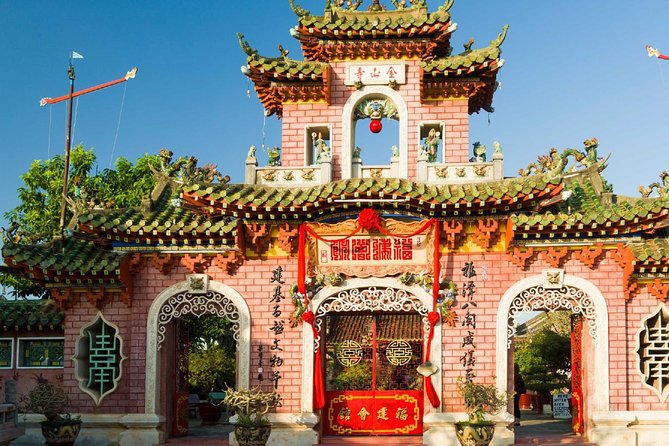
Next comes the Cantonese Assembly Hall, where your guide explains the history and helps you capture photos. The big idea here is that Hoi An’s assembly halls are not generic temple buildings. They are tied to the community groups that shaped the town, with ornate decoration that reflects both Chinese and Japanese influences.
After the assembly hall, the tour adds a pottery stop, described as a traditional pottery museum where locals work. That pairing works well. You go from carved details and painted surfaces in a meeting hall to something more grounded: how ceramics get made and why the town became known for it.
This is also one of the best sections if you like learning through seeing. You get visuals, you get the meaning behind what you are looking at, and you are not stuck staring at a static display.
One drawback to keep in mind: entrance tickets for Old Town and related attractions are not included, so some of what you see here may require additional payment depending on the day’s access.
Japanese Covered Bridge reality check: restoration can change your photos
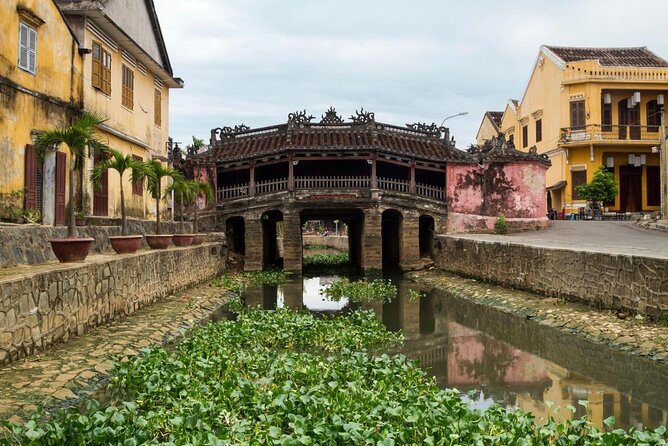
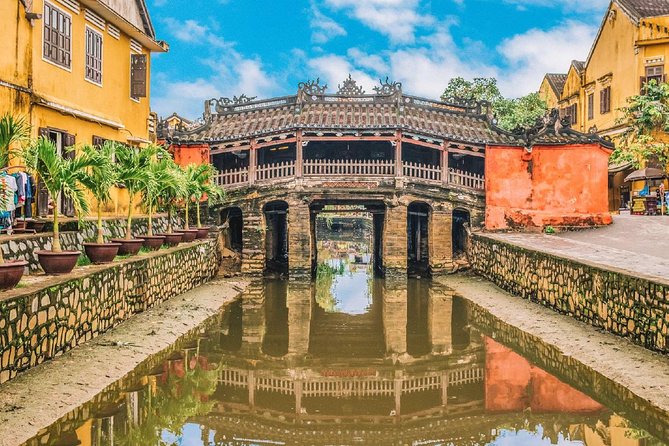
No Hoi An walk is complete without the Japanese Covered Bridge, the elegant pink bridge people recognize instantly. In the tour framing, it was originally built to divide the city during the Japanese occupation. Today, it is more of a shared landmark than a boundary.
Here is the key thing to plan around: the bridge can be under renovation. In past experiences, parts of the bridge were covered in steel construction, and on some visits you could only get partial views, which makes the usual photo moment harder to get and the monument’s details easier to miss.
So what should you do?
- Go in expecting it might not look fully open or unobstructed.
- Take photos from a few angles, not just straight on.
- Use the guide’s timing and positioning help if you have it, because the best angles can still exist even when access is limited.
Even if your bridge photos are imperfect, the stop still helps you understand why the bridge is such a powerful symbol in town. And if the view is blocked, it is a great moment to switch your goal from postcard to story, meaning you focus on how the town preserves landmarks and still keeps moving.
Handicraft tour and souvenir buying with less regret
The tour’s final major block is a handicraft tour plus time to shop for colorful souvenirs, about 1 hour 45 minutes. This is where the experience becomes more useful than just sightseeing.
I like this segment because you are not only buying something. You are learning how locals make a living and what goes into the work. If you care about buying a ceramic piece, woven item, or craft souvenir that feels tied to the place, this extra context helps you choose better and feel less like you are grabbing whatever is cheapest.
Also, this segment is a good chance to ask practical questions in plain language: what something is made from, whether it is handmade, and what the care needs might be. The tour is family-friendly in the sense that you do not need specialized knowledge to enjoy it.
The main consideration is that you can spend money here if you are not ready. Personal expenses are not included, and the whole point of the handicraft stop is shopping.
If you want a calmer experience, set a target before you go in, like one small item rather than a big shopping spree.



Price and value: a free tour with ticket costs you should expect
The listed price is $0.00 per person, which is a standout value if you are okay with a few extras. The reason this can still be a great deal is that the tour covers the guided walking plan, pickup and drop-off from central Hoi An, an air-conditioned vehicle, an English-speaking guide, and bottled water.
But you should do the math, because entrance fees are not included. The tour notes entrance fees for places such as Hoi An Old Town, the pottery-related Pottery Village, and also options like the Basket Boat Ride and Camh Village. Depending on what the guide includes and what you decide to add, your final cost could rise.
My advice: budget for entrance fees and keep some cash for lunch and personal expenses, even if the tour itself looks free. If you treat this as a guided orientation plus planned craft time, the value is hard to beat.
Also, the tour mentions group discounts and a mobile ticket, which can simplify things if you are traveling with friends. Still, confirm what you will actually pay on-site so there are no surprises.
Pace, comfort, and what to bring for a smooth 8:00 am start
The tour runs in the morning and keeps a steady pace across multiple stops. With Hoi An heat and humidity, the air-conditioned vehicle between locations is a real comfort. Bottled water helps too, especially if you plan to spend time photographing or browsing.
Since most travelers can participate, you do not need to be a fitness athlete. Still, you are walking through historic areas and market zones, so wear comfortable shoes. Bring sunscreen and a hat if you get sun easily.
If you want the best photos, consider:
- Your phone camera at the ready for quick shots at the bridge and assembly hall.
- A small bag that keeps your hands free while you browse.
- Patience if restoration affects access. A partial view can still lead to good photos if you adjust angles.
Who this tour suits best in Hoi An
This works best if you:
- Want a guided introduction to UNESCO-listed Hoi An Ancient Town
- Care about understanding what you see, not just taking pictures
- Like crafts and want a shopping stop with context
- Prefer a small group (max 9) over a packed bus tour
It might not fit you as well if your main goal is a perfectly unobstructed, postcard-style bridge photo. When the bridge is under restoration, you can still enjoy the symbolism and the general area, but the view may be limited.
If that is your top priority, I would treat this as a broader Ancient Town orientation and be ready to be flexible with the bridge shot.
Should you book this Hoi An Ancient Town Tour?
I would book it if you want an easy, structured morning that combines the big landmarks with real local texture, like the market and the pottery-focused stops. The free price makes it especially attractive, as long as you go in knowing entrance fees and lunch are on you.
I would not book it if you are only chasing one perfect image of the Japanese Covered Bridge. Restoration can affect what you see, and you cannot control that. But if you are okay with a practical photo plan and you enjoy learning through crafts, this tour is a strong way to get oriented in Hoi An fast.
FAQ
What time does the tour start?
The tour starts at 8:00 am.
How long is the Hoi An Ancient Town Tour?
The duration is about 6 hours.
What is included in the price?
It includes pickup and drop-off from central Hoi An, an air-conditioned vehicle, an English-speaking tour guide, and bottled water.
Are entrance fees included?
No. Entrance fees are not included, including fees for places such as Hoi An Old Town and related stops like Pottery Village and other optional areas.
What stops are covered during the tour?
You will visit the Hoi An Market, a Cantonese Assembly Hall, the Japanese Covered Bridge, a pottery museum stop, and finish with a handicraft tour.
Is there free cancellation?
Yes, you can cancel for a full refund up to 24 hours before the experience starts. If it is canceled due to poor weather, you will be offered a different date or a full refund.
More Tours in Hoi An






More Tour Reviews in Hoi An
Not for you? Here's more nearby things to do in Hoi An we have reviewed











Hoi An Ancient Town Tours, compared.
 ★ 5.0Marble Mountains – Hoi An Ancient Town Sunset Daily Ingroup TourFrom $33690 reviews
 ★ 5.0Hoi An Ancient Town Walking Tour with a LocalFrom $9517 reviews
 ★ 4.9Hoi An Ancient Town – Walking Tour with Local GuideFrom $14385 reviews
 ★ 5.0Linh Ung Pagoda – Marble Mountains – Hoi An Ancient Town Daily Ingroup TourFrom $39299 reviews
 ★ 4.5Marble Mountains – Hoi An Ancient Town Afternoon Tours FROM DANANG(15H30-21H)From $37162 reviews
 ★ 4.5Hoi An Ancient Town – Night Market Street Food Tours By NightFrom $55161 reviews
 ★ 4.5Hoi an Coconut Boat & Hoi an Ancient Town(Option Marble Mountain)From $4886 reviews
 ★ 4.5Hoi An Ancient town -Marble Mountains Tours FROM DANANG(15H30-21HFrom $3884 reviews
Browse the lists this tour appears in