
REVIEW · HOI AN COUNTRYSIDE & VILLAGE TOURS
Half Day Exploring Hoi An Countryside in a Vespa
A Vespa trip to rice fields beats typical tours. You’ll ride out past Hoi An’s busy center, meet families doing everyday farm and craft work, and learn how coastal and rural life connects. I especially like the hands-on village activities and the home-cooked meal that feels personal, not staged. The main thing to consider is that you are riding for part of the time, so wear closed, comfy shoes and be ready for dust or light rain (they do provide a rain poncho).
This is a beginner-friendly half day, guided in English with a licensed driver. Pickup is included in the Hoi An area, and you’ll come back by shuttle transfer after your countryside lunch and cultural chats. If you want real interaction with local life, not just photos, this route is a strong fit.
Key highlights you should care about
- Rice noodle making try-it session with a local household in Dong Ha Village
- Votive paper offerings creation, a detail most visitors never see
- Lang Ca Ong Whale Temple and the fishing legends behind it
- Mat weaving hands-on time with a craft family
- Rice wine brewing and what makes the process meaningful
- A home meal with a middle-class Vietnamese family after the countryside stops
Hoi An countryside by vintage Vespa: the ride, the pace, the point
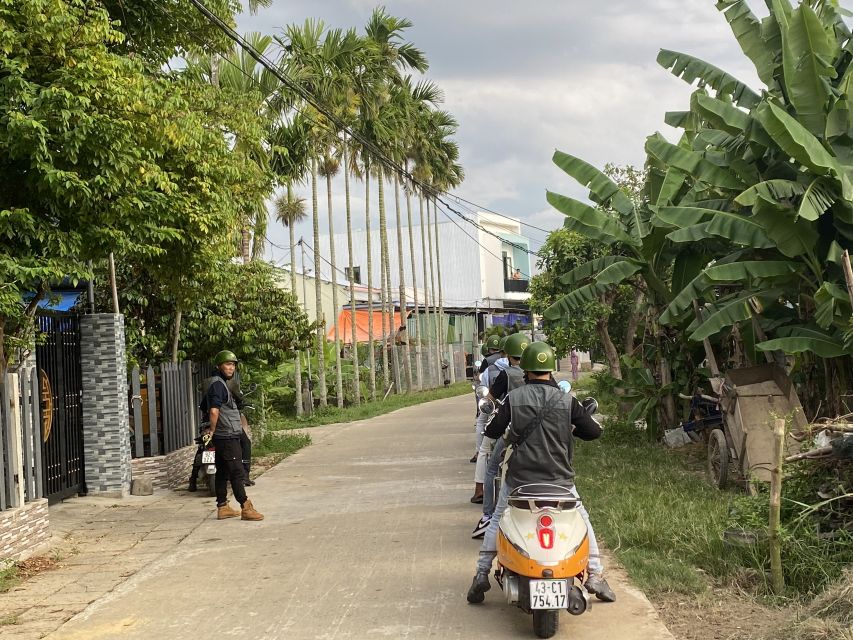
The best part of this half-day tour starts before the first workshop. You get picked up from hotels around Hoi An Ancient Town area (roughly 1 to 5 km from key spots like the Post Office, Central Market, and the center). You’ll be asked to wait in the hotel lobby about 15 minutes ahead of pickup, or you’ll meet at 358 Nguyen Duy Hieu street in Cam Chau if you’re not within that pickup radius.
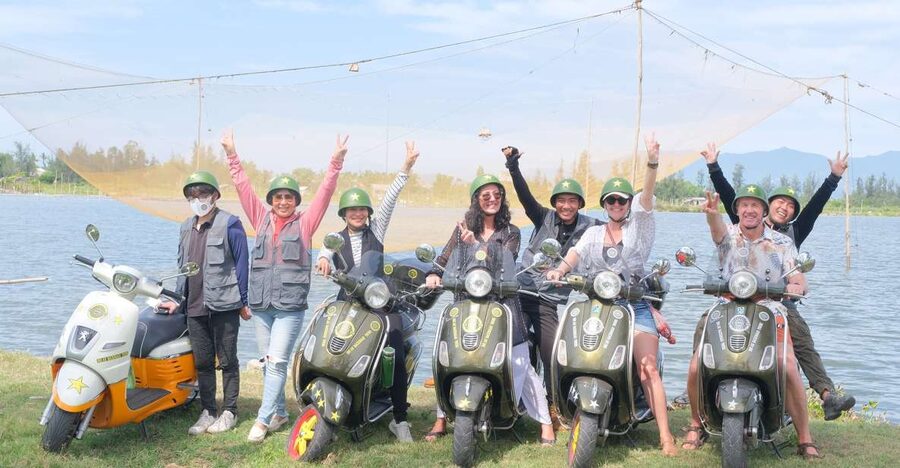
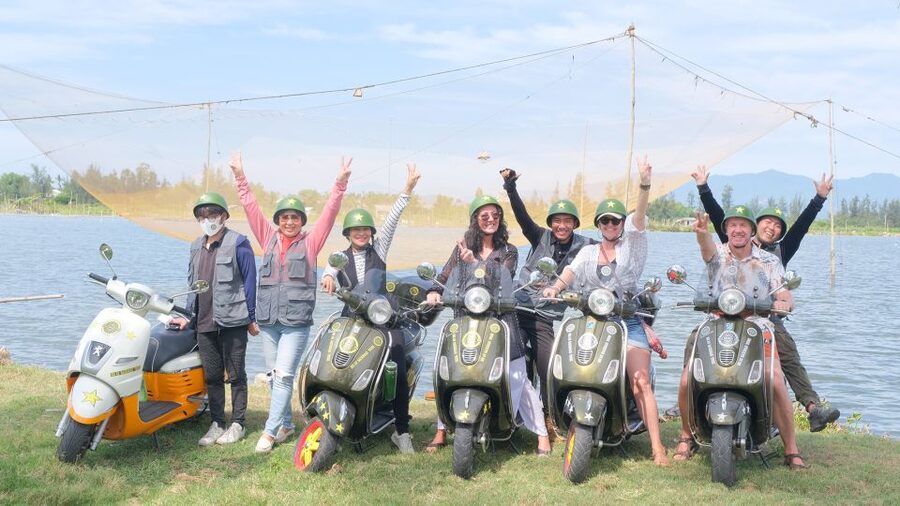
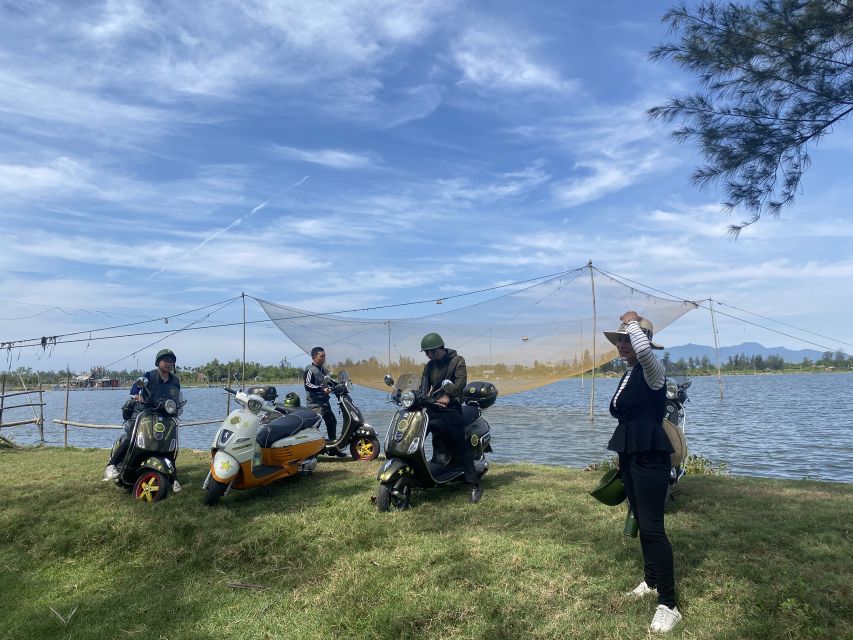
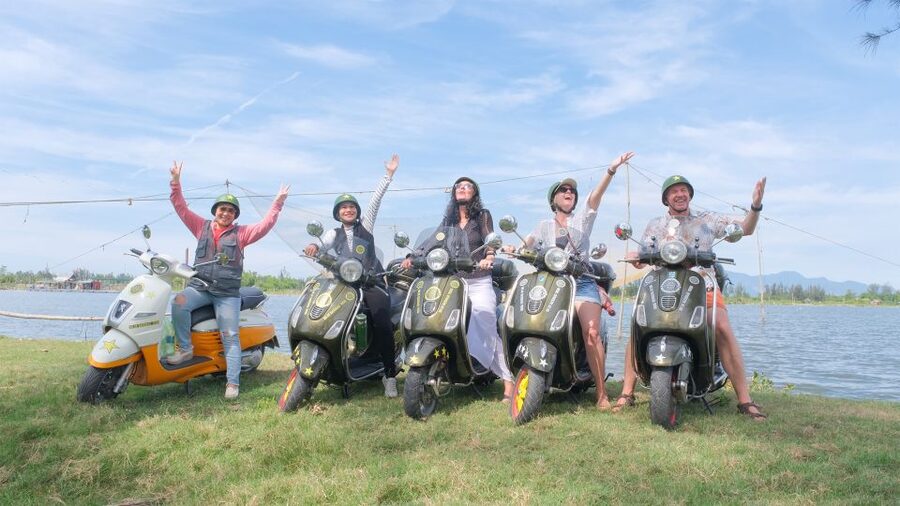
Then you’re off on a vintage army style motorbike or scooter experience, with an experienced, licensed driver handling the roads and the petrol for the journey. This matters because it keeps the tour calm. You’re not stuck negotiating traffic. You’re there to look, listen, and ask questions.
The route runs along winding countryside roads with green fields and quiet waterways. That sounds pretty on paper, but it’s also practical. On a short tour, you want the ride itself to be useful. Here, the scenery helps you understand what you’re about to learn, whether it’s farming cycles or craft work that depends on local materials and local customers.
The timing is tight in a good way: the whole experience is about 4.5 hours. So you get multiple stops without burning your day. If your schedule is limited, this is the kind of tour that gives you variety without dragging you across half the province.
More Hoi An lantern evenings, food walks, village rides, island trips, and central Vietnam day tours to compare


Dong Ha Village: farming life, rice noodles, and votive paper offerings
Your first real learning comes when you reach a local home in Dong Ha Village (Cam Kim). This is where rural Hoi An turns from scenery into daily routine. The focus is on agriculture, especially how families grow rice, vegetables, and grains and how livestock and farming practices fit into the bigger picture.
You’ll watch and join in with daily activities, which is where the tour earns its value. Farming in Vietnam is not just a backdrop. It’s a system, and you see that through small, repeatable steps.
Two hands-on moments stand out:
- Making rice noodles. You get to try your hand at the process, so you’re not just looking at a finished product. You’ll get a feel for how labor-intensive “everyday food” really is.
- Creating votive paper offerings. This is a cultural detail tied to local beliefs and community rhythms. It’s also a great conversation starter, because you can ask what the materials mean and when families use them.
One practical note for this stop: because it’s a family home and you may do small tasks, keep your footwear comfortable and reasonably grippy. You do get helmet and rain gear later, but good shoes help now.
The biggest drawback to keep in mind is that home visits can be physically active, even if they are not labeled as strenuous. You might squat or lean while watching demonstrations. If you have mobility issues, you should consider this type of activity carefully and wear shoes that won’t slip.
Tra Nhieu and Duy Vinh craft roads: Whale Temple first, then traditions you can touch
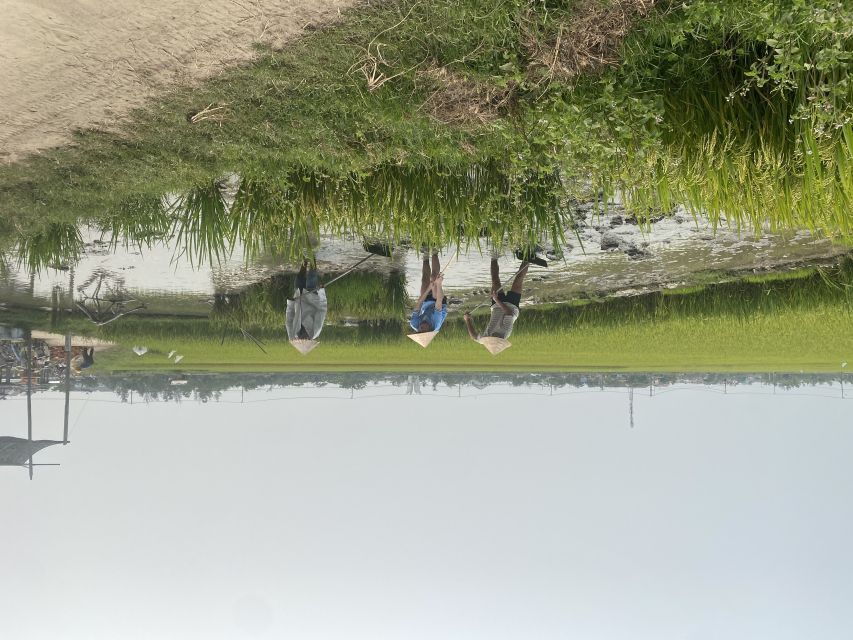
After Dong Ha Village, you ride through more countryside to Tra Nhieu and related areas such as Duy Vinh. This stretch is more than transit. It sets your brain into the right mode for village crafts and local stories. On a vespa ride, you feel the distance between Hoi An’s old town and where people live and work.
Your first stop here is Lang Ca Ong, often called the Whale Temple. This is a coastal life anchor, even though you’re in a rural route. You’ll learn local legends and traditions linked to fishing and the kinds of methods locals used in the past and still talk about today. You’ll also hear about traditional net-pulling techniques, which connects the religious space to real labor.
Why this matters: whale temples are not “just a temple stop.” They explain how communities interpret risk, luck, and the sea. Even if you’re not a mythology person, the fishing context makes it easier to understand why ceremonies and symbols show up in places like this.
Then the tour shifts from legends to hands-on craft.
Mat weaving with a local household: why this craft still matters
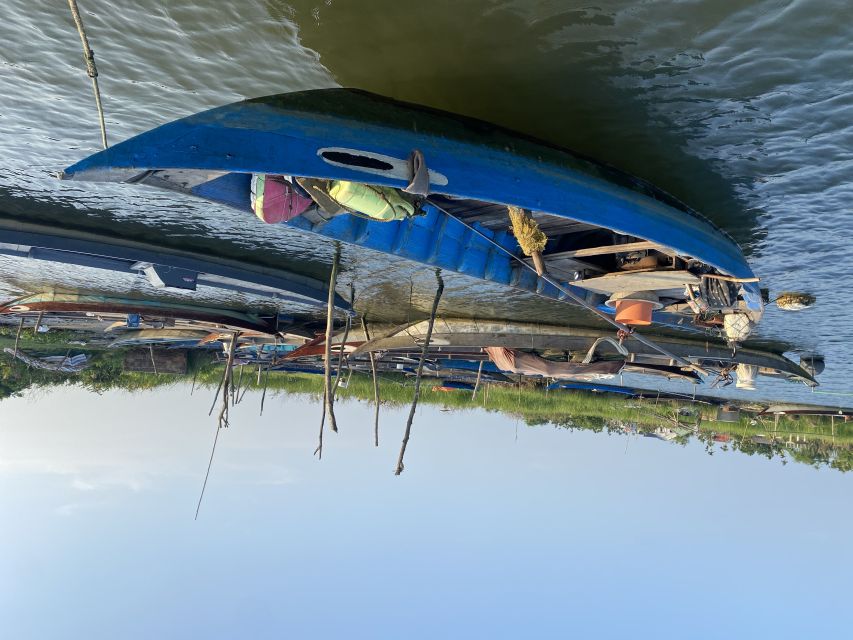
Next, you visit a local household where you learn the art of mat weaving. You’ll observe the process and get hands-on experience, with the craft passed down through generations.
This is one of those skills where you can see why it survives. It turns natural materials into something useful, and it fits family work rhythms. The tour is designed so you’re not just handed a souvenir mat at the end. You get a taste of the work itself, the repetition, and the care in making the finished product even.
When you try weaving yourself, you start noticing the things a casual viewer misses:
- how the materials need to be handled
- how the pattern depends on consistent tension and spacing
- how much is learned through doing, not through reading
A small consideration: weaving can require patience and fine hand movements. If you have shaky hands or you dislike crafts that take concentration, you may still enjoy the observation part, but the hands-on element might feel slow. The flip side is that it’s exactly the kind of slow work that makes a countryside tour feel real.
Rice wine brewing in Duy Vinh: the process and the meaning
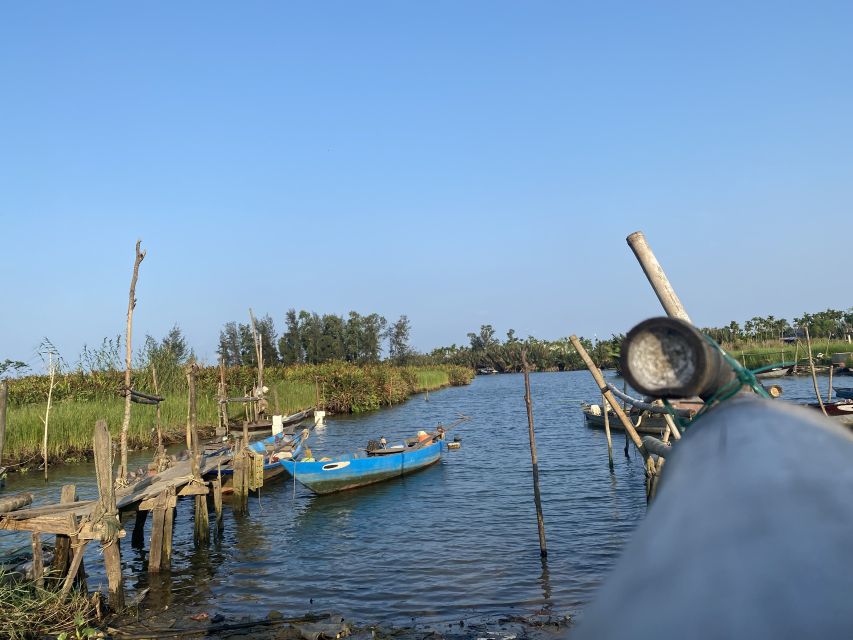
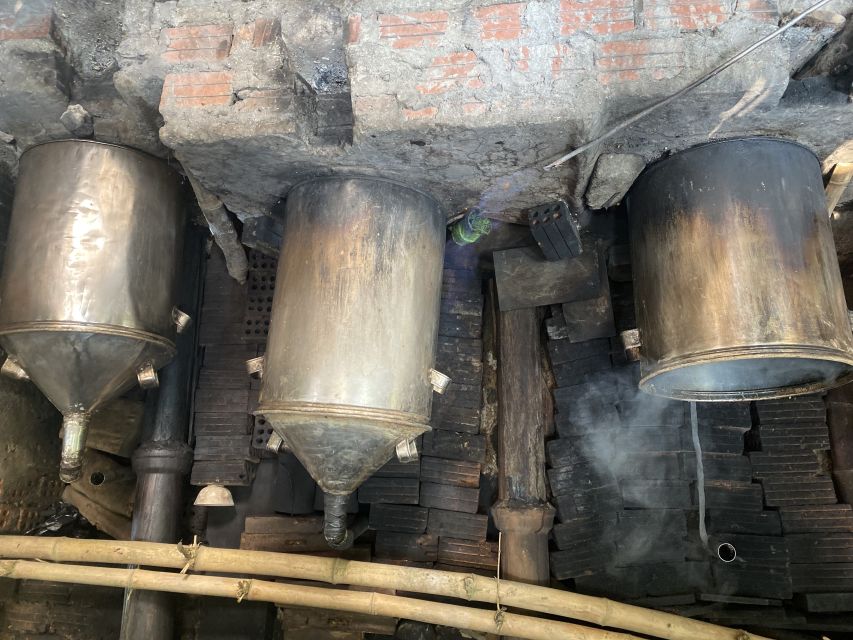
Another local home brings you to the process of brewing rice wine. You’ll learn the steps involved and, more importantly, why this traditional beverage has cultural significance.
This stop is different from the noodle and weaving activities. Instead of a visible craft pattern, you learn about time, fermentation, and the careful sequence that turns plain ingredients into something families share and use in ceremonies.
You might find it easier to connect to this lesson if you ask a couple of smart questions:
- how long the process takes
- what families look for during brewing
- how rice wine fits into everyday life versus special occasions
The tour does a good job of treating this as more than a photo moment. It’s a window into how food and drink traditions carry identity. In a short tour, that kind of context can be more valuable than another famous landmark.
More Hoi An lantern evenings, food walks, village rides, island trips, and central Vietnam day tours to compare



The home-cooked meal: the social highlight that ties everything together
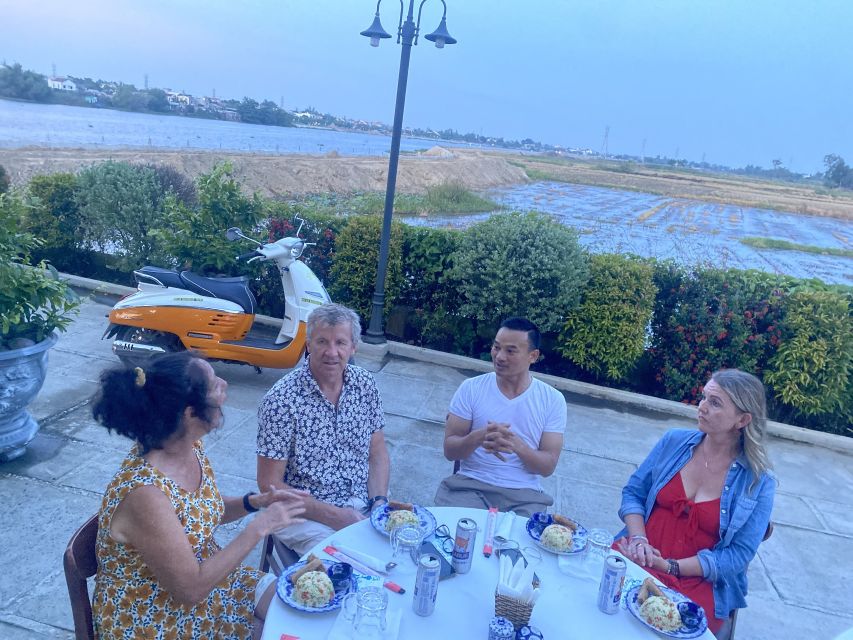
After the craft and farm stops, the tour finishes at a local family’s home for a home-cooked meal. This is where the day clicks into focus. You’ve seen rice noodles, craft work, and brewing. Now you sit down to eat, and you can connect the dots.
The meal is included, and it’s described as giving a unique insight into the lives of middle-class Vietnamese people. That wording matters, because it’s not a “performance meal.” It’s not a restaurant with an audience. It’s a family space, and that changes the vibe of the entire afternoon.
As for what you’ll get, the exact menu isn’t specified, so don’t expect restaurant names or a checklist. Plan to enjoy authentic Vietnamese flavors that reflect what local families cook at home.
A quick, practical tip: eat slowly. This kind of meal is part of the cultural exchange, not just a fuel stop. If you enjoy chatting, this is also where conversation often turns personal, because everyone is sitting face to face instead of moving from site to site.
Price and value: what $64 buys you in real terms
At $64 per person for about 4.5 hours, you’re paying for more than transportation. You’re buying a bundle:
- pickup and drop-off around central Hoi An
- a licensed English-speaking guide
- the vespa driver and fuel for the day
- helmets and rain ponchos
- tickets and entrance fees
- taxes and permits
- a home-cooked meal
So the real question is: does it feel like value? For most people, yes, because you’re not doing a generic sightseeing loop. You’re doing multiple active cultural exchanges across agriculture, crafts, and local traditions. Those home stops take effort and time to coordinate, and your guide is what makes it work smoothly.
The one cost to remember: tipping isn’t included. If your driver and guide do a great job (and they usually do, since the experience centers on interaction), set aside some cash for a tip. It’s not required in your wallet plan, but it’s part of how local service cultures work.
Who this half-day Vespa tour is best for
This is a strong match if you:
- want a short day trip outside Hoi An’s main areas
- like learning through doing, not just watching
- enjoy conversations with locals and seeing day-to-day life
- are comfortable riding as a passenger on a scooter or vespa
It’s also a good option for beginners. The tour is designed for beginners, and no prior experience is necessary.
If you’re the kind of traveler who only wants famous monuments, you might find this less satisfying. This is a village-and-craft day. The reward is cultural understanding and human connection.
If you hate workshops or crafts, keep that in mind. The tour includes several hands-on moments, like trying rice noodles and mat weaving. You can still observe, but the best parts are interactive.
Practical tips so your day goes smoothly
- Wear comfortable shoes. You’ll move through homes and do light activity.
- Bring a phone you don’t mind getting dusty. Rural stops can be very close to field paths.
- Ask your guide questions during the rides. The countryside route makes it easy to ask about farming, fishing legends, and daily life.
- Plan for weather. They provide a rain poncho and helmet, but your shoes and clothes still matter.
Also, a small timing trick: get ready early for pickup and be waiting when they arrive. That helps the whole group keep momentum and protects your time at each home.
Should you book the Hoi An countryside vespa half day?
I’d book this if you want more than pretty countryside. You get a guided route that connects farm life, coastal legends, craft skills, and a real home meal. It’s beginner-friendly, not stressful, and it includes the kinds of experiences that are hard to arrange on your own without local connections.
Skip it if you’re short on time and only want famous sights, or if you dislike hands-on workshops. This is a “work-with-your-hands” style cultural tour, even if it’s gentle.
If you want a memorable half day where you actually talk to people and try something, this one fits the bill.
FAQ
How long is the Half Day Exploring Hoi An Countryside in a Vespa?
The tour lasts about 4.5 hours. Starting times depend on availability.
What is the price per person?
The price is listed as $64 per person.
Where does pickup happen?
Pickup is included around Hoi An Ancient Town, typically for hotels about 1 to 5 km from the center. If you are outside that area, you’ll use the meeting point at 358 Nguyen Duy Hieu street, Cam Chau, Hoi An, Quang Nam.
How early should I be ready for pickup?
Wait in your hotel lobby about 15 minutes before your scheduled pickup time. If using the meeting point, arrive about 15 minutes before the tour start.
Do I need scooter experience to join?
No. The tour is designed for beginners, and no prior experience is necessary.
Is an English-speaking guide included?
Yes, an English-speaking guide is included.
What activities are included at the local homes?
You can expect hands-on experiences such as making rice noodles, learning about and making votive paper offerings, trying mat weaving, and learning the process of brewing rice wine.
Is the meal included?
Yes. A home-cooked meal at a local family is included.
What gear is provided for the ride?
You’ll receive a helmet and a rain poncho.
Is tipping included in the price?
No. Tip for the local driver and tour guide is not included.
What is the cancellation policy?
Free cancellation is available up to 24 hours in advance for a full refund. The tour also lists a reserve now and pay later option.
More Motorbike & Scooter Rentals in Hoi An
More Scooter Rentals in Hoi An


More Tour Reviews in Hoi An




Not for you? Here's more nearby things to do in Hoi An we have reviewed








Hoi An Countryside & Village Tours, compared.
 ★ 5.0Hoi An Countryside Jeep Tour: Food, Culture & Daily LifeFrom $79414 reviews
 ★ 5.0Hoi An Countryside Vespa Tour: Food, Culture & Daily LifeFrom $93406 reviews
 ★ 5.0Hoi An Countryside Bike Cycling Tour with Basket Boat and lunchFrom $41325 reviews
 ★ 5.0Hoi An countryside cycling tourFrom $41227 reviews
 ★ 5.0Hoi An Countryside Biking Tour(Vegetable village -basket boat – fishing village)From $45216 reviews
 ★ 5.03 Hours Hoi An Countryside Bicycle TourFrom $35193 reviews
 ★ 5.03 Hours Hoi An Countryside Motorbike TourFrom $51152 reviews
 ★ 5.0Uncover Real Rural Hoi An – A True Local Life ExperienceFrom $5595 reviews
Browse the lists this tour appears in