
REVIEW · WORKSHOPS
Traditional Wood Carving Workshop
Driftwood turns into art here. In Hoi An, you spend about 2.5 hours at Làng Củi Lũ Hội An, learning the old craft of Vietnamese woodworking from artisans connected to the Kim Bong carpentry tradition.
What I like most is how practical the coaching feels, not just a lecture. You get to start with basic chiseling skills, then move into your own design and carving, guided step by step. The other big win is the cultural storytelling, especially the meaning behind driftwood and the artworks made from it. The only real drawback to plan around is that you need good weather, since the activity depends on it.
Key highlights you should know before you go

- Kim Bong tradition explained first, so your carving has context
- Driftwood gets treated with respect, not just as a cheap material
- Basic chiseling instruction, short, clear, and hands-on
- Sketch to carving to painting, so you create something real
- Small group size (max 16) for better attention during the workshop
- Take-home souvenir, made by you, not bought off a shelf
Làng Củi Lũ Driftwood Village: where the workshop energy comes from
This experience happens at Lang Cui Lu – Driftwood Village in Hoi An, at Tổ 13 Thôn Đồng Nà, Cẩm Hà, Hội An, Quảng Nam 560000, Vietnam. It is not a studio you just pass by. It feels like a working place where the art lives on site, with a workshop, studio space, and an art gallery you can explore with your guide.
The atmosphere matters here. The setting is described as a local, rural-style environment, and that fits the whole idea of driftwood art. Instead of touring a museum behind glass, you are in a place built around tools, materials, and process. One review also highlighted a relaxed tone, including a welcome drink and an easygoing pace that still keeps you moving toward a finished piece.
One practical note for your planning: transportation is not included. So you will want to build time for getting to the meeting point and back. The good news is the activity ends back at the starting point, so you do not get left stranded somewhere new.
More Hoi An lantern evenings, food walks, village rides, island trips, and central Vietnam day tours to compare



Kim Bong woodworking stories, Quang Nam meaning, and why you hear it before carving
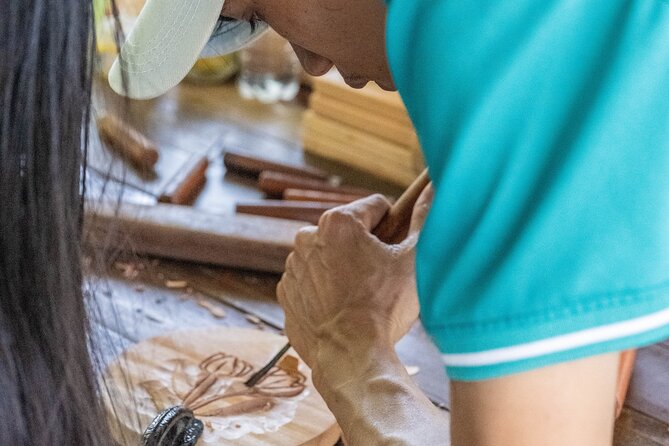
Before you touch tools, you hear how this craft connects to the larger story of Vietnamese woodworking, especially the Kim Bong carpentry village tradition and the Quang Nam region. You also learn the background of the artist village at Lang Cui Lu, including why this driftwood-focused approach matters.
That early storytelling is not just cultural wallpaper. It changes how you carve. When you understand that the wood choices and designs carry meaning, the process feels more personal. You are not only making a souvenir, you are working in a tradition with rules, symbolism, and a shared craft history that is described as older than 500 years.
If you like experiences that blend hands-on making with context, this part is a big reason to do the workshop instead of just buying a carved piece elsewhere in town.
Driftwood, recycled materials, and how the workshop turns trash into treasure
The material is the star of the show: driftwood. In everyday life it is usually overlooked, even forgotten. In this workshop, it is treated as something with depth, history, and meaning. You learn about driftwood and what the artworks made from it represent, which makes the whole process feel grounded in local practice, not just a craft trend.
I also appreciate that the workshop explicitly frames driftwood as a meaningful material. That keeps things honest. You are not being sold a feel-good story without substance. You are learning the logic of the craft: the texture, the shapes you can work with, and how artists translate that material into designs that make sense.
And yes, you end up with something you can take home. That is the whole point, since you are carving from recycled driftwood and then painting it.
The hands-on flow: chisels, sketching, carving, and painting your design
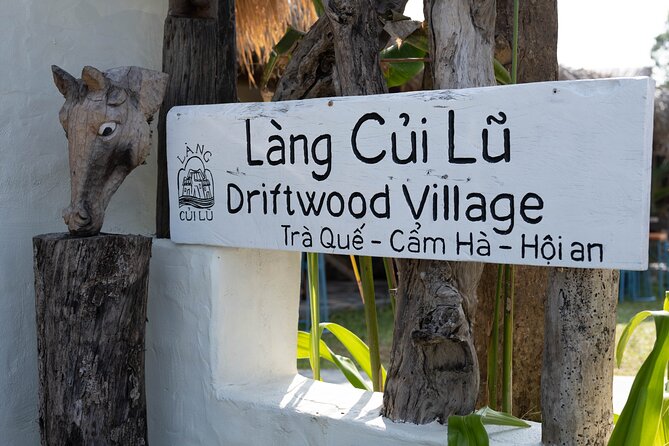
The workshop is structured so you do not get stuck in the hard part without help. You start with basic chiseling techniques taught by the artisans. That matters, because carving is one of those skills where the first 5 minutes can feel awkward if nobody shows you what to do.
Then you move into the creative step. The artisans help you visualize a design and sketch it onto the driftwood. Once the design is mapped out, you carve your piece under guidance and then paint it.
Here is what that practical flow means for you:
- You get a clear progression from tool basics to artistic output.
- You are less likely to panic when you realize wood does not forgive mistakes.
- Your finished work looks like something designed, not just random carving marks.
In at least one account, the level of support is praised as just right, with experts giving help without taking over. That balance is what you want in any craft class. Too little help and you will fight the process. Too much help and your result stops feeling like yours.
What you will make, and what makes it feel special
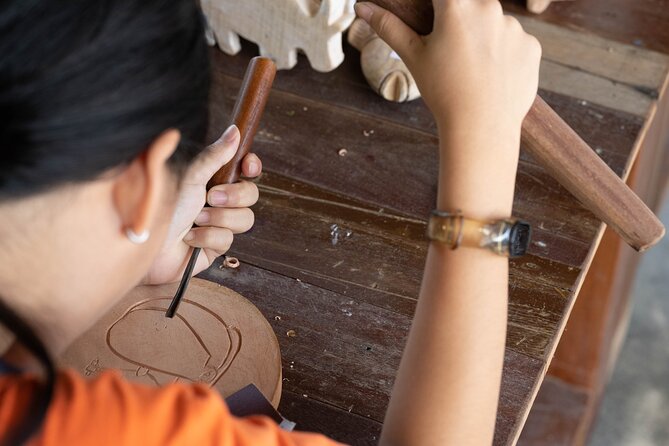
You will create a unique work of art from recycled driftwood. The specifics of the design are not spelled out in the details you have here, but the process is clear: sketch onto driftwood, carve, then paint.
The uniqueness comes from two places. First, the material itself is unique, since driftwood pieces vary in shape and texture. Second, the workshop structure builds in your own design choices, with the artisans helping you translate your idea into something carveable.
The takeaway is not only the object. It is the memory of doing the work with real local craftsmen, step by step. For many people, that becomes the favorite souvenir from Hoi An, because it is not just something you bought. It is something you made with your hands.



Group size, family fit, and how different ages handle carving time
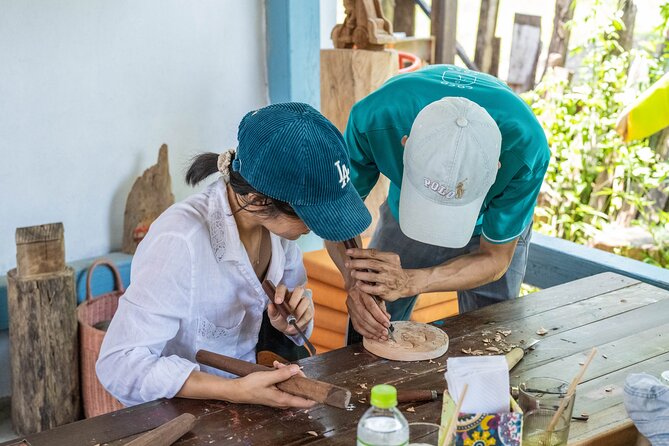
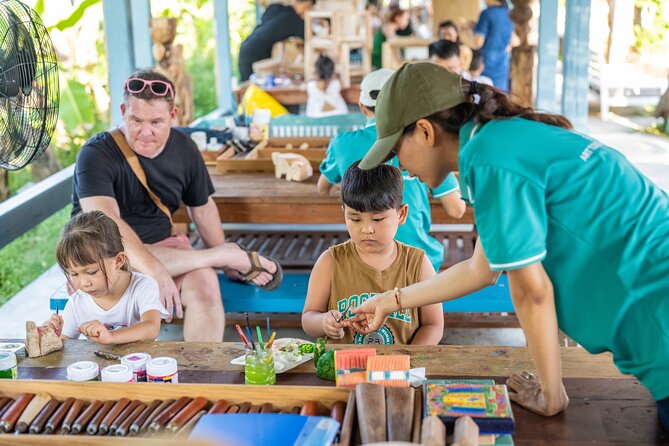
The workshop caps at 16 travelers, which is a good size for hands-on learning. It usually means you can actually get feedback when you need it. In a family setting, that matters a lot. You do not want your child (or your own patience) waiting too long for attention when something needs a quick correction.
The workshop is clearly set up to work across ages. One set of experiences included families with children around 7, 9, and 12, plus adults up to mid-50s. Another note emphasized that it is interactive enough for kids, and that the pace and support can suit different ages.
So who is it best for?
- Families who want a shared activity that does not turn into screen time
- People who like craft work more than passive sightseeing
- Anyone who wants a meaningful souvenir made with local guidance
Who might find it less ideal?
If you want a purely relaxed walking tour with no tools involved, this will feel like a workshop, not a wander. Also, carving and painting require focus for a couple hours, so if you are looking for something with zero concentration, you might prefer a museum visit or a market stroll instead.
Price and value: why $43 feels fair for artisan-led making
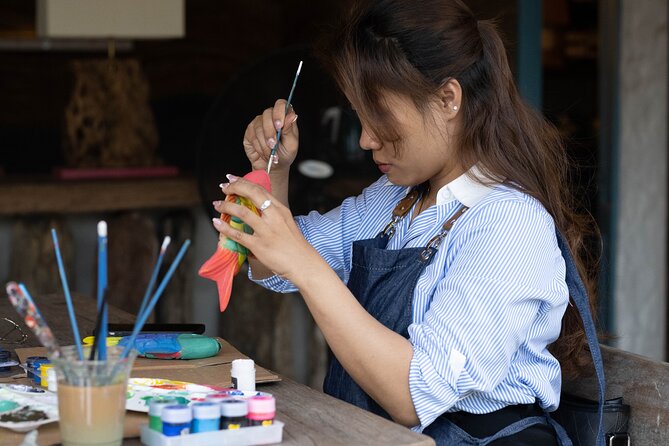
At $43 for about 2 hours 30 minutes, you are paying for more than materials. You are paying for a workshop guide, artisan instruction, and the tools and painting supplies that are included. Carving tools and painting supplies are part of the package, which can make this feel like better value than a self-guided workshop where you end up renting tools separately.
The other value factor is the small group cap. With a max group size of 16, the artisans can actually help you during key moments, like how to hold tools safely and how to carve without ruining your design.
Two extra things that can improve value in practice:
- Group discounts are available, which can lower the per-person cost if you travel with friends or family
- You get a mobile ticket, which keeps your day simple once you are in Hoi An
Just remember the one cost not included: private transportation. If you need a taxi or Grab ride, that adds to your total. Still, many people find the hands-on result is worth planning for.
Timing, weather, and what to wear so you stay comfortable

The workshop runs for about 2 hours 30 minutes, and it can fit into either the morning or the afternoon. That flexibility is helpful when you are building a Hoi An day around other activities.
Weather matters, since the experience requires good weather. So on a cloudy or rainy day, plan to have your schedule flexible enough to switch dates if needed. Also, because you will be carving and painting, dress for hands-on work. Wear something you do not mind getting dust or paint on.
If you are traveling with kids, this is even more important. Protective clothing is the difference between a fun class and a frantic cleanup afterward.
Logistics that actually matter on the day
Your activity starts at Làng Củi Lũ Hội An – Driftwood Village in Cẩm Hà. The session ends back at the meeting point, so you do not need to coordinate a second pickup.
You should expect to get confirmation at the time of booking. And if you are bringing a service animal, the experience allows them. In terms of participation, it says most travelers can join, which fits the workshop’s family-friendly setup.
Should you book this Traditional Wood Carving Workshop?
I think you should book it if you want a hands-on Hoi An activity with real craft instruction and a take-home piece that actually feels personal. The combination of Kim Bong tradition context, driftwood storytelling, and step-by-step carving and painting makes it more meaningful than a typical souvenir stop.
Skip it if you are mainly looking for scenery, cafes, or a low-effort activity with no tools. Also, if weather is unpredictable and you cannot adjust plans, the good-weather requirement can be a risk.
If you do book, go with one mindset: treat it like a making session, not a quick photo opportunity. The payoff is in the time you spend under guidance, getting your own driftwood artwork finished.
FAQ
How long is the Traditional Wood Carving Workshop?
It lasts about 2 hours 30 minutes.
Where does the workshop take place in Hoi An?
The start point is Làng Củi Lũ Hội An – Driftwood Village, Tổ 13 Thôn Đồng Nà, Cẩm Hà, Hội An, Quảng Nam 560000, Vietnam. The activity ends back at the same meeting point.
How much does it cost?
The price is $43.
What is included in the workshop fee?
Carving tools and painting supplies are included.
Is transportation included?
No, private transportation is not included.
How big are the groups?
The workshop has a maximum of 16 travelers.
What do I learn during the workshop?
You learn about the traditions connected to the Kim Bong carpentry village and Lang Cui Lu, you learn about driftwood, and you practice basic chiseling techniques. You also carve and paint your own work of art from recycled driftwood.
Does the activity require good weather?
Yes. The experience requires good weather, and if it is canceled due to poor weather, you will be offered a different date or a full refund.
When will I get confirmation after booking?
Confirmation is received at the time of booking.
Can most people participate, and are service animals allowed?
Most travelers can participate, and service animals are allowed.
More Workshops & Classes in Hoi An


More Tour Reviews in Hoi An
Not for you? Here's more nearby things to do in Hoi An we have reviewed











Workshops, compared.
 ★ 4.9Vietnamese Coffee Culture and Coffee Making ClassFrom $144,006 reviews
 ★ 4.9Vietnamese Foldable Lantern Making ClassFrom $103,742 reviews
 ★ 5.0Cooking Class Hoi An:Local Market, Basket Boat, Fishing & CookingFrom $283,660 reviews
 ★ 5.0Hoi An Cooking Class(Market,BasketBoat Crabfishing&Cooking Class)From $283,386 reviews
 ★ 4.8Market Tour, Basket Boat Ride and Cooking ClassFrom $172,208 reviews
 ★ 5.0Hoi An Full Lantern Making Class- A special Foldable lanternFrom $152,007 reviews
 ★ 5.0Hoi An Cooking Class(Local market,Basket Boat,Fishing & Cooking)From $281,323 reviews
 ★ 4.9Basket Boat Ride, Cooking Class by HangcoconutFrom $19802 reviews
Browse the lists this tour appears in