
REVIEW · PRIVATE
Private Motorbike tour and Discover local villages around Hoi An
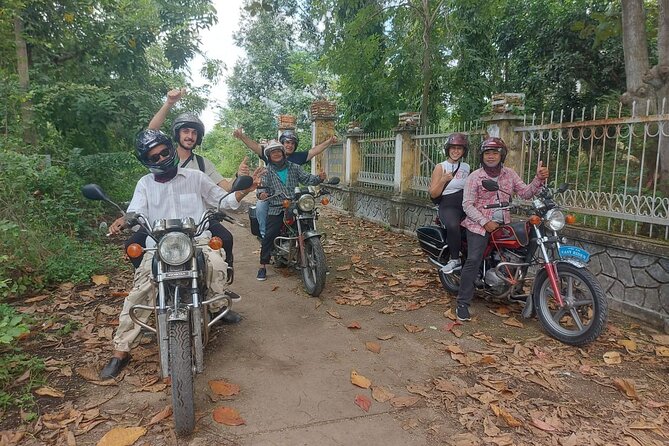
Motorbike villages beat any museum. This half-day ride turns the Hoi An countryside into living workshops, with real makers and a few chances to try the crafts yourself. I especially love the hands-on pottery and rice-paper experiences, and I also like how the route moves through working villages, not just photo stops. One thing to consider: it is a tight 4 hours, so if you want long, slow hangouts in a single place, you may feel a bit time-pressed.
You get a private setup on your own group, starting at Market Bar on the Market Terrace area. Pickup and travel time are included in the total duration, so you are not wasting half the day figuring out logistics. I also appreciate that the tour uses a mobile ticket and keeps things straightforward, but it does rely on decent weather.
Key points you will care about
- Private motorbike time with a route built around working craft villages near Hoi An
- Hands-on practice: try pottery, make or work on rice-paper noodle steps, and experiment with weaving
- Admission included at the main stops, so you are not constantly checking extra costs
- Boat and wood work on the river at the carpentry stop, not just carved souvenirs
- Mat weaving with a purpose: mats historically replaced mattresses and can be reused after washing
The route around Hoi An: why the ride matters as much as the stops
This is not a sit-on-a-bus tour. It is a motorbike ride through the countryside where you can actually see how daily life connects to the crafts. You pass rice fields and small village roads, then you arrive at communities where the work is ongoing, not staged for visitors.
That movement is part of the value. If you only visit a shop or a museum display, you miss the process. Here, each stop is tied to a practical, repeatable job, from clay forming to rice processing to weaving threads into mats. It makes everything you see feel less like shopping and more like understanding how things are made.
Another strong plus is the variety in one morning or afternoon block. In a single tour you go from pottery to noodle and rice-paper production to carpentry, then to mat weaving. That variety is why the day often feels “exciting and diverse” even when you are not chasing big landmarks.
You can also read our reviews of more private tours in Hoi An



Pickup, private ride, and the 4-hour timeline (without feeling rushed)
The whole experience runs about 4 hours, including travel time. You start and end back at the same meeting area, at Market Bar on the Market Terrace side near D. Bạch Đằng and 02 Hoàng Diệu in Cẩm Châu, Hội An.
The “private” part matters here because it lets the schedule feel like it is built for your group, not a factory line of strangers. You also get a mobile ticket, and confirmation comes at booking time. In practical terms, that means less back-and-forth, more time focused on the experience.
The one timing reality: each main stop is roughly 40 to 50 minutes. That is long enough to watch how the craft works and still get some hands-on time, but not long enough to become a master. If you are the type who likes to linger and ask endless questions, you may want to save those deeper follow-ups for a second visit later, or buy something small from the village stores to support the makers.
Weather is also a factor. The tour is best in good conditions, and if weather turns poor, the operator offers an alternative date or a full refund. So plan smart, especially if you are traveling in the wet season.
Stop 1: Thanh Hà Pottery Village, where you start with clay
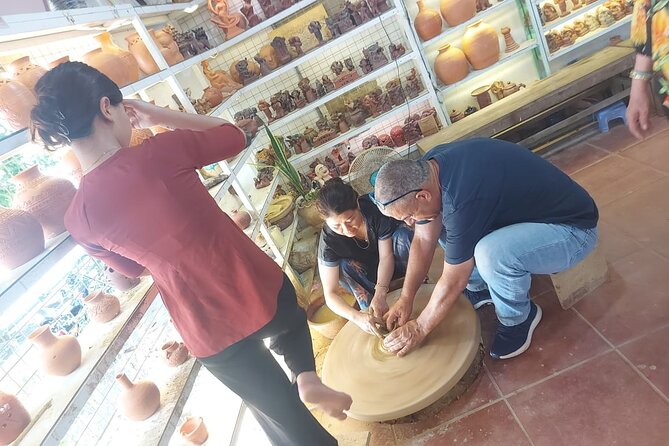
Thanh Hà Pottery Village is your first workshop stop, and it is a classic way to understand a craft because you begin with the raw material. Local people make pottery from clay, and the owner teaches you how to create items such as ashtrays and vases before you make your own piece.
What I like about starting with pottery is that you quickly get the sense of “process first.” You are not only looking. You are learning the basic steps and then putting your hands to the work. That hands-on moment changes your perspective when you later see finished goods in shops.
The visit is about 50 minutes, and admission is included. That matters because it keeps your brain on the experience instead of money math. You will also have time to visit the store afterward, where you can browse what the artisans produce.
One consideration: pottery is hands-on, which means you may end up with clay on you, or with that slightly messy workshop vibe. Bring patience, and wear something you are comfortable getting a little dirty.
Stop 2: Cẩm Kim Island, the noodle factory that also makes rice paper
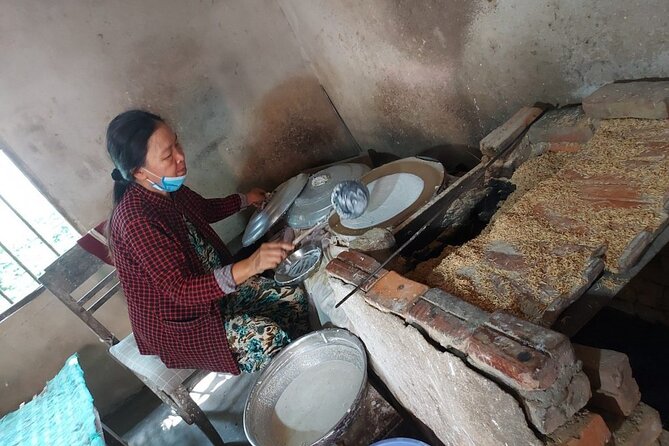
Next up is Cẩm Kim Island, where you will see a homemade noodle factory and learn how rice paper connects to everyday food. This stop includes a clear, step-based process for making noodles and rice paper from rice grains.
The sequence starts with soaking rice for about 6 hours. After that, you grind with water, then heat a specialized pot, and you continue through the production steps from there. Even without memorizing every action, the value is that you see the craft as a chain of small moves, not one magic trick.
Why this stop is so popular is simple. Rice paper is so common in Vietnamese cooking that it is easy to treat it like a store-bought ingredient. Here, you see the work behind it. You learn how it begins, and that makes every later meal feel more personal because you know the effort behind one thin sheet.
This stop is also about 50 minutes with admission included. You get enough time to watch, ask questions, and understand the flow of production, rather than just snapping photos and rushing out.
Stop 3: Kim Bồng Carpentry Village, from wood carving to river boat work
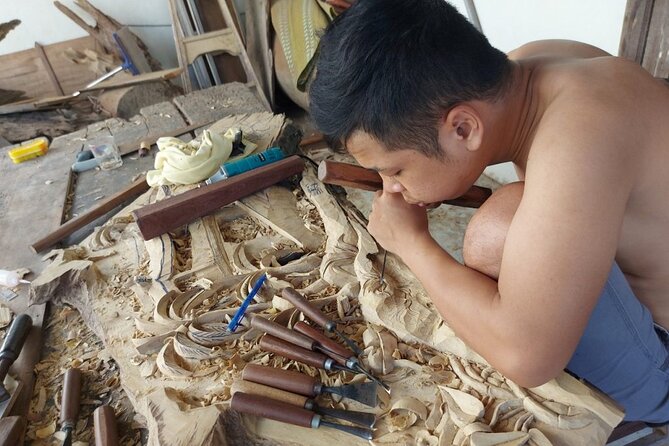
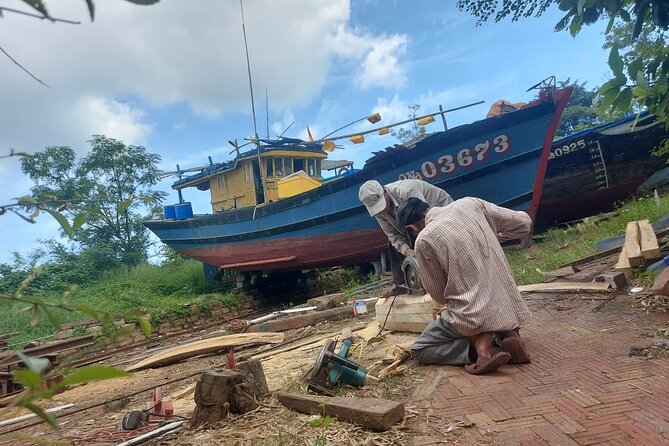
At Kim Bồng Carpentry Village, the focus shifts from food to wood and bamboo. You will see carpenters at work designing and carving wood products. The work takes time and patience, and you feel that when you watch how slow, careful shaping becomes real objects.
But the most memorable part for many people is the boat angle. The village also supports ship carpenters who work on the river, busy renovating and manufacturing wooden ships. That is a different kind of craftsmanship from decorative carvings. It is functional, demanding, and tied to a local working landscape.
This stop lasts around 40 minutes, and admission is included. That is enough time to understand the variety of products made from wood and bamboo, and to spot the difference between “pretty” woodworking and more structural, ship-related work.
A small practical note: wood and workshop spaces can be dusty and bright, so protect your eyes and keep an eye on your footing. If you like photography, this is one of the better stops, because the work has motion and detail.





Stop 4: Tra Nh iêu Mat Village, learning from a plant and making weaving work
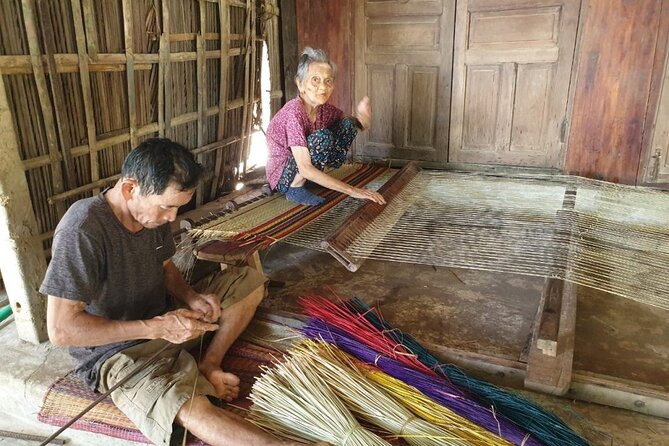
Tra Nh iêu is your final main craft stop, focused on mats. These are not modern foam mattresses. Historically, locals used mats as a mattress replacement when the weather was hot and air conditioning was not part of daily life. The practical side is that these mats can be reused after hand washing.
You will first see the plant source for the mats and learn how it is processed into threads. Then those threads get woven into mats. The tour also explains the color-making side, where colors come from the carpets that will later be used as sleeping mats.
What makes this stop feel special is the human side of the work. You can watch women and small children weave mats, including the new generation carrying the skill forward. That detail turns the tour from “watching crafts” into watching people train future makers.
You also get an opportunity to experiment with the weaving process. That is the kind of hands-on activity that tends to stick in your memory because you leave with a better understanding of why weaving is slow and why a good result depends on consistency.
This stop runs around 50 minutes, and admission is included. If you want to buy something meaningful at the end of the day, mats can be a good choice because you understand the labor behind them.
Lunch in Hoi An: light vegetarian, close enough to keep the day rolling
After the village stops, the tour drives you to a local restaurant for a light vegetarian lunch. It is around 50 minutes.
I like having lunch included because it keeps you from having to hunt for food after a full stretch of watching, riding, and trying. Also, the vegetarian style is a simple way to keep the day easy for many people, especially if you are not trying to plan around dietary needs mid-tour.
Keep your expectations aligned with the word light. This is meant to recharge you, not stretch the day into a second event. If you want a big feast, you can add that later on your own.
Price and value: why $55 can make sense here
At $55 for about 4 hours, this can be good value, mostly because you are not only paying for transportation. Your ticket covers a lot of the “experience inputs.”
Here is the value logic that matters:
- The tour is private for your group, which can be a big deal in Hoi An where shared tours are common.
- Pickup and travel time are included, so the time cost stays reasonable.
- Admission tickets are included at the main craft stops (pottery, rice-paper and noodles, carpentry, mats).
- You get structured time at each place, plus a lunch stop afterward.
Could you spend less by going on your own? Sure. But DIY usually turns into a search problem: finding the right workshop order, arranging transport, and figuring out what is worth your time. Paying for this kind of route helps you skip the guesswork and focus on the craft.
Who gets the best deal? People who want variety in one half-day, people who prefer real working villages over staged sites, and people who like hands-on activities even if they are only beginner level.
Who this motorbike craft tour fits best
This tour is a strong match if you want:
- A break from Hoi An crowds, with a real countryside feel
- A day that mixes looking and doing, not just watching passively
- A family-friendly style of experience where kids can learn by watching and trying parts of weaving or craft steps
- A good overview of multiple traditional skills, ceramics, rice-based foods, wood and bamboo, and mat making
It may be less ideal if you:
- Hate time limits and want to linger for hours in one workshop
- Prefer sightseeing focused on monuments rather than crafts and daily production
If you are traveling with kids, the mat weaving stop especially makes sense because you see the next generation working alongside adults. And it is easier to explain what they are doing when the tour connects each craft to a practical use.
Practical tips to make the day smoother
I do not have access to every detail about what is provided, so I stick to the basics that help most motorbike and workshop days.
Wear comfortable clothes you can move in. You will likely spend time close to work tables and in workshop environments. Bring sun protection, because parts of village roads and open work areas can feel bright. If you are sensitive to dust, a light mask can help, especially near woodworking areas.
Also, go with a beginner mindset. The pottery and weaving experiment are not about making perfect items. They are about learning the rhythm of the craft.
Finally, keep one small camera-friendly rule: if you are learning something, pause first and then take photos. It keeps the experience respectful and reduces the chance of rushing your own guide.
Should you book this private motorbike village craft tour?
I think you should book it if you want a half-day that feels local and hands-on, with real makers working across pottery, rice paper and noodles, wood and boat carpentry, and mat weaving. The big win here is that the day connects process to people, not just products.
I would skip it if your top priority is long sightseeing sessions at a few places, or if you know you dislike structured workshop time. Also, watch the weather forecast since the tour requires good conditions.
If you are deciding between a quick day tour and a “deeper” cultural experience, this one lands in the middle in a good way. It gives you variety, practical learning, and a private route, all in a manageable 4-hour window.
FAQ
How long is the Private Motorbike tour around villages near Hoi An?
It runs for about 4 hours, and that total includes travel time.
What does the tour cost?
The price listed is $55.
Where do we meet and where does the tour end?
You start at Market Bar – Market Terrace (near D. Bạch Đằng / 02 Hoàng Diệu, Cẩm Châu, Hội An) and the tour ends back at the same meeting point.
Is pickup included?
Pickup is offered, and travel time is included in the tour duration.
What can you do at Thanh Hà Pottery Village?
You visit the pottery village, get taught how to make products like ashtrays and vases, then make something yourself, and you can visit their store afterward.
What do you see and learn on Cẩm Kim Island?
You visit a homemade noodle factory where rice paper and noodles are made from rice grains. The process includes soaking rice for about 6 hours, grinding with water, and heating a specialized pot, among other steps.
What happens at the mat village stop?
You see the plant used for mats, learn how it is processed into threads, and watch women and children weave mats. You also have the chance to experiment with weaving. The tour explains that these mats were used as mattress replacements and can be reused after hand washing.
Is lunch included?
Yes. After the tour, you drive to a local restaurant for a light vegetarian lunch.
More Private Tours in Hoi An



More Tours in Hoi An




More Tour Reviews in Hoi An
Not for you? Here's more nearby things to do in Hoi An we have reviewed









Private, compared.
 ★ 5.0Easy Rider private tour via Hai Van pass from Hue – Da Nang – Hoi An (1Way|Loop)From $551,542 reviews
 ★ 5.0Hai Van Pass Motorbike Private Tour with Mister T Easy RiderFrom $58742 reviews
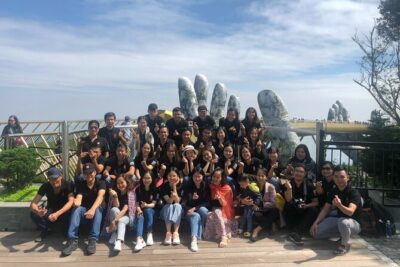 ★ 5.0Ba Na Hills with Golden Bridge Private TourFrom $75708 reviews
Marble Mountain, Monkey Mountain Peak, Lady Buddha PRIVATE TOURFrom $75518 reviews
★ 5.0Ba Na Hills with Golden Bridge Private TourFrom $75708 reviews
Marble Mountain, Monkey Mountain Peak, Lady Buddha PRIVATE TOURFrom $75518 reviews
 ★ 5.0HOI AN Hidden Gems in Rural Villages & River Islands PRIVATE TOURFrom $65494 reviews
Da Nang International Airport PRIVATE Transfer To Da Nang/Hoi AnFrom $5392 reviews
★ 5.0HOI AN Hidden Gems in Rural Villages & River Islands PRIVATE TOURFrom $65494 reviews
Da Nang International Airport PRIVATE Transfer To Da Nang/Hoi AnFrom $5392 reviews
 ★ 5.0Hue: Private Car to Hoi An via Fabulous StopsFrom $26371 reviews
 ★ 5.0Private guided Sunworld Ba Na Hills & Golden Hands BridgeFrom $100264 reviews