
REVIEW · MORNING
Hoi An Sunrise Tour to Hidden Local Villagers
Waking up early here pays off. This Hoi An sunrise tour takes you out to local family industries and quiet village rhythms, with stops tied to fish sauce, noodles, and mat weaving. You also get a real sense of how everyday work connects to the wider Quang Nam region, not just postcard sights.
What I like most is the small group size (max 8), which keeps the pace calm and the questions flowing. The second big win for me is the guide style, with people like Hoa, Tham, Huong, and Nhat using practical explanations and clear connections to what you are seeing.
One thing to consider: it starts at 5:00 am and runs about 4 to 5 hours, so bring patience (and sleep backup) if you are not a morning person. Also, the tour needs good weather, so you may have to shift dates if conditions are bad.
Key reasons this tour feels different
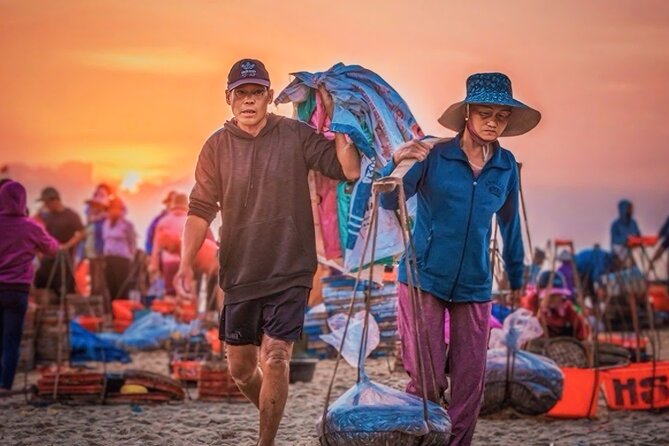
- 5:00 am start gives you quieter village energy before the day gets busy.
- Max 8 travelers means more time at each stop instead of rushing photos.
- Duy Vinh fish sauce craft shows how dipping fish sauce is made and processed at a family level.
- Cam Kim Island work life focuses on real production, including mat weaving for the market.
- Cua Dai Bridge perspective helps you understand how Hoi An links to other districts across the Thu Bon River.
- Admission at stops is free, so your $49 goes toward time with local hosts and transportation.
A 5:00 am sunrise tour that makes Hoi An feel like real life
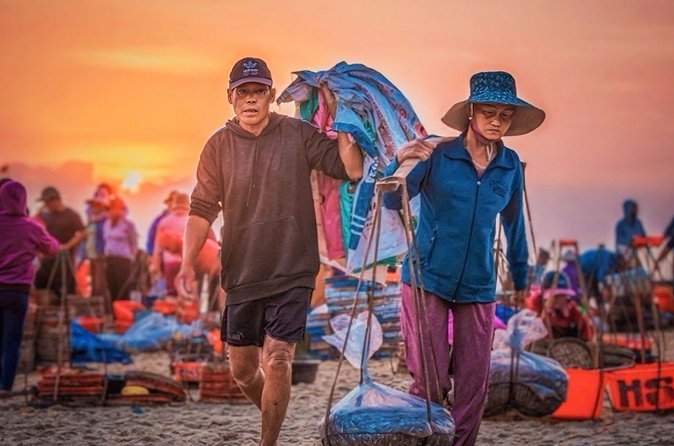
Starting at 5:00 am changes everything. In old town, the morning pace is still getting going, but out in the villages you can feel the day already in motion. You’re not just collecting views, you’re watching routines that locals build their livelihoods on.
This early start also helps you see the work without the later-day crowding. You’ll have time to listen, ask questions, and notice details people tend to miss when they visit at midday.
Just keep expectations simple. This is not a “look at this, now run to the next highlight” kind of morning. It’s a slow, focused circuit built around trades and daily tasks.
More Hoi An lantern evenings, food walks, village rides, island trips, and central Vietnam day tours to compare


Small group, calm pace, and guides who connect the dots
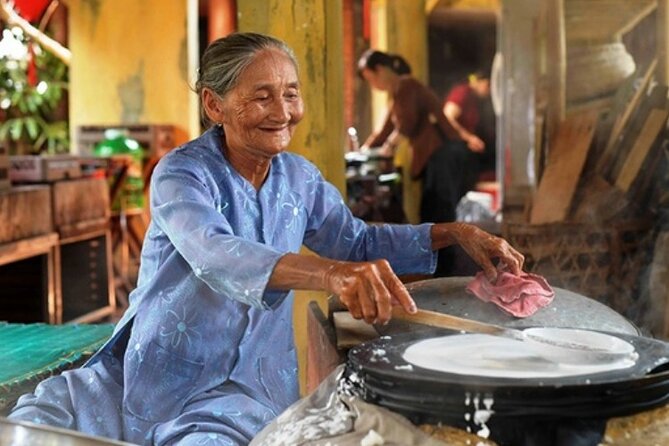
The tour caps at 8 travelers, which matters more than most people think. You can move at a human pace, and you’re less likely to feel like you’re standing in someone else’s queue.
I also like that the experience is hosted by Billy Vietnam Travel, with guides such as Hoa, Tham, Huong, and Nhat showing up by name in the guide stories. That personal touch comes through in how they talk about local work and how they introduce the people at each stop.
If you prefer a tour where explanations feel practical and grounded, you’ll probably enjoy this setup. The tone is designed to support local industries and show how Vietnamese families maintain their occupations, not just drop you at a viewpoint.
Stop 1 in Duy Vinh: fish sauce making, family work, and dipping sauce secrets
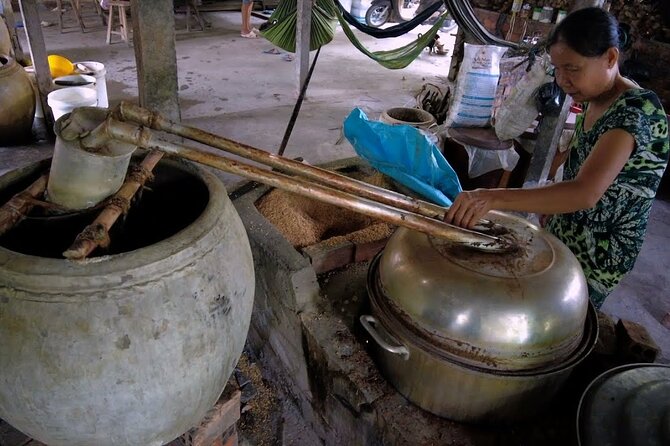
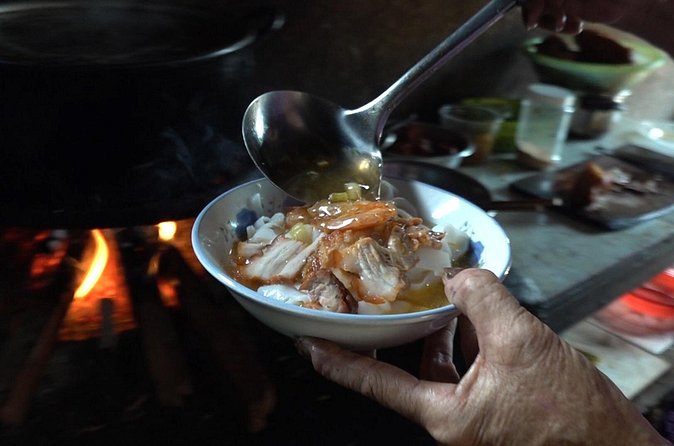
Your first stop is Duy Vinh, where you learn about how Vietnamese families make fish sauce and how the savory dipping sauce gets processed. Fish sauce is one of those ingredients most visitors recognize, but it’s usually treated like a product you buy, not a craft you understand.
Here, the tour frames it as work that lives in families. You’ll get a clearer picture of the processing steps and the idea that the sauce is not just flavor, it’s labor, timing, and local know-how.
A nice practical angle is that the stop is about 1 hour, with admission listed as free. That means you can take in a focused education without feeling trapped in a long workshop.
Possible drawback: if you are hoping for lots of hands-on activity, the schedule emphasizes seeing and learning rather than doing. Still, the payoff is understanding what you’ll taste later in restaurants, even if the tour itself is more about the process than the tasting.
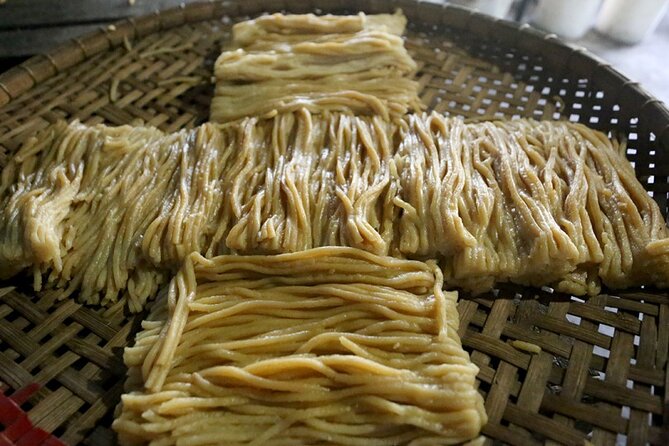
Cam Kim Island: noodles and the food-work connection
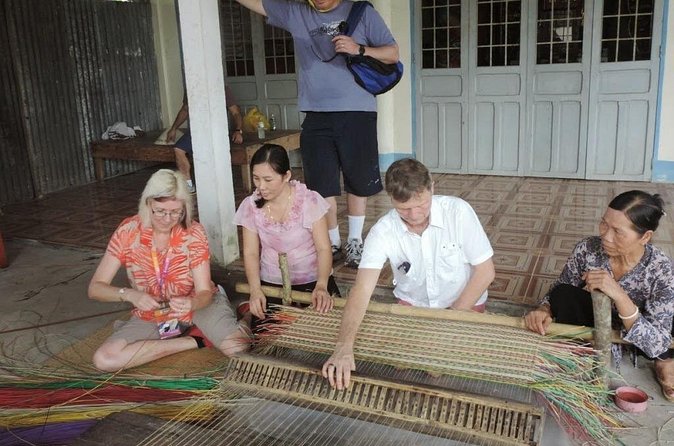
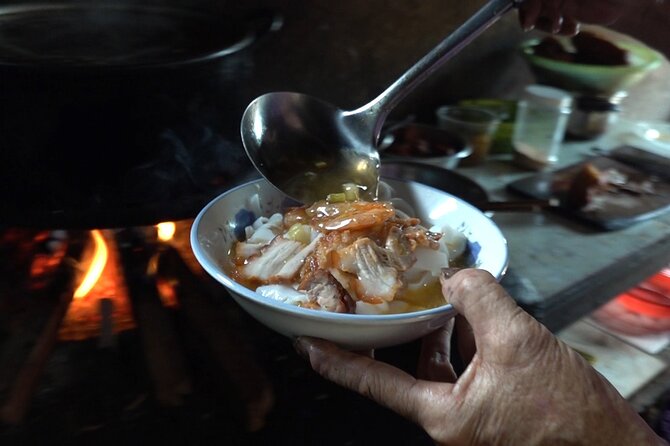
Next you head to Cam Kim Island for another roughly 1 hour stop. This part is centered on noodles, and the tour uses that as an entry point into local food culture. Vietnam is famous for noodles, but the local story matters, because noodle work is also tied to daily production and supply chains.
I like this stop because it connects food to people. It’s easy to treat noodles as a category on a menu. Here, you’re nudged to think about how local livelihoods support what visitors enjoy.
As with the other stops, admission is listed as free, so you’re paying for guided time and access, not extra ticket costs.
Potential consideration: if you strongly prefer “scenic photography” stops, this segment is more about understanding than viewing. The value is in learning how local trades function.
Cua Dai Bridge: a practical look at the Thu Bon River and the Quang Nam road network
Between village stops, you spend time at Cua Dai Bridge, spanning the Thu Bon River. The tour explains how it connects Hoi An City with the Duy Xuyen District, and places it along a coastal road in central Quang Nam.
This might sound like a geography lecture, but it’s useful. You start to see why Hoi An feels tied to the region around it, not isolated like a bubble. The bridge is part of that daily movement, and understanding that helps your later sightseeing make more sense.
Because the time here is listed as about 1 hour, you don’t lose the morning to a slow drive-with-no-moment. You get a defined stop with context.
Possible drawback: if you want the trip to be only workshops and village life, this bridge stop could feel like a break. I’d treat it as an intentional reset so the rest of the morning lands better.



A second Cam Kim Island visit for mat weaving and village production
The tour returns to Cam Kim Island for a second 1 hour visit, and this is where one of the most striking local-work details shows up.
Cam Kim has about 200 households, and around 80 percent work in mat weaving. Each year, the village supplies the market with millions of mats across different designs and decorative patterns.
That’s a big number, and it changes how you look at souvenir mats. Here, you learn they are not just crafts made for tourists. They’re part of a production system, with family labor driving supply and variety.
I also like that the tour is structured so you see more than one side of island life. You start with food work through noodles, then you come back for the production work through weaving. That gives you a fuller sense of how daily livelihoods stack up.
Possible drawback: mat weaving is visually interesting, but it’s also a real production process, not a staged show. If you expect everything to be nonstop demonstrations, you may find some moments quieter than you imagined. The value is watching how people keep their work going.
What $49 buys you, and why free admissions matter
At $49 per person for about 4 to 5 hours, this is priced like a half-day experience. The biggest value piece is that admissions for the listed stops are marked as free, so you are not paying additional entry fees on top of the guide.
You’re also getting a morning that includes multiple sectors: food craft, textile weaving, and a regional connection point at the bridge. That combination is harder to build on your own without knowing where to go and who to ask.
Another value factor is timing. Tours that start at 5:00 am tend to be easier when the organizer handles the schedule. You don’t have to coordinate a multi-stop route across Hoi An and the island areas.
Quick planning note: the tour is commonly booked about 18 days in advance on average, so if you’re traveling during busier weeks, don’t wait until the last minute.
Pickup, mobile tickets, and how to make logistics less stressful
Pickup is offered, and the meeting start time is 5:00 am. You’ll also have a mobile ticket, and the meeting area is described as near public transportation, which gives you options if you do not want to rely on pickup.
Why does this matter? Early tours create a bigger “margin for error” problem. If you miss a morning transfer, you miss the entire day’s plan. Having clear meeting logistics and mobile ticket support reduces that risk.
This is also a tour where “most travelers can participate.” That suggests the pace and route are generally set up for a broad range of visitors, not only a specialist crowd.
Weather and group limits: the real rules behind a smooth sunrise morning
This experience requires good weather. If it’s canceled due to poor weather, you’re offered a different date or a full refund. That’s important in central Vietnam, where rain can change plans fast.
The tour also has a minimum number of travelers. If the minimum isn’t met, you’ll get a different date/experience or a full refund. In practice, it means booking earlier is smart, both for availability and for reducing the chance of a reschedule.
The good news is the group is capped at 8, so you’re not packed in. That balance, between flexibility and a capped headcount, is part of why the experience feels personal.
Who should book this sunrise village tour
This tour is a strong match if you like:
- learning how ingredients and products are made at the household level
- morning outings with fewer crowds and a calmer feel
- tours where the guide helps you connect your everyday eating and shopping to real local work
- a smaller group pace instead of a big coach-style morning
It may not be the best fit if you want:
- long, scenic photo stops with lots of free time
- a tour that focuses only on the old town highlights
- zero early mornings, because 5:00 am is the anchor point
Practical tips for making the most of your 5:00 am start
- Pack water. Four to five hours is long enough to need it, especially early when you’re half awake.
- Wear light layers. Mornings can feel cooler, and you’ll likely be moving between stops.
- Bring a phone with enough battery, but also expect moments where listening matters more than filming.
- If you get a guide like Hoa, Tham, Huong, or Nhat, ask small questions. The tour is designed for those back-and-forth moments.
And if you have dietary sensitivities, you’ll still learn about fish sauce and noodles, but the tour emphasis is on process and work, not meal service. Plan on snacks or breakfast after the tour if you need something substantial.
Should you book this Hoi An sunrise tour to hidden local villagers?
If you want Hoi An beyond the old town streets, I think this is a smart booking. The tour’s value comes from pairing multiple local industries in a morning that runs at a reasonable half-day length and keeps the group small at max 8.
I’d especially recommend it if you care about supporting local work in a direct way, because the whole structure is built around how families maintain their occupations. Seeing fish sauce processing in Duy Vinh and mat weaving in Cam Kim Island turns “Vietnamese food” and “souvenir crafts” into something human-scale.
Before you book, just be honest about the tradeoff: it is early, and the weather needs to cooperate. If that fits your travel style, this sunrise circuit is one of the more meaningful ways to understand how everyday labor shapes what you see and eat in Hoi An.
FAQ
What time does the Hoi An sunrise tour start?
The tour starts at 5:00 am.
How long is the tour?
It lasts about 4 to 5 hours.
Is pickup offered?
Yes, pickup is offered.
How much does the tour cost?
The price is $49.00 per person.
How big is the group?
The tour has a maximum of 8 travelers.
Are admission tickets included?
Admission tickets at the listed stops are marked as free.
What happens if the weather is bad or I need to cancel?
The tour requires good weather. If it is canceled due to poor weather, you are offered a different date or a full refund. For cancellations, you can cancel up to 24 hours in advance for a full refund.
More Morning in Hoi An
More Tours in Hoi An




More Tour Reviews in Hoi An
Not for you? Here's more nearby things to do in Hoi An we have reviewed








Morning, compared.
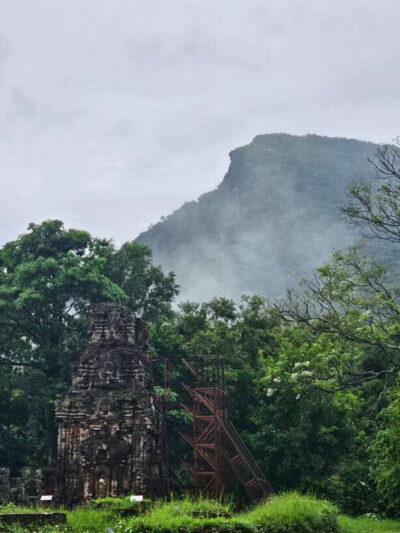 ★ 4.9My Son Sanctuary Early Morning w. Champa Food BrunchFrom $202,750 reviews
 ★ 5.0Morning Small group to Marble Mountains – Am Phu Cave – Monkey MountainFrom $261,097 reviews
 ★ 5.0My Son Sanctuary Morning Tour & Early Morning with Boat TripFrom $19645 reviews
 ★ 5.0Early Morning My Son Sanctuary Trip w. Champa Food & CoffeeFrom $21629 reviews
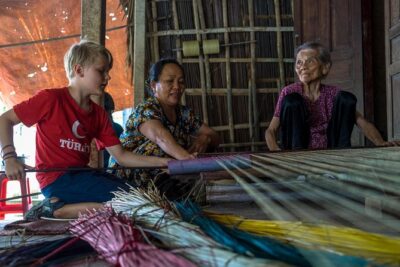 ★ 4.8Morning Countryside Tour by BikeFrom $29303 reviews
★ 5.0Hoi An Morning Countryside Tour by BikeFrom $29282 reviews
★ 4.8Morning Countryside Tour by BikeFrom $29303 reviews
★ 5.0Hoi An Morning Countryside Tour by BikeFrom $29282 reviews
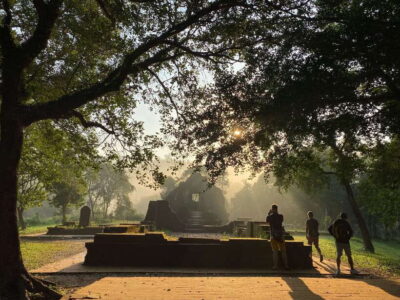 ★ 4.7My Son Early Morning with Banh My and Coffee 6 amFrom $18205 reviews
 ★ 5.0My Son Sanctuary Early Morning Tour 6 am w Banh my and CoffeeFrom $21142 reviews