
REVIEW · FOOD & DRINK
Hoi An: Silk Process, Lantern Making Workshop & Local Food
Silk and lanterns in one 150-minute stop. You’ll see the mulberry-to-silk chain firsthand, and you’ll also make a lantern you keep as a souvenir. The main drawback to consider is that it is not suitable for mobility impairments or wheelchair users.
I like how this tour ties craft work to place and culture, not just a quick demonstration. A guide named Thu is especially praised for being sweet, kind, and on top of the details, which makes the whole process feel easier to follow. If your English is sensitive to accents, keep in mind that at least one previous participant found their guide’s English harder to catch, so choose this tour when you’re comfortable with that risk.
Another plus: you’re not just standing around in a workshop. The visit includes time in peaceful old buildings and gardens, plus a meal that lands right after the hands-on parts, so the day feels complete instead of rushed.
Key highlights that are worth your time
- Mulberry gardens and silkworm feeding, explained in a real working setting
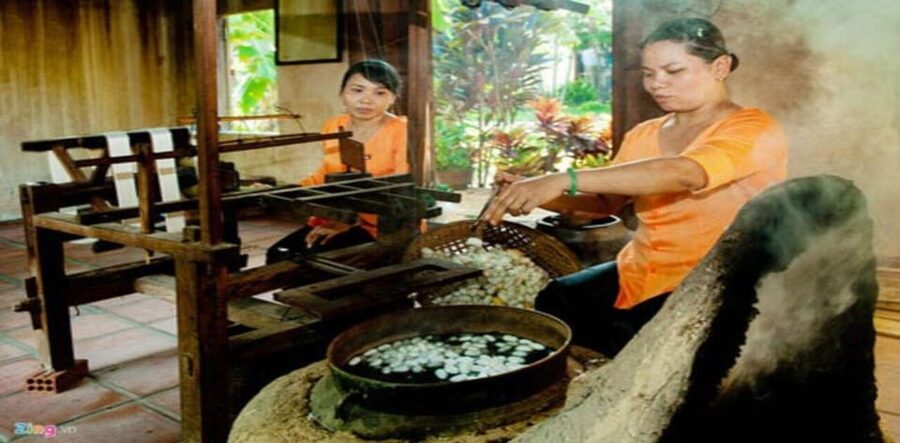
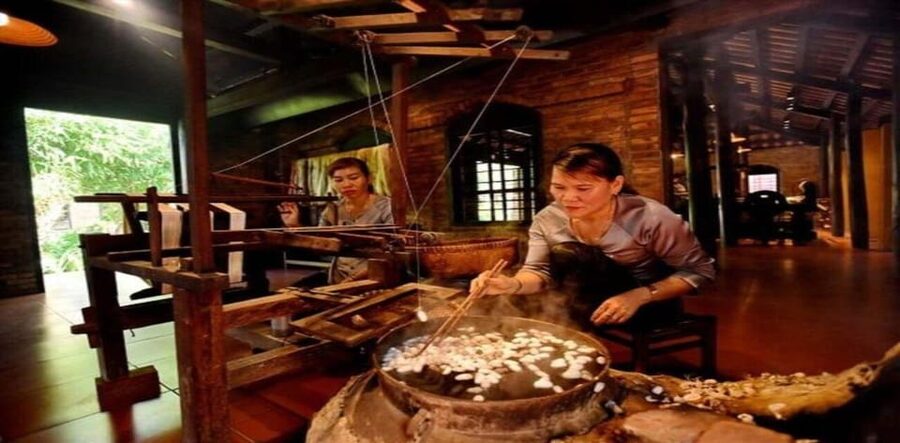
- Cocoon unraveling to silk thread, showing the steps that make weaving possible
- How to spot pure silk vs fake, with a practical exhibition stop
- Lantern making with a keep-it souvenir, plus a clear intro to color and shape
- Included meal with Cao Lau and spring rolls, timed as a satisfying finish
- Guide-led pace and materials provided, so you can focus on learning, not prep
Why Hoi An Silk Village is the right place to learn silk
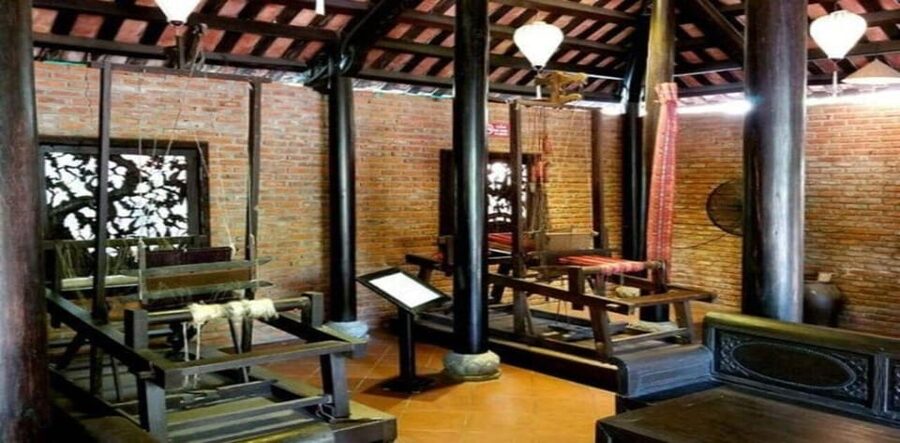
This experience starts at the Hoian Silk Village area on Nguyen Tat Thanh street, so you’re not bouncing between unrelated stops. It’s set up to show why Hoi An’s silk tradition matters, especially the handmade weaving method connected to the Champa to Dai Viet era.
One of the most useful details you’ll get here is context. The silk village is described as the only location with valuable genetic sources of mulberry, which matters because mulberry is the base food for silkworms. In plain terms, it helps explain why this craft could keep going in Hoi An and still look like itself today.
You’ll also get a look at how sericulture and textile work fit into daily life, not just high-end fashion. That connection is what makes this more interesting than a generic craft workshop.
You can also read our reviews of more food & drink experiences in Hoi An


Mulberry gardens and silkworm-breeding houses, the start of the process
The tour begins with a welcome drink, then moves into the story of craft sericulture in Quang Nam, including a stop at a traditional house. This isn’t just set dressing. You get the background for what you’re about to see, so the later steps make more sense.
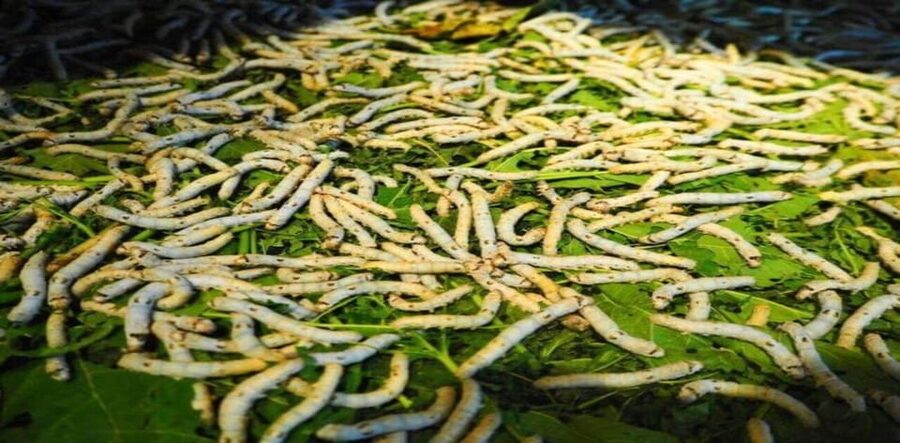
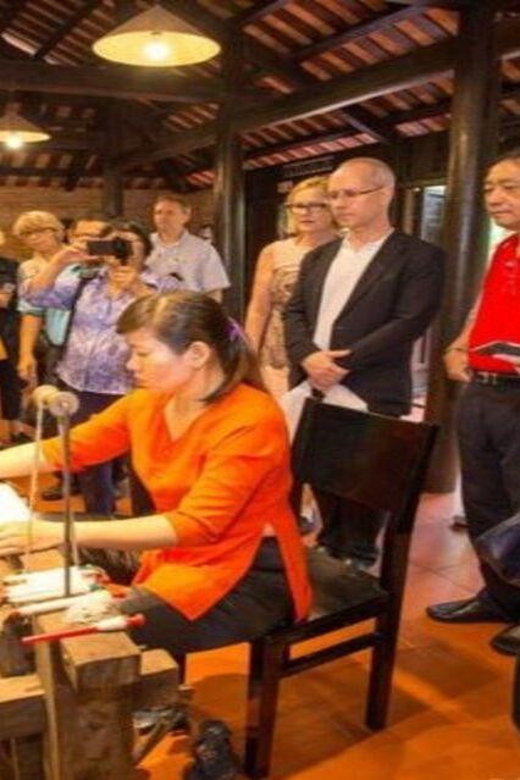
Next comes the part most people remember: the ancient mulberry gardens and the silkworm-breeding house. You’ll learn how to feed silkworms the traditional way and how the process runs as a living routine. It also gives you the rare chance to see how silk starts long before any fabric exists.
If you like nature-oriented craft, this section is where you’ll feel it. It’s quieter and slower than the hands-on parts, and it helps you understand what the artisans are working with.
From cocoons to silk thread in the Unraveling House
After silkworms and cocoons come the technical step: how silk thread is taken from the cocoon. You’ll visit the Unraveling House, where the focus shifts from biology to making usable thread for weaving.
This is the moment the whole experience clicks. You’ll see the idea behind what you’ll be weaving later in the silk story, because thread has to be processed in a way that makes it workable. Even if you never plan to weave at home, you’ll leave knowing why silk fabric feels different from most other fibers.
This section also works well if you’re a visual learner. Instead of only hearing about silk, you watch the conversion from cocoon material to thread as a clear sequence.
Champ handicrafts and weaving house visits
One of the tour’s strengths is that it doesn’t keep you in a single lane. Along the way, you’ll discover handicrafts of the Champ people and how traditional textiles are made while visiting the Vietnamese traditional silk weaving house.
This is where you start seeing silk as more than a single item. The focus shifts to technique and tradition, and you get the sense that weaving practices are shaped by culture, tools, and how garments were made over generations.
Practical tip: pay attention to how they describe stages and materials. The tour is built to explain the full pipeline, and understanding the steps makes it easier to appreciate why the final fabric looks the way it does.
The pure silk vs fake silk stop, and how to shop smarter
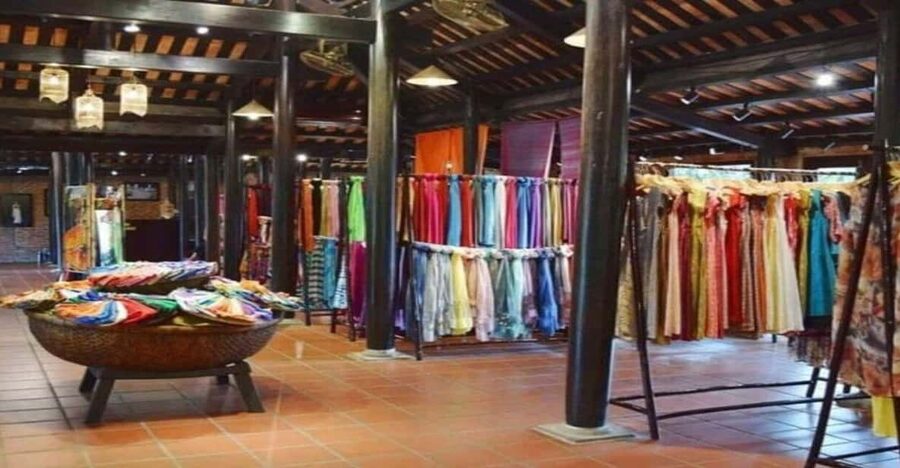
You’ll have an exhibition time at the Hoi An Silk Village area, and this is one of the most useful stops. You’ll learn the difference between pure silk and fake silk fabric, and that knowledge can actually help you shop later in Hoi An.
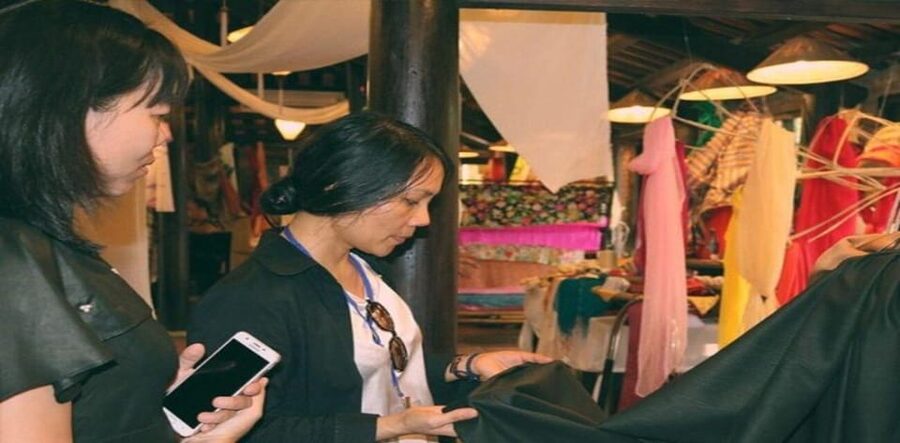
Even if you’re not shopping for tailoring, this part helps you separate hype from quality. The tour also points out that the product range supports different shopping needs, including scarves and items you might want to take home.
What I like about this segment is that it’s not just sales talk. It gives you a framework for thinking like a buyer, so you can ask better questions and feel less rushed.
And if you do want to buy: set a small budget in your head before you reach the exhibition. Silk shops can be tempting, and having a limit keeps you choosing what you truly like, not what you feel pressured to take.
More Hoi An lantern evenings, food walks, village rides, island trips, and central Vietnam day tours to compare





Lantern making class: craft the souvenir and learn the meaning
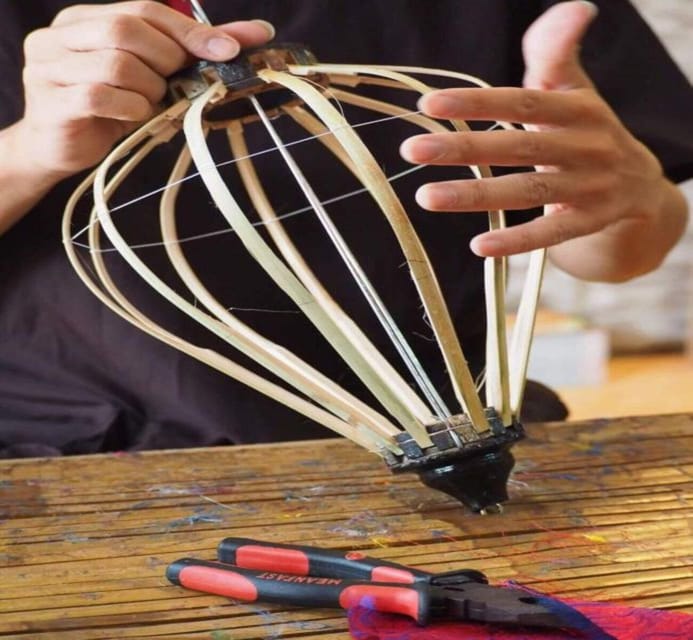
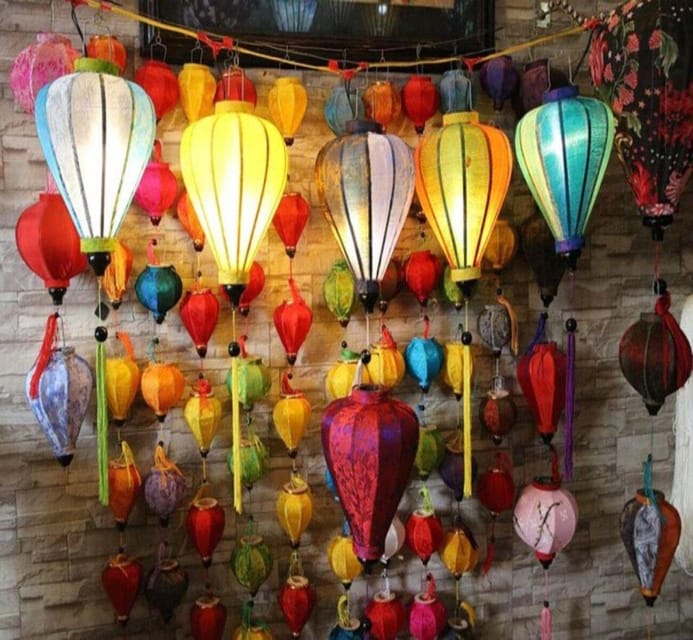
Then the tour turns to lanterns, which have become part of Hoi An culture. This is where you get closer to local history through making something physical, not just reading about it.
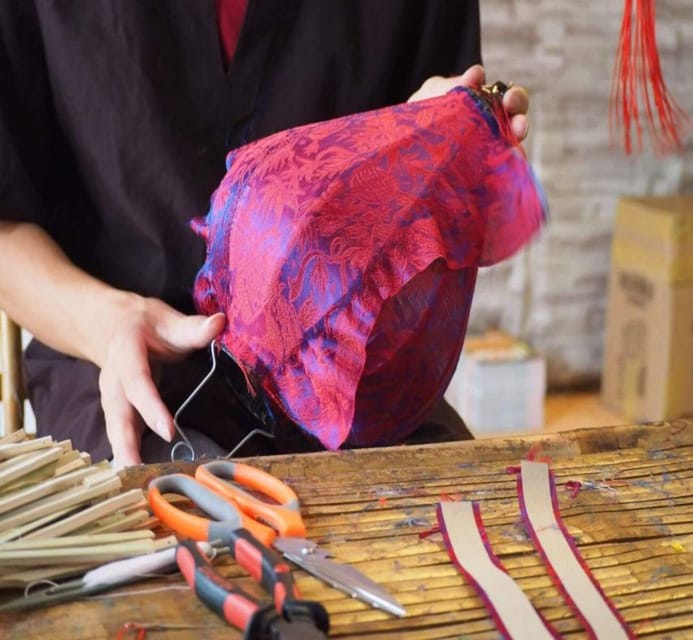
You’ll get a brief introduction to the lantern’s history, plus its shape and color. You’ll also hear about the many stages of making lanterns, which helps you see the craft as a process rather than a magic trick.
After that, you make your own lantern and keep it as a souvenir. This is a big value point because it’s not only an observation tour, you leave with something you created.
If you’re going with a friend group, this is also where the energy usually lifts. It’s structured enough to feel guided, but open enough that your lantern will look like your version, not a photocopy.
Lunch with Cao Lau and spring rolls, timed after the craft work
After the hands-on parts, you’ll enjoy local food to finish the experience. Included in the meal are Cao Lau, deep fried spring rolls, and a fruit plate, plus a welcome drink earlier in the day.
This timing matters. When you’re learning silk steps and focusing on lantern construction, your brain goes into problem-solving mode. Food acts like a reset, so you can actually taste the flavors instead of just snacking while you rush to the next stop.
Good to know for planning: ingredients can be adapted based on vegan, vegetarian, gluten-free preferences, or allergies. If you have specific allergies, it’s worth mentioning your needs clearly when you check in.
If you’re the type who likes learning, then tasting, then shopping, this tour fits that rhythm well.
Price, timing, and what the $22 covers
The stated price is $22 per person for about 150 minutes. For many craft experiences in Vietnam, that’s a reasonable window because you get more than one meaningful component: silk education, lantern making, and an included meal.
You also skip the ticket line, and the tour includes an English speaking guide, entrance fee, materials, and tools. One lantern per person is included, which is usually the expensive part in workshops where you pay for supplies separately.
A caution on cost: on Vietnamese public holidays, there’s an extra charge of 50% per person, paid by cash when booking. If you’re traveling during a holiday period, factor that in early so you don’t get surprised at checkout.
Logistics that actually affect your day
The meeting point is Hoian Silk Village at 28 Nguyen Tat Thanh street. Since hotel pickup and drop-off are not included, you’ll want to plan how you’ll get there and back on your own.
For the 150-minute duration, think of it as a structured half-visit rather than an all-day immersion. You’ll stay long enough to understand the steps, but it won’t swallow your whole afternoon, which makes it easy to pair with other Hoi An sights.
One more practical consideration: the tour is not suitable for people with mobility impairments or wheelchair users. The experience is likely to involve walking through gardens and traditional spaces, so if mobility is an issue, you’ll save time by choosing a different activity.
Who should book this, and who should skip it
This is a great fit if you care about craft process. If you enjoy watching how things are made, and you like leaving with both knowledge and a tangible item, you’ll probably feel satisfied.
It’s also smart for first-timers who want a single tour that covers multiple angles: silk production, weaving context, lantern culture, and a local meal. And if you’re shopping in Hoi An later, the pure silk vs fake silk education can genuinely help you feel confident.
Skip it if you need wheelchair accessibility or if you know you dislike guided craft settings where you follow stages and stay in one site. Also skip if you want a super short activity, because 150 minutes is long enough to feel like a real workshop, not a quick stop.
Should you book the Hoi An Silk Process and Lantern Workshop?
If you want an authentic craft experience that ends with a lantern souvenir and a real meal, this one is worth serious consideration. I’d book it when you can comfortably handle a non-wheelchair-friendly site, and when you’re ready to learn the full chain from mulberry to silk thread to lantern making.
If you’re mainly looking for shopping only, you might find better value with a targeted silk buying tour. But if you want the story behind the items and the satisfaction of making something yourself, this workshop hits the sweet spot of learning plus take-home value.
FAQ
How long is the Hoi An Silk Process, Lantern Making Workshop & Local Food?
The experience lasts about 150 minutes.
What does the tour include?
It includes an English speaking guide, entrance fee, a welcome drink, a meal (Cao Lau, deep fried spring rolls, and fruit plate), one lantern per person, and all required materials and tools.
Where is the meeting point?
You meet at 28 Nguyen Tat Thanh street, Hoi An, at Hoian Silk Village.
Will I keep the lantern I make?
Yes. You make your own lantern and keep it as a souvenir.
Is the meal suitable for dietary needs?
The ingredients can be adapted depending on whether you are vegan, vegetarian, prefer gluten-free, or have allergies.
Is this tour wheelchair accessible?
No. It is not suitable for people with mobility impairments or wheelchair users.
More Food Experiences in Hoi An

More Food & Drink Experiences in Hoi An
More Tour Reviews in Hoi An




Not for you? Here's more nearby things to do in Hoi An we have reviewed











Food & Drink, compared.
 ★ 4.9My Son Sanctuary Early Morning w. Champa Food BrunchFrom $202,750 reviews
 ★ 5.0Da Nang & Hoi An: Food, Sightseeing, Culture & Hidden GemsFrom $72806 reviews
 ★ 5.0Evening Walking Food Tour, folk game and lantern boatFrom $39665 reviews
 ★ 5.0Early Morning My Son Sanctuary Trip w. Champa Food & CoffeeFrom $21629 reviews
 ★ 5.0Hoi An Countryside Jeep Tour: Food, Culture & Daily LifeFrom $79414 reviews
 ★ 5.0Hoi An Countryside Vespa Tour: Food, Culture & Daily LifeFrom $93406 reviews
 ★ 4.5Hoi An at Sunset: Authentic Local Street Food TourFrom $39329 reviews
 ★ 5.0Hoi An Street Food Walking Tour with TastingsFrom $35317 reviews
Browse the lists this tour appears in