
REVIEW · CYCLING TOURS
Biking to Explore Traditional Craft Villages in Hoi An.
First thing you notice, this tour rides through real working villages. You pedal early, meet families who make everyday Vietnamese goods, and actually try your hand at pottery and other crafts. I like that it is practical and hands-on, and I also like the small-group feel with a real English-speaking guide like Hung guiding you step by step. One thing to consider: it is a fast-packed morning with multiple stops, so if you want long, slow photo breaks, you might feel a bit rushed.
You start at 8:00am with pickup from your hotel and a bike, then you hop from craft house to craft house. The route mixes village workshops with countryside scenery, including pagoda and war-history viewpoints, plus chili gardens, corn fields, and rice paddies. It ends around 1:30pm with a boat back to Hoi An Old Town.
This is not a sit-and-watch show. You get messy, you get to learn, and you get to keep what you make in the pottery stop. If you love everyday craft culture more than major sightseeing, this style of morning fits perfectly.
Key highlights worth planning around
- Hands-on pottery at Thanh Ha, with you shaping items you can take home
- Rice-flour cooking practice, where you make rice paper and noodles and then eat
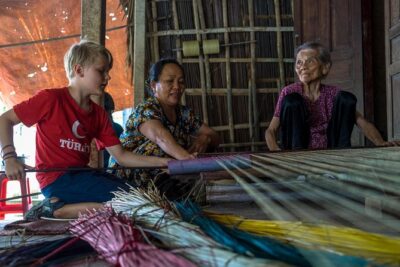
- Reed mat making in a local house, with a real try-at-it challenge
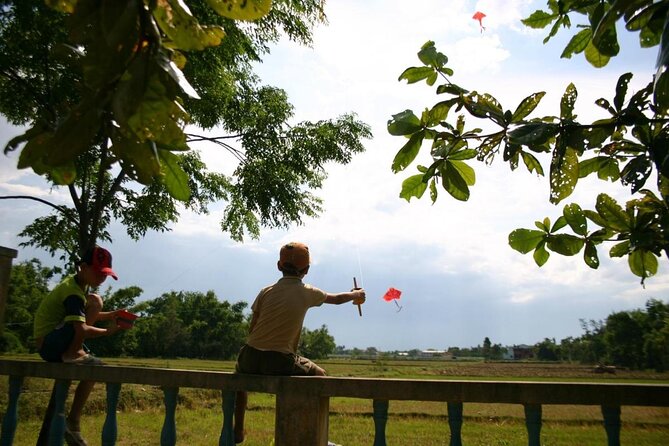
- Countryside cycling with river crossings, rice fields, and water buffalo photo chances
- War-era storytelling stops at a pagoda, war monument, and cemetery
- Boat return to Hoi An so your legs get a break while you still see the area
Why this craft-focused bike tour feels more real than sightseeing
Hoi An is famous for its lantern streets, but this tour shows the quieter side of how people actually live and work. You are not just looking at art. You are watching skills that feed daily life, from claywork to reed weaving to basic staples like rice noodles.
What I like most is the mix of workshop time and riding time. The bike gives you distance and context, and the workshops give you something concrete to understand. When you make a bowl, you learn why certain shapes matter. When you mix and cook rice flour into noodles, you understand how simple ingredients become comfort food.
Also, the guide does more than translate. In a tour like this, good guiding matters because families do things a certain way and expect visitors to follow along. A steady, English-speaking guide like Hung helps you keep pace and ask the right questions, which makes the whole morning feel smoother.
You can also read our reviews of more cycling tours in Hoi An

Price and what you actually get for $45
At $45 for about 5 hours, the big value is that your ticket covers the stuff that usually adds up: visit tickets, an experienced English-speaking guide, bikes, a boat ride, and bottled water. Most craft experiences charge extra for entry and for guide support. Here, the cost stays tied to the full route.
You are also paying for time spent with families, not just a photo stop. You learn how to make items yourself in multiple workshops, which is the part that turns the day from entertainment into education you can taste and use.
The one tradeoff is that you are paying for breadth. You cover several villages in one morning, so you are not lingering for hours in a single workshop. If you want deep time in one craft, you might prefer a private option. If you want to sample several traditional trades in one shot, this price structure makes sense.
Morning logistics: pickup, bike setup, and the ride pace
You get picked up around 8:00am from your hotel. That matters in Hoi An because you do not waste time finding starting points on your own. After pickup, you are out with bikes and ready to pedal to the first workshop.
The ride is early, which helps with cooler temperatures and calmer village streets. One review noted the cycling is about 15 km with an easy, leisurely pace. That fits the design of the day. You are not training for a race. You are moving enough to connect places, then stopping often to participate.
This pace is also good for first-time cyclists. Even if you are not a regular rider, you can focus on balance and enjoy the scenery rather than worrying about speed. Do not overthink it, just keep a steady rhythm and let the group flow.
Stop 1: Thanh Ha Pottery Village and making your own clay souvenir
Thanh Ha Traditional Pottery Village is where the tour starts, and it is a smart choice. Pottery sets the tone because it is hands-on from the first minutes, and you immediately see how claywork connects to building materials in Vietnam.
In this village, families have long made bricks and tiles for older homes, not just decorative pottery. Then you get to the fun part: you learn how to make items like cups, jars, bowls, and pots by yourself. You also keep what you make as a souvenir, which is a big practical advantage. You leave with something personal, not just a small postcard-size trinket.
What to expect inside a pottery workshop
You will likely spend time learning basic shaping, and then you will work on your own piece. It can get messy, so wear clothes you do not mind getting stained. If you are careful about keeping things clean, you might feel a bit stressed, but that is part of the experience.
Potential drawback to plan for
Clay can be a tactile learning curve. If you have trouble with fine-motor tasks, your first attempt might not look like the examples. That said, the point here is participation and learning, not producing a museum-grade object.
Stop 2: Rice paper and noodle workshop where you cook and eat
After pottery, you bike to a local family making rice paper and noodles from rice flour. This is one of the most satisfying transitions in the whole day because it connects craft skill to a daily food you can recognize.
You learn how rice paper and noodles are made, then you enjoy eating it. That matters. If you only watch a demonstration, the process stays abstract. When you make it and taste it, it becomes real.
Why this stop is worth your time
Rice-based foods are a cultural backbone in central Vietnam, and the techniques here explain why Vietnamese cooking feels both simple and deeply skilled. You see that flour and water can become something with texture, shape, and purpose. It also gives you a chance to ask questions about daily routines, not just craft history.
Practical consideration
You will have already started the morning with early cycling. This stop helps because food slows things down. Still, be prepared for a small, warm stretch of time in a cooking environment.





Stop 3: Reed sleeping mats, a hands-on skill with a different kind of challenge
Next comes the reed sleeping mat workshop. This one shifts your body from shaping clay to weaving and assembling fibers, which is a nice variety when you are doing multiple village activities back to back.
At the local house, you can challenge and make a sleeping mat by yourself. That is the key phrase: you are not just pointing at a finished product. You learn the method and do part of the work.
Why it feels special
Reed weaving is not just craft. It connects to how people prepare for everyday comfort and seasonal needs. The skill also has a rhythm, which is different from pottery’s slow shaping. If you enjoy learning through repetition, you may find this stop surprisingly relaxing.
What to consider
Depending on how the mat making is taught, you might spend time seated and leaning forward. If you have back or wrist issues, take it easy and work at your own pace during the hands-on portion.
The ride route: pagoda, war monument, cemetery, and river stories
Between the workshops, you cycle through the area and cross toward viewpoints that include a pagoda, a war monument, and a cemetery. Your guide shares stories about the Vietnam War as you pass key spots.
This is a serious segment of the morning, and it is also one of the most meaningful parts. It turns the ride from scenery into context. You see how landscapes hold memory, not just how they look in photos.
What I like about including this here
It breaks up the craft theme with human history. Crafts explain daily life. These stops remind you that daily life has always been shaped by conflict, rebuilding, and community survival.
A consideration
This part can feel emotionally heavy, especially if you have little context about the war. If you prefer light, easy-only travel days, you might want to mentally prepare. The guide’s storytelling should help keep it understandable, but the topics are not light.
Fields, chili gardens, corn farms, and water buffalo photo chances
As you continue, the route cuts across agricultural areas. You cross chili gardens, corn farming, and rice fields. This is where you get the wide-open Hoi An countryside feeling, plus the photo moments people dream about.
A highlight is the chance to take photos of water buffalo. Even if you only get a brief look, these animals are a reminder that the countryside around Hoi An is active, not staged.
How to get the best photos without slowing everyone down
Keep your bike moving until you’re sure you want a stop. When you see buffalo or a great rice field angle, step off quickly, grab the shot, then rejoin. The tour timing is built around multiple villages, so quick photo stops work best.
Stop 4: Traditional carpentry village and the skill behind boats and statues
The last craft stop is a traditional carpentry village. You see how local artisans carve and work with wood, including making wooden statues and fishing boats.
This is a strong ending because it shows woodworking as both decorative and practical. Fishing boats are essential. Statues and carvings show artistry and technique. By the end of the morning, you have seen clay, rice-based foods, reed weaving, and then wood carving. That range makes the day feel cohesive rather than random.
What you can expect
You will likely watch carvings and see the tools or process involved. The pace is not a long workshop here like pottery, but it is still a real look at how skilled people turn raw material into useful objects.
One drawback to keep in mind
Because the carpentry stop comes last, some people get tired after the earlier hands-on work and the cycling. If you feel your energy dropping, lean into watching closely rather than trying to overdo explanations. The guide should fill in context as you watch.
Boat return to Hoi An Old Town: a smart breather at the end
After the carpentry village, you get on a boat and return to Hoi An old town. This is a practical design choice. After pedaling most of the morning, a boat ride gives your legs a reset while still letting you see the waterway side of the region.
You finish around 1:30pm. That timing is good because it leaves you time for lunch, a nap, or a casual wander around the Old Town lantern streets afterward.
What I recommend after you get back
If you have more time in Hoi An, use the rest of the afternoon to connect the dots. Look for craft details in shop displays or old-house features. When you already made pottery or saw how boats are built, you notice the city differently.
What to bring and how to enjoy the hands-on parts
This is a craft-focused day, so small comfort choices make a big difference.
Bring
- Comfortable shoes that can handle a workshop environment
- Sun protection, because early rides in daylight can add up fast
- A small towel or something to wipe hands if you have it
- Optional light gloves if you prefer not to handle textured materials directly
Wear
Wear clothes you do not mind getting slightly messy. Pottery and mat making can involve materials that do not care about your favorite shirt.
One small mindset tip
Treat this like a do-it-yourself class, not a souvenir hunt. You will get more satisfaction from learning than from trying to make the perfect final product.
Who should book this Hoi An craft bike tour
This tour is a great fit if you want
- A morning with active cycling and real village interactions
- Hands-on experiences like pottery, rice noodle making, and reed mat weaving
- A guide who explains how daily life, history, and agriculture connect
It also suits couples, friends, and solo travelers because the group is capped at maximum 10. That keeps it social without feeling chaotic.
You might skip it if
- You hate early starts or want a slow, all-day schedule
- You prefer sightseeing from a vehicle only
- You want deep time in one workshop rather than several short, learn-and-move stops
Should you book Sun Hoi An Tours for this craft village ride
If you like travel that is practical and hands-on, I think this is an easy yes. For $45, you get a guided route through multiple traditional trades, you participate in making things, and you return by boat. That is more value than many tours that charge similar amounts for fewer activities.
Book it if you want to leave Hoi An with a story you can hold, like your pottery souvenir, plus the context to understand what you are seeing around town.
If you prefer lounging and long sightseeing breaks, you might find the morning packed. Still, the ride pace is described as easy and leisurely, so it is not an exhausting grind.
In short: if you want a morning that feels like meeting real makers and seeing working countryside, this is a strong match.
FAQ
How long is the tour in Hoi An?
The tour runs for about 5 hours, ending around 1:30pm.
Where does the tour start?
You get picked up from your hotel around 8:00am in Hoi An.
How much does the tour cost?
The price is $45.
What’s included in the price?
Included are all visit tickets, an experienced English-speaking guide, bikes and a boat ride, and bottled mineral water.
What villages and craft stops are visited?
You visit Thanh Ha Traditional Pottery Village, a carpentry village, and workshops where you make rice paper and noodles and where you make sleeping mats from reeds. The route also includes stops to see a pagoda, war monument, and cemetery.
Is there a bike and boat included?
Yes. Bikes are provided, and you also return by boat to Hoi An Old Town.
Do I get to make anything myself?
Yes. At the pottery village, you learn to make items like cups, jars, bowls, and pots and keep them as souvenirs. You also make rice paper and noodles and can make a sleeping mat by yourself.
What is the group size?
The tour has a maximum of 10 travelers.
Is the tour suitable for most travelers?
The tour notes that most travelers can participate.
Is the tour dependent on weather?
Yes. It requires good weather, and if it is canceled due to poor weather, you are offered another date or a full refund.
What is the cancellation policy?
Free cancellation is available. You can cancel up to 24 hours in advance for a full refund.
More Cycling Tours in Hoi An



More Tour Reviews in Hoi An
Not for you? Here's more nearby things to do in Hoi An we have reviewed









Cycling Tours, compared.
 ★ 5.0Hoi An Countryside Bike Cycling Tour with Basket Boat and lunchFrom $41325 reviews
 ★ 4.8Morning Countryside Tour by BikeFrom $29303 reviews
★ 5.0Hoi An Morning Countryside Tour by BikeFrom $29282 reviews
★ 4.8Morning Countryside Tour by BikeFrom $29303 reviews
★ 5.0Hoi An Morning Countryside Tour by BikeFrom $29282 reviews
 ★ 5.0Hoi An countryside cycling tourFrom $41227 reviews
 ★ 5.0Hoi An Countryside Biking Tour(Vegetable village -basket boat – fishing village)From $45216 reviews
 ★ 5.0ATV Quad Bike Hoi An Adventure & BBQ FeastFrom $69190 reviews
 ★ 5.0Rural Cycling Tour to Village with Basket Boat RideFrom $27174 reviews
 ★ 5.0Private Hoi An Evening Food Tastings Tour by BikeFrom $65145 reviews
Browse the lists this tour appears in