
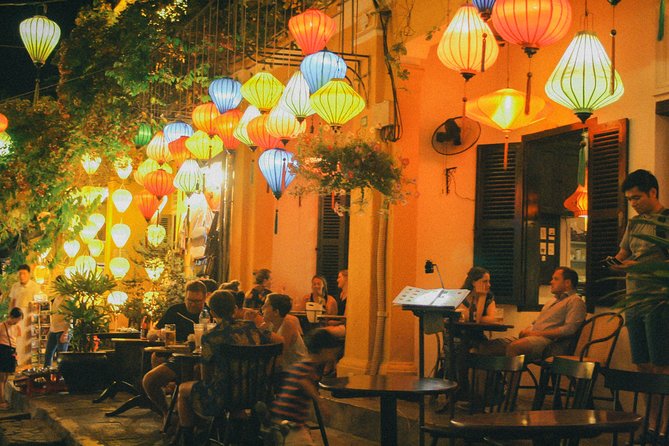
Choose Hoi An by the day you want to have.
Start with old-town streets, the coconut waterways, a workshop or a longer regional day. Compare pickup, active time, tickets and the return hour before choosing.
Begin with distance, heat and pace.
Ancient Town is walkable, Cam Thanh needs a short transfer, and My Son or Hue takes a meaningful part of the day. Choose the geography first.
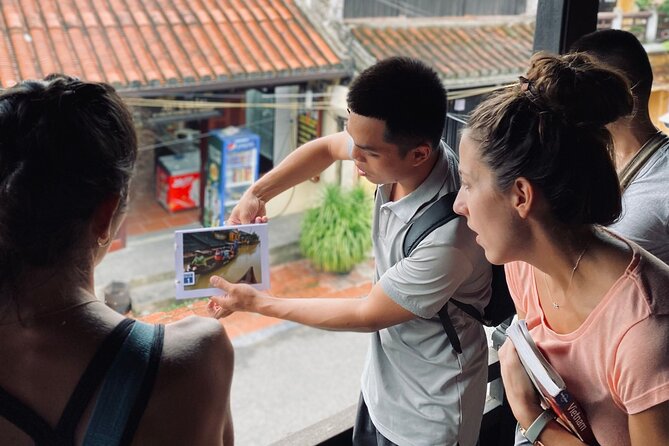
Hoi An Ancient Town Walking Tour with a Local
Hoi An old town walking tour with a local guide, Japanese Covered Bridge, Cantonese hall, performance, market tasting, herbal tea included.
From $9 per person
Read the review → ★ 4.9Visitor favouriteVietnamese Coffee Culture and Coffee Making ClassFrom $144,006 reviews
 ★ 4.9Good first-day choiceVietnamese Foldable Lantern Making ClassFrom $103,742 reviews
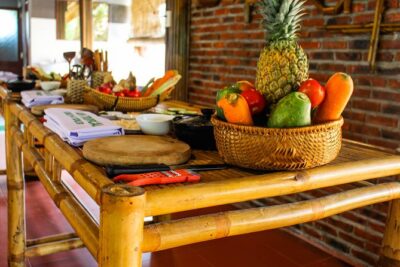 ★ 5.0Small-group optionCooking Class Hoi An:Local Market, Basket Boat, Fishing & CookingFrom $283,660 reviews
 ★ 5.0Plan aheadHue to Hoi An ( Hoi An to Hue) Top Gear with Lefamily Riders Tours ( 1 way)From $503,156 reviews
 ★ 5.0Easy to compareHoi An/ Da Nang – Ba Na Hills – Golden Bridge Deluxe Small groupFrom $212,613 reviews
 ★ 5.0Local focusFull Day Golden Bridge and Ba Na Hills Small Group TourFrom $212,369 reviews

Decide how lively you want the water.
Basket-boat trips range from quiet coconut-waterway rides to spinning demonstrations, fishing and cooking combinations. Compare time afloat, village activities and pickup.
Spend the travel time where it matters.
My Son, Marble Mountains and Ba Na Hills ask for different road time, walking and ticket budgets.
 Cham towers before the heat
The My Son morningCompare departure time, guide depth, entrance fees and whether the return runs by road, river or both.Compare the options →
Cham towers before the heat
The My Son morningCompare departure time, guide depth, entrance fees and whether the return runs by road, river or both.Compare the options →
 Caves, stairs and viewpoints
The Marble Mountains half-dayCheck walking demands, lift use, temple time and whether Da Nang or the coast is added.Compare the options →
A long resort-complex day
The Golden Bridge dayCompare admission, buffet, pickup zone, free time and the return hour before committing.Compare the options →
Caves, stairs and viewpoints
The Marble Mountains half-dayCheck walking demands, lift use, temple time and whether Da Nang or the coast is added.Compare the options →
A long resort-complex day
The Golden Bridge dayCompare admission, buffet, pickup zone, free time and the return hour before committing.Compare the options →
Match the water to the conditions.
A short lantern boat, a coconut-waterway ride and a Cham Islands day are very different bookings. Compare time afloat, equipment, sea policy and return transport.
Choose by what you make yourself.
Cooking classes, coffee sessions and craft workshops differ in hands-on time, group size, take-home pieces and the extras bundled around them.
 ★ 5.0Hoi An Full Lantern Making Class- A special Foldable lanternFrom $152,007 reviews
 ★ 5.0Da Nang & Hoi An: Food, Sightseeing, Culture & Hidden GemsFrom $72806 reviews
 ★ 4.9Basket Boat Ride, Cooking Class by HangcoconutFrom $19802 reviews
 ★ 5.0Evening Walking Food Tour, folk game and lantern boatFrom $39665 reviews
Give the old streets a focused route.
Assembly halls, merchant houses, markets and the river fit best when the guide controls the sequence. Compare walking time, entrance tickets and shopping stops.
Keep Hoi An close or make a day of it.
Start with the old town and villages, then decide whether the coast, Cham heritage or the Hai Van road belongs in the plan.


Pick a pace that fits.
Compare walking, private vehicles, cycles, boats, food and workshops without losing sight of pickup and return time.




Build the road day around one anchor.
My Son, Golden Bridge, Hai Van Pass and Hue reward a clear priority. Extra stops should support it, not crowd it out.
Keep the first plan simple.
Use one day for the old streets, one for countryside and water, and one for the regional journey that matters most.
 Day 1
Ancient Town on footWalk early, pause through the hottest hours, then return to the river when the lanterns come on.Plan this day →
Day 1
Ancient Town on footWalk early, pause through the hottest hours, then return to the river when the lanterns come on.Plan this day →
 Day 2
Countryside and coconut waterwaysPair Cam Thanh with a market, cooking class or village cycle only when the transfers stay compact.Plan this day →
Day 3
A Cham heritage morningLeave before the heat, give the towers enough time, and check whether the return is by road or river.Plan this day →
Day 2
Countryside and coconut waterwaysPair Cam Thanh with a market, cooking class or village cycle only when the transfers stay compact.Plan this day →
Day 3
A Cham heritage morningLeave before the heat, give the towers enough time, and check whether the return is by road or river.Plan this day →
Latest Hoi An tour reviews
 ★ 5.0Half day Marble Mountain and Linh Ung Pagoda TourFrom $283 reviews
 ★ 5.0Private Car Rental from Hoi An to HueFrom $1003 reviews
 ★ 5.0Private Taxi from Hoi An to Da Nang by Sedan/SUV/16 SeatsFrom $153 reviews
 ★ 3.5Transfer from Da Nang to HueFrom $703 reviews
 ★ 5.0Private Transfer From Hoi an TO Hue with SightseeingFrom $393 reviews
 ★ 5.0Phong Nha: private car transfer to/from Hoi An ( Da Nang).From $1173 reviews
 ★ 4.1My Son Sanctuary & River Boat Tour From Hoi An or Da NangFrom $243 reviews
 ★ 4.5Private Shore Excursion to HUE IMPERIAL CITY from Chanmay/Tiensa PortFrom $1453 reviews